

Alaska Native Youth Take Their State to Court to Stop the Alaska LNG Megaproject and Protect Their Futures
March 11, 2026
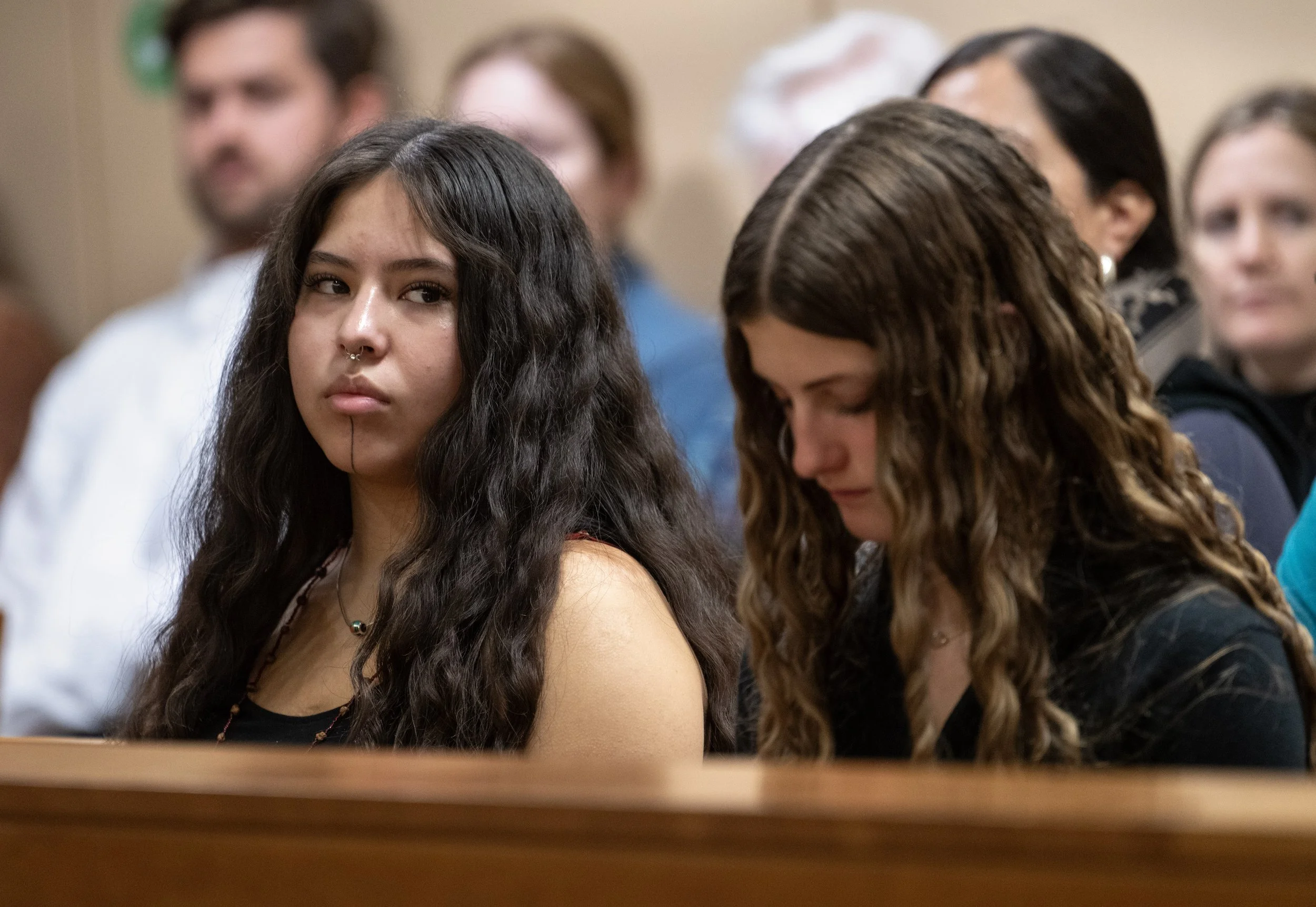
Sanoonick v. State of Alaska II youth sit in court during a hearing in their case at the Superior Court for the State of Alaska, Third Judicial District at Anchorage. Photo by Robin Loznak
In a landmark climate case, eight young people across Alaska filed Sagoonick v. State of Alaska II to stop the massive LNG (liquified natural gas) project that threatens their homes, futures, and the sacred lands their people have stewarded for thousands of years. At a time when climate pollution must be rapidly reduced to avoid further climate harms to Alaska’s youth, the Alaska LNG Project would more than triple Alaska’s climate pollution for decades to come. Among the youth plaintiffs challenging this project as violating their fundamental rights are two powerful voices— Ch’eelil and Jamie—who are fighting, not only for themselves but for their communities, cultures, and generations to come.
The Alaska LNG Megaproject is one of the largest fossil fuel infrastructure proposals in the United States, backed by state support and driven by profits. But for the youth plaintiffs in the case, including Alaska Native youth like Ch’eelil and Jamie, this project represents an existential threat. It endangers ecosystems already threatened by the climate crisis—ecosystems that are central and critical to Indigenous survival, culture, and sovereignty.
Meet Ch’eelil
Ch’eelil, who is Diné and Neets’aii Gwich’in, speaks of the vital role salmon plays not only in diet but also in identity. She grew up fishing for Chinook salmon on the Yukon River—a practice deeply rooted in her family and cultural traditions. Each summer at fish camp, she learned from her family how to harvest, cut, dry and prepare salmon—lessons passed down through generations about respect for the river, sharing with elders, and caring for the land that sustains them.
But with rising water temperatures, ocean acidification, and other impacts of climate pollution, Chinook populations have collapsed. Since 2008, harvest levels haven’t met subsistence needs, and for the past few years, the river has been closed to Chinook fishing entirely. It has now been six years since Ch’eelil has been able to return to fish camp with her family and harvest their own salmon. The loss is not only about food security, it’s about the loss of place where cultural knowledge is lived and passed on.
This has impacted Ch’eelil’s access to a resource central to her identity. “Our Culture is tied to the land,” Ch’eelil says. “How will future generations learn who they are if there is no land to learn from?” I want my little siblings and the generations after us to grow up with the same teachings I did—to fish, gather, to know where they come from.”
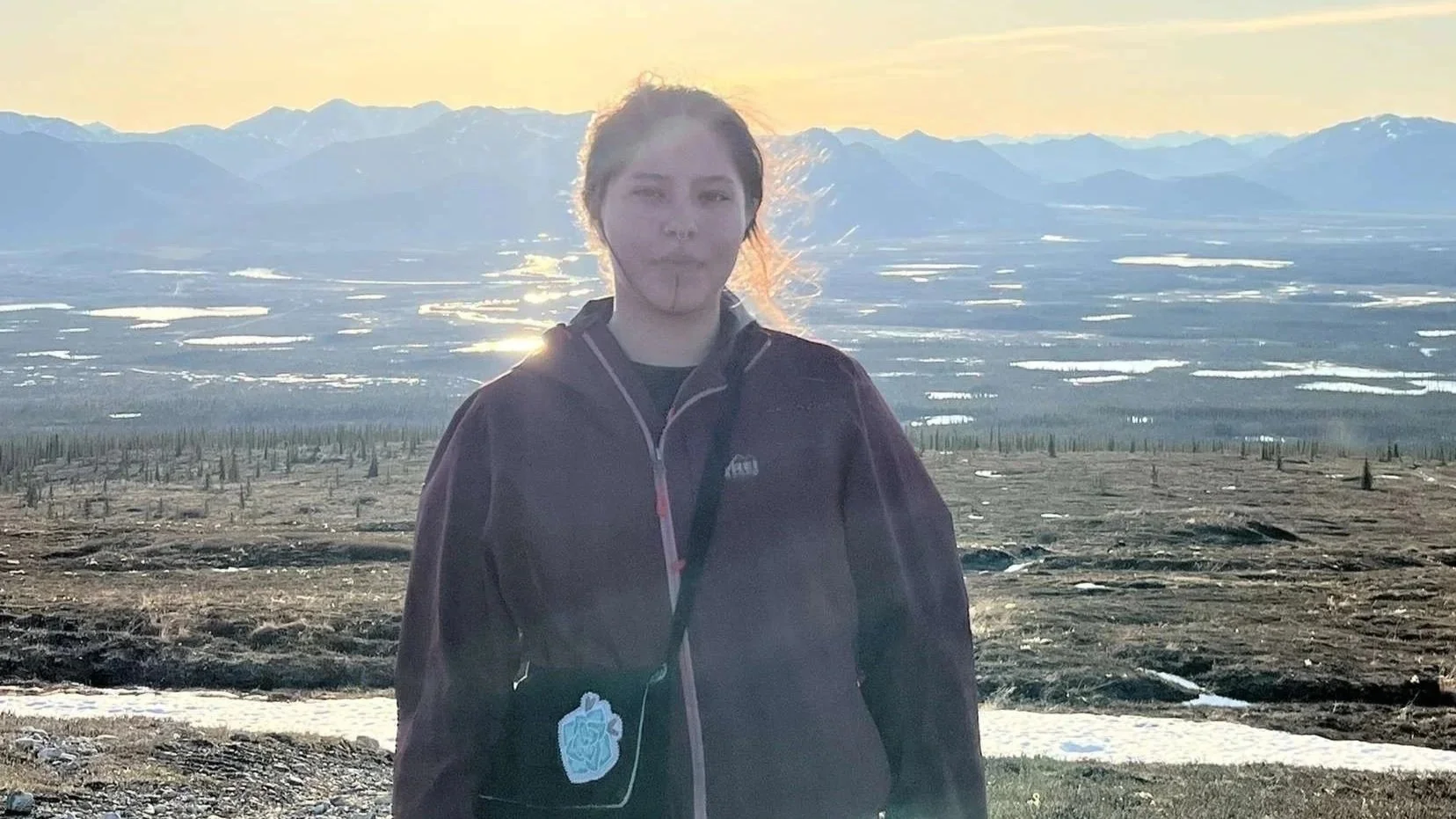
Sagoonick v. State of Alaska II, youth plaintiff Ch’eelil.
While climate change has already taken her family’s fish camp from them, other subsistence traditions remain, for now. Her family still relies on caribou and gathers berries from the land. These traditions continue to anchor her community, but they too are vulnerable to a rapidly warming Arctic. What’s at stake isn’t just one species, but an entire way of life.
Beyond subsistence, Ch’eelil’s daily life is increasingly shaped by the climate crisis. In 2020, wildfires came dangerously close to her home, forcing her family to prepare for evacuation. She’s endured harmful smoke that makes it unsafe to go outside and suffers from worsening seasonal allergies due to longer pollen seasons. Even the activities that bring her joy, like soccer, snowboarding, and sledding, are being compromised.
Extreme heat has also caused her to experience heat exhaustion during sports, while milder winters and unpredictable weather are making it harder and more dangerous to enjoy Alaska’s outdoors.
If the Alaska LNG Project is allowed to proceed, it will cause further and accelerating climate harms to Ch’eelil, threatening not only the salmon that have already disappeared from her family’s fish camp, but also the caribou, berries, and lands that her people still depend on to survive and to remain who they are.
Meet Jamie
Jamie, a Yup’ik youth from Kasigluk, lives in deep connection with the lands and waters her ancestors have relied on for thousands of years. Like Ch’eelil, Jamie’s family and community depend on the surrounding ecosystems for food, safety, and the continuation of cultural traditions.
Kasigluk sits along the An’arciiq (Johnson River) on land once stabilized by permafrost. That permafrost is now rapidly thawing. Erosion has stripped away the ground that used to separate Jamie’s home from the river—so much that the water has flowed all the way to her house and beneath her porch, kitchen, and part of her living room. Her house has sunk more than a foot in ten years due to permafrost thaw.
“Since just a few months ago, our house has been getting a lot more cracks that are getting wider, and the house shifts more often now,” said Jamie. “That’s not the worst part, the worst part is that the house is slanted, nearly under the boardwalk.”
With the colossal climate pollution from the Alaska LNG Project, the erosion, flooding, and land loss will only accelerate.
The effects aren’t isolated to her home. Community infrastructure is failing. Boardwalks built to replace dirt paths have warped and become hazardous, while other buildings have already sunken into the tundra or been abandoned. Increased flooding from storm surges, melting ice, and rising waters further affects the damage, creating a vicious cycle: flooding speeds permafrost thaw, which weakens the land and increases future flood risk.

“Our village might not exist in a few decades. We’re fighting for the right to remain on our land.” — Jamie
Last spring, Jamie’s house partially flooded, and for weeks, she could hear the waves crashing and debris knocking against the foundation beneath her. For Jamie and her community, climate change isn’t a distant threat—it’s under their feet, at their doors, and getting worse every year.
Alaska is home to more than 200 federally recognized tribes, from the Inupaiq and Yup’ik in the Arctic to the Tlingit and Haida in the Southeast. The Alaska LNG Project will do more than pollute the air and warm the planet, it will fundamentally threaten entire ways of life.
These youth plaintiffs are saying no to a future of rising seas, vanishing salmon, and cultural erasure. They are fighting for their climate rights and climate justice rooted in Indigenous knowledge, sovereignty, and intergenerational responsibility.
At Our Children’s Trust, we are proud to represent these brave young people in their historic legal fight. Their courage is a reminder that the climate crisis is not just a scientific or political issue—it’s deeply personal. It’s about land, culture, memory and belonging.