
Teaching the Next Generation: How Hawaiʻi's Educators Are Bringing Constitutional Rights into the Classroom
December 9, 2025
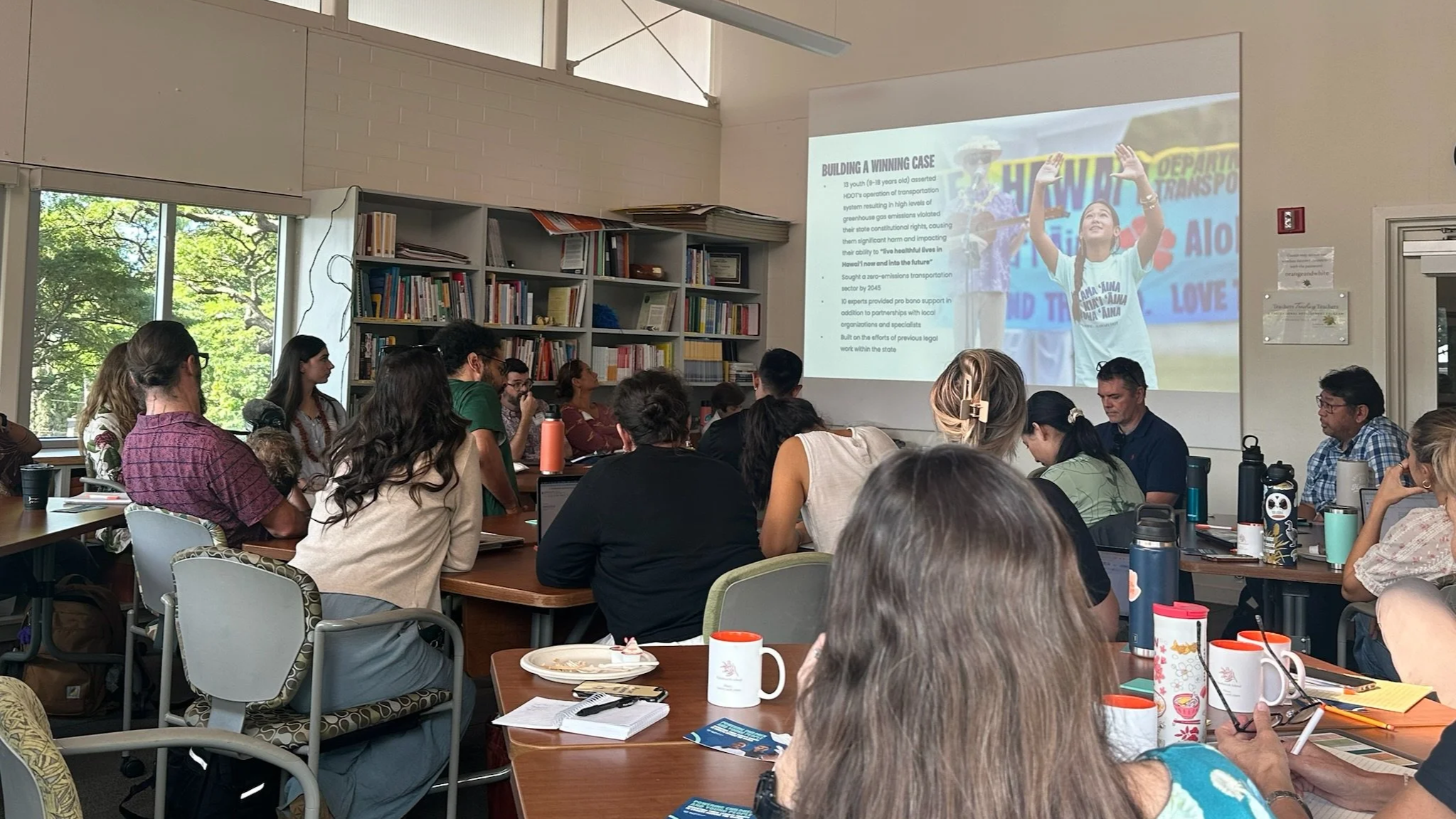
Our Children’s Trust and Navahine v. HDOT Teacher workshop in a Hawai‘i school in October 2025.
When 13 young people stood up for their constitutional right to a life-sustaining climate and achieved a historic settlement in Navahine v. Hawaiʻi Department of Transportation, they didn't just win in court—they opened a door for every student in Hawaiʻi to understand their own power.
Now, we're working with educators and community partners to bring that power—and its lessons about constitutional rights, civic engagement, democracy and climate action—into classrooms across the islands.
The Power of Knowing Your Rights
Imagine a classroom where students learn that young people their age successfully held their government accountable for creating a transportation system that harmed them by spewing tons of climate pollution into the air each year, and that they made history when they used their state constitutional right to a clean and healthful environment to achieve the most comprehensive climate remedy ever issued by any court in the United States.
This isn't abstract civics. This is students discovering that they have real power, that their voices matter, and that they can shape the future of their home.
"For us, this was never just about winning in court," explains youth plaintiff Navahine. "It was about our kuleana to protect our home for future generations. That work doesn't end with a settlement—it's just beginning."

Navahine, lead plaintiff in Navahine v. Hawai‘i DOT
Building Climate Literacy: From Pilot Program to Professional Development
We recognize the truth in Navahine’s words: sustainable change requires long-term cultural transformation. Working with Dr. Krista Hiser from Kapiʻolani Community College and Dr. Debbie Milliken from Punahou School, and inspired by retired Supreme Court Justice Michael Wilson, we began by developing and piloting lesson plans during the 2024-25 academic year to teach Hawaiʻi youth about this historic case so that every child in Hawaii knows they have a constitutional right to a clean and healthful environment, which includes a safe climate.
The pilot results were inspiring. Students deeply engaged with the Navahine case, created materials to teach family members and friends about the settlement, and sparked conversations across generations about democracy, constitutional rights, and climate action. What stood out most was the shift in tone these lessons created—rather than leaving students in a place of climate anxiety or despair, learning about the case kindled hope and demonstrated that change is possible. Students who had been overwhelmed by climate information their whole lives suddenly saw a concrete example of young people like themselves creating meaningful change through civic engagement. Students who felt they couldn’t make a difference were able to see their peers leading in partnership with their government. Students could see in tangible ways both their power and the results that they could achieve by taking action.
Teachers found that when students shared the personal stories of the plaintiffs—not just the legal facts—their audiences connected more deeply with the material. And perhaps most encouraging, students and their audiences consistently wanted to know more about the next steps in implementing the settlement. They weren't just learning history—they were connecting to an ongoing process they could participate in.
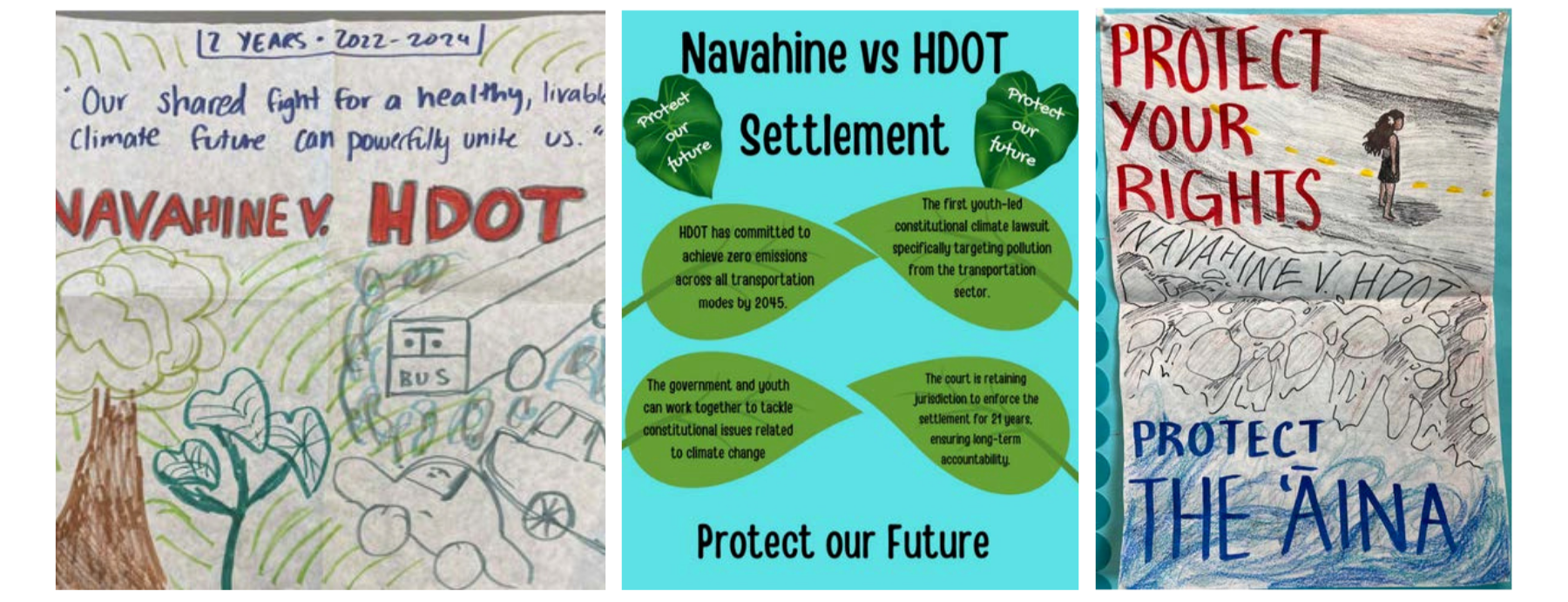
Hawai‘i Student projects about Navahine v. HDOT. Courtesy of Punahou School.
Scaling Up: Professional Development Workshops
Building on these successful pilots, we're now developing workshops in collaboration with the Sustainability Fellowship Program and Davis Democracy Initiative at Punahou School and the Hanahauʻoli School Professional Development Center. These workshops introduce teachers to the Navahine settlement and its dual opportunities for teacher and student learning.
The workshops offer something truly special: educators learn directly from the people who achieved this historic victory. Our attorneys and youth plaintiffs share not just what happened in court, but what it means for students today—how this settlement, recognized by all three branches of Hawaiʻi's government, can inspire and inform civic engagement.
First, students can understand and advocate for their constitutional rights—learning these aren't just abstract words in a document, but enforceable protections that young people successfully defended.
Second, they can engage in real-world civic action connected to Hawaiʻi's transportation future. The settlement is unfolding right now: HDOT created a dedicated division for implementation, young people are actively shaping infrastructure decisions through the HDOT Youth Transportation Council, and the state released a comprehensive plan charting the course to end transportation emissions by 2045.
These aren't distant policy developments—they're opportunities for students to witness civic engagement as it happens and apply that knowledge to their own participation in democracy, whether through public testimony, community advocacy, or other forms of action.
Participating educators gain resources to connect these developments to classroom instruction, explore curriculum being piloted in Hawaiʻi's schools, and engage in dialogue with colleagues to design lessons that prepare students for climate action—weaving together constitutional rights, youth action, climate justice, and state-level policy.
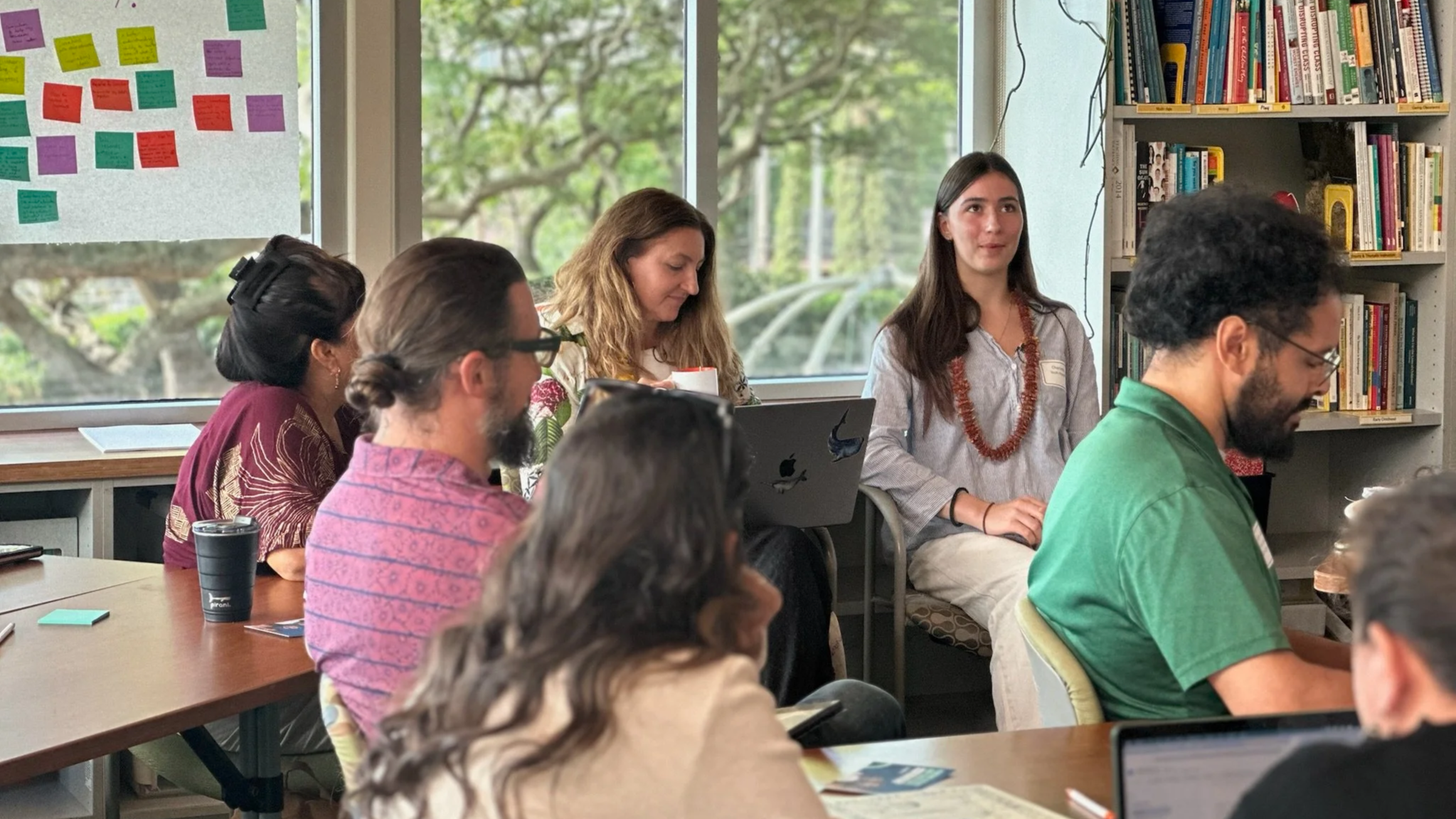
Andrea Rodgers, Our Children’s Trust Deputy Director of U.S. Strategy and lead attorney in Navahine v. HDOT alongside Charlotte, Navahine youth plaintiff, as they lead a teacher workship in Hawai‘i, October 2025.
Creating Ripples Across the Islands
Teachers who participate in the workshops become eligible to host presentations at their schools, where students can hear directly from the attorney and youth plaintiffs who made history. Each trained educator becomes a champion for constitutional rights and climate literacy in their community.
We're also in conversations with the State's Office of Curriculum and Instructional Design about developing statewide curriculum, working to ensure that students across all islands can access this transformative education.
Looking to the Future
We're building toward a future where every student in Hawaiʻi grows up knowing they have a constitutional right to a life-sustaining climate—and the power to defend it. Where civic engagement isn't something abstract learned from textbooks, but something modeled by youth just like them who stood up and created change.
The Navahine settlement mandates zero emissions in Hawaiʻi's transportation sector by no later than 2045. Students learning about this case today will be the adults living in—and helping to create—that transformed future.
Through educator and student engagement, we're helping ensure that every student in Hawaiʻi learns a fundamental truth: you have rights, you have power, and you have kuleana to protect the future.
That's not just climate education—that's democracy education in action. And it's happening right here, right now, in Hawaiʻi's classrooms.