

Uniting for Climate Rights: West Coast Environmental Law Joins Canadian Youth-Led Climate Lawsuit
October 27, 2025
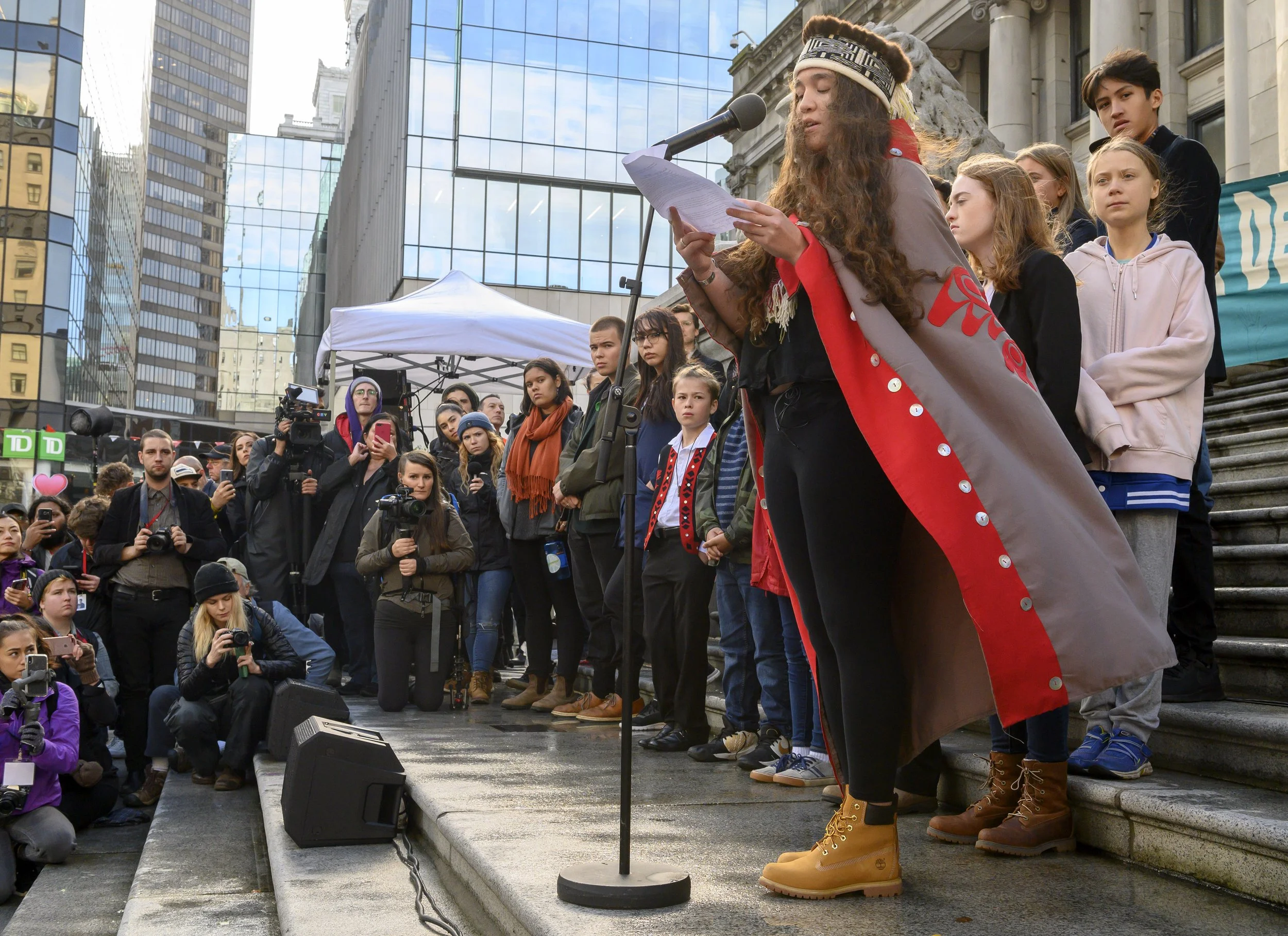
La Rose v. His Majesty the King youth plaintiffs at a press conference and rally. Photo by Robin Loznak.
Across Canada, the signs of a worsening climate crisis are impossible to ignore—wildfires blanketing skies in smoke, floods swallowing communities, and rising costs leaving families struggling to rebuild. For the young Canadians behind La Rose v. His Majesty the King, these are not distant threats but daily realities that jeopardize their futures and violate their Charter rights to life, liberty, and security of the person. Determined to hold their government accountable, they are preparing to make history at the first federal climate trial in Canada.
As the case moves toward trial next year, Our Children’s Trust is honored to welcome West Coast Environmental Law (WCEL) as partners in support of La Rose. Together with Arvay Finlay LLP and Tollefson Law Corporation, we’re helping to ensure that Canada’s youth have their day in court and that the country’s highest laws reflect what this moment demands: a stable climate system. In the Q&A below, WCEL shares why they joined the case, what’s at stake for Canadians, and how youth-led legal advocacy is transforming the climate movement in Canada.
1. Why did you decide to partner with Our Children’s Trust to become a part of this case?
Worsening wildfires, floods and disasters have made it more obvious than ever that the legal rights of Canadians, especially young people, are being violated by climate change. At the same time, it’s become clear that we cannot rely upon the political will of our elected officials to protect those rights. Supporting the La Rose case allows us to use the power of the law to ensure that governments do more, and faster, to keep people and communities safe.
2. Why do you see this case as significant—not just legally, but socially and environmentally—for Canada?
The climate crisis is generally treated in Canada as a matter of political choice – governments can choose to set weak climate goals or prioritize the oil and gas industry over reducing greenhouse gas emissions. This case reframes the issue as a matter of constitutional rights. By arguing that the government of Canada is violating young people’s rights to life, liberty and security of the person, it places the threat of greenhouse gas pollution into its proper context.
A similar case brought in the Netherlands transformed how Dutch people saw their country’s duty to act on climate change, and resulted in all political parties committing to more ambitious climate goals. Many other cases are being won in courts around the world. It’s time to do the same here in Canada.
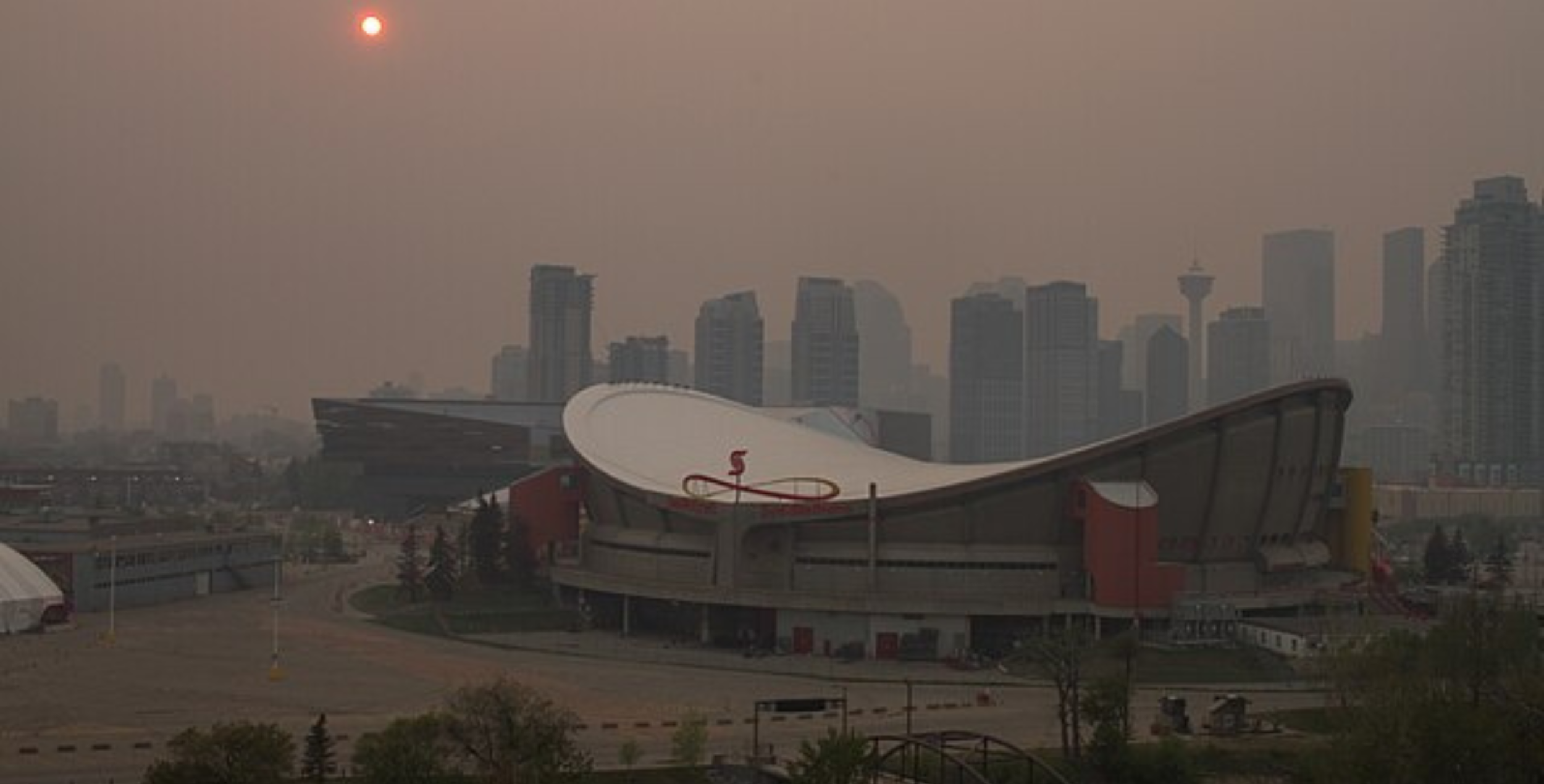
In May 2023, wildfires in northern Alberta, Canada, caused significant impact on air quality as thick smoke engulfed areas across Canada and the United States. On May, 17th, 2023, the day this photograph was taken, the Air Quality Health Index from the Government of Canada measured 10+, the highest rating possible. Photo by Dwayne Reilander.
3. What does it mean to your organization to support youth who are going to trial and standing up for their Charter rights?
It is incredibly inspiring to work with young people who refuse to respond to the climate crisis with hopelessness and instead are standing up for their rights and demanding accountability from politicians who continue to drag their feet on the climate crisis. These are voices that deserve to be heard, both in the courts and by our elected officials, and we’re committed to doing everything we can to ensure they get their day in court.
4. Why is youth-led legal advocacy important in Canada’s climate movement today?
Far too many Canadians still believe that climate change isn’t harming them. But it is – if not directly, then through increased costs of living, taxes, and insurance premiums. While it’s affecting everyone across the country, today’s youth will face even worse impacts over their lifetimes. Youth-led advocacy gives a tangible, human face to the challenge and reminds us all of the urgency and responsibility to act.
Youth-led legal advocacy is also important in that it centers the voices of those most impacted by the climate crisis. Climate justice and generational justice demand that we listen to and uplift those who bear the greatest burden, young people, Indigenous communities and people in the global South who are disproportionately affected by a crisis they did little to create. As climate impacts intensify, we can expect to see more calls for accountability from these communities and nations, including legal claims against wealthier countries in the global North. This case is part of a broader movement pushing Canada, and the world to confront that moral and legal responsibility.
5. What is the relationship between WCEL’s support for the La Rose case and for the Sue Big Oil campaign?
La Rose is a legal challenge brought because the constitutional rights of youth are being violated by the actions, and inaction, of the Canadian government on climate change, seeking to force the government to do more. Sue Big Oil is a campaign that calls on British Columbians to recognize that the actions of global fossil fuel companies have contributed to the violation of the legal (non-constitutional) rights of British Columbians and their local governments, and should be paying a fair share of the resulting harm.
Both campaigns focus on the fact that fossil fuel pollution and climate change generally are harming legal rights, and those who have contributed to those rights violations must be held accountable. The two campaigns rely on different arguments and target different defendants, but both assert that it has never been legal to promote products and government policies that you know will harm and kill people and destroy property.
6. How can the Canadian government be held responsible for a global problem?
The courts, in Canada and around the world, are holding that each government is responsible for doing its part to solve the global climate crisis and that each additional tonne of greenhouse gases entering the atmosphere makes the violation of legal rights worse. Canada remains one of the largest greenhouse gas polluters in the world, both overall and per person, and Canada has an obligation to do whatever it can to protect the Charter rights of these youth.
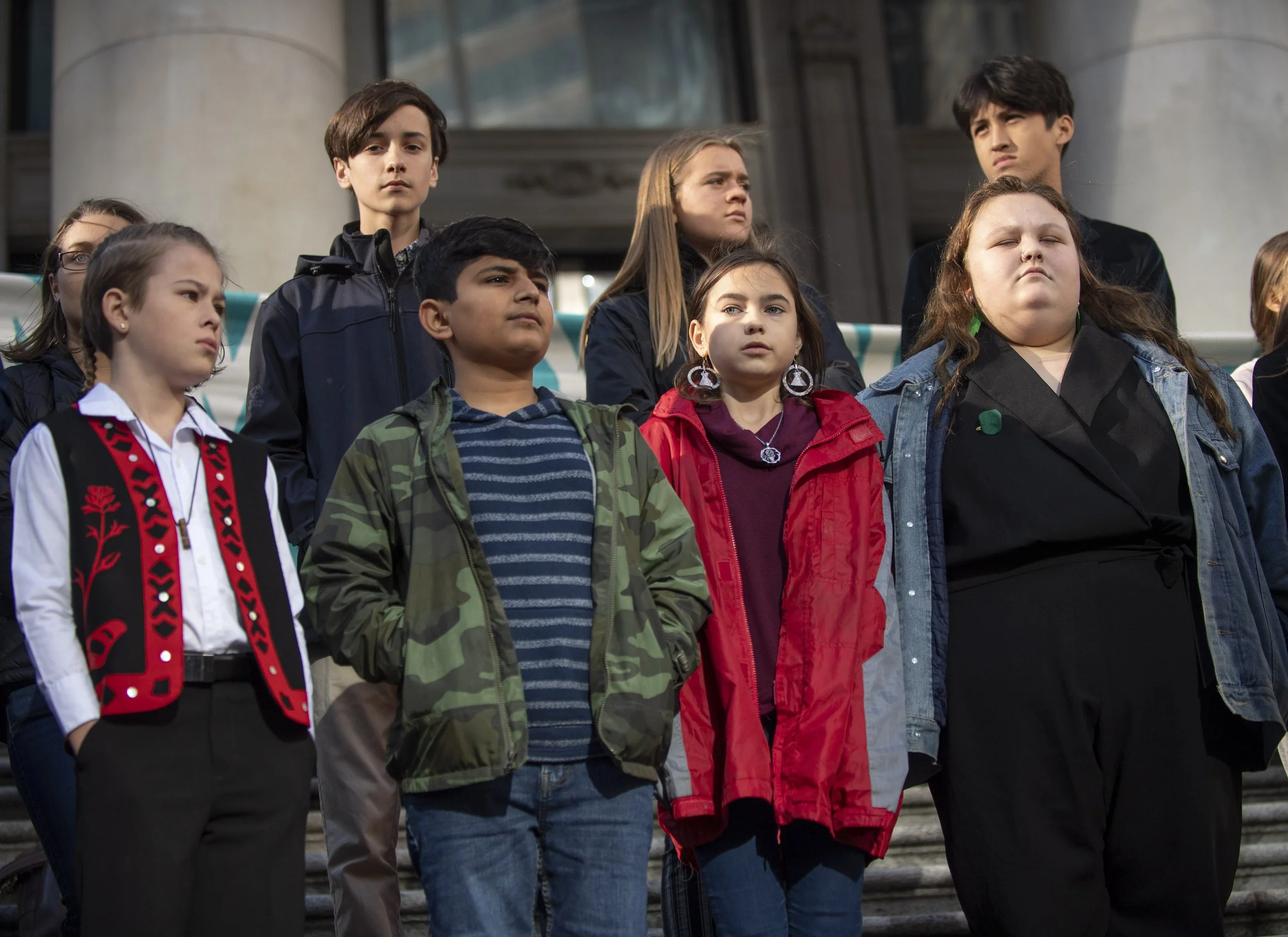
La Rose v. His Majesty the King youth plaintiffs at a press conference and rally. Photo by Robin Loznak.
7. Is there anything else you want Canadians to understand about why this case matters and why WCEL is proud to be part of it now?
Unfortunately, Canada has recently been back-sliding on its climate leadership, and voices in Canadian politics have been pushing back against climate action. The government has already dropped the price on carbon, suspended the EV mandate, and is musing about building more oil and gas pipelines. It is essential that the government and the public recognize that these types of policy choices represent an attack on the constitutional rights of Canadians, and especially Canadian youth.
West Coast Environmental Law is one of Canada’s oldest public interest law organizations and is proud of our track record of defending Canadians from the impacts of climate change since prior to the Kyoto Conference in 1997. This court case is one of the most important initiatives we have taken in pursuit of that goal.