

Youth Petitioner M.D. Shares How the EPA is Violating Her Rights to Free Exercise of Religion
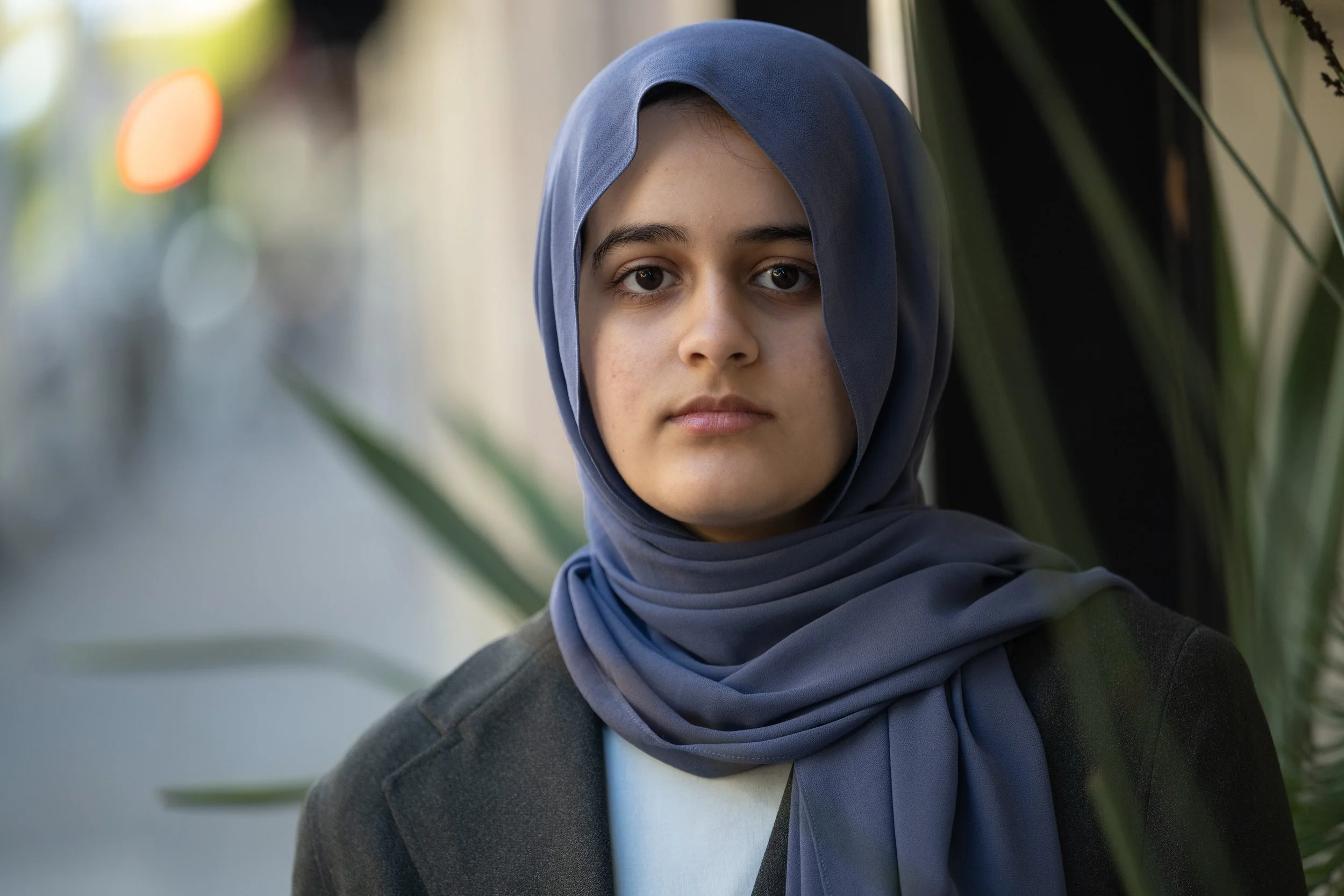
Venner v. EPA Youth Petitioner M.D. Photo by Robin Loznak.
May 20, 2026
M.D. (a minor) is a young Muslim woman from Orange County, California. She loves her faith and tries to live it fully—but a worsening climate is making that harder every year. The heat and air pollution that come with more gas-powered vehicles on the road are forcing her to choose between observing her religious practices, including wearing hijab and fasting during Ramadan, and protecting her health.
M.D. is a youth petitioner in Venner v. EPA, a constitutional petition asking a federal court to reverse and vacate EPA's rule rescinding the 2009 Endangerment Finding (Repeal Rule), a landmark determination that greenhouse gas pollution threatens public health and welfare, and challenging EPA's elimination of all federal greenhouse gas emission standards for cars and trucks that have been in place since 2012.
The excerpt below is from M.D.’s declaration, detailing for the court how the Repeal Rule will harm her and infringe on her constitutional rights. Her declaration was filed on May 20, 2026, in support of the petitioners' motion for stay in the D.C. Circuit, asking the court to pause the Repeal Rule while the petition is decided on the merits.
“I am a citizen of the United States and a resident of Garden Grove, California. I am currently studying Physics at my local college and reside in my parents’ home.
My Islamic faith is a huge part of my life and affects everything I do.
As I’m going through my day, I try to have the most genuine intention in everything I do. Every little decision I am thinking “what would God say?” I go to mosque, do my prayers, learn Arabic, and try to associate with other Muslims and build relationship with my community.
My faith even informs how I structure my day, as I plan my sleep cycle around my morning prayer, which changes with the sunrise. My parents, have raised me in the Islamic faith and tradition, and it is my personal desire to continue in that faith. Respecting my parents is part of my faith that I wish to practice.
Rising heat from greenhouse gases is disrupting and burdening my religious beliefs and practices as a Muslim. As part of my religious devotion, I wear hijab, which includes a head covering, long pants, and sleeves. The material is rarely breathable.
This means on very hot days, I can overheat, so I avoid physical activity outside. Exercise is very important to me, and I try to run every week. I would prefer to run outside, which improves both my mental and physical health, but because of heat combined with hijab I must run inside.
I also participate in Taekwondo in full hijab, which can get very hot. I am unable to attend during Ramadan because the heat, combined with the required fasting, is too unsafe.
Having to endure more hot days also significantly affects my ability to fast during the holy month of Ramadan. I started fasting for portions of the month when I was seven years old. By age eight or nine, I began fasting the entire month, from dawn to dusk. Since then, I’ve done the full month every year, only skipping some days if I am religiously exempt. Because Ramadan follows the lunar calendar, sometimes it falls in the warmer times of the year when extreme heat that is growing from climate change is more likely to occur. In high heat, especially over multiple days, it is difficult to carry out my religious practice of fasting and abstain from food and water.
This year, Ramadan was in late February and into March. This March was the hottest March on record where I live, and I understand that with more greenhouse gas pollution, more heat will be trapped resulting in warmer overall temperatures, but also more extreme heat events.
The dehydration is the most difficult part of Ramadan, and with this year’s heat I had very bad headaches.
As part of Ramadan, we worship together at the mosque at night, with certain holy days, weekends, and special programs really packing us in. When we all gather in the mosque it is very hot, so I had to be careful to wear clothing I won’t overheat in. The high heat and fasting disrupted by ability to do my schoolwork and prepare college transfer applications, because I had trouble focusing. Though it was cooler at night, I was forced to juggle all my work and my prayers during that short window.
My religious practices wearing hijab and fasting during times my faith calls me to fast are burdened by the EPA’s decision to repeal the Endangerment Finding and its related greenhouse gas vehicle emission standards.
Without pollution limits on the transportation sector, one of the largest national contributors to climate change, my home in southern California will only get hotter. That heat is inescapable. Even a few years of having this rule repealed will cause significantly more carbon dioxide to be released, which will stay in the atmosphere longer than I will live, leading to heat that imposes burdens on my religious practices. EPA’s rule rescission means I am left choosing between my wellbeing and practicing my religion.
In Islam, taking care of the earth and animals are very important. I believe that animals and the environment should be treated with respect, and that I must serve as a protector of the environment based on my Islamic faith. Having a government that promotes industries that rely on fossil fuel products to act without restraint, allowing them to degrade the climate and profit without paying the cost of their pollution, prevents me from carrying out my religious duty to protect the environment.”
Read the rest of M.D.’s declaration here.