
Youth Power is Steering the Future of Electric Transportation in Hawai‘i
August 1, 2025
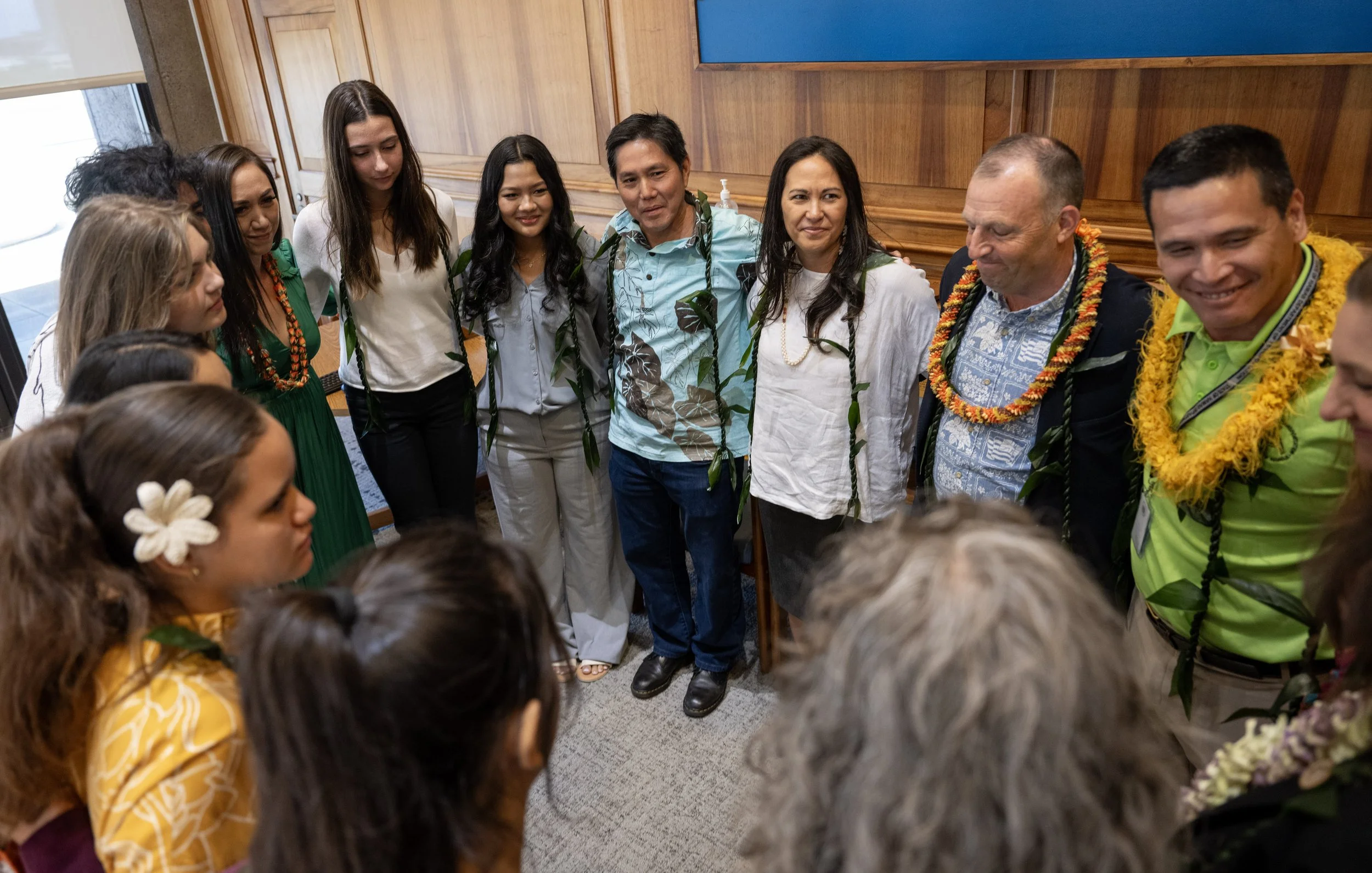
Navahine v. HDOT youth plaintiffs, Our Children’s Trust attorneys, Hawai‘i Governor Josh Green, and HDOT Director Ed Sniffen on the day of they announced the first-of-its-kind Settlement Agreement to decarbonize Hawai‘i’s transportation sector.
One year ago, youth in Hawaiʻi made history. Through Navahine v. HDOT, they secured a first-of-its-kind legal settlement agreement to decarbonize Hawaiʻi’s transportation system by 2045 and protect young people’s constitutional rights to a livable climate. But the fight didn’t end with the legal victory—it was just the beginning.
Following the settlement, Our Children’s Trust and co-counsel, Earthjustice, partnered with the Hawaiʻi Department of Transportation (HDOT) to launch the Hawaiʻi Youth Transportation Council—a groundbreaking model for integrating youth into climate decision-making. The Council, composed of 20 youth ages 12 to 24 from across the islands, is helping shape Hawaiʻi’s transportation future with bold, community-based, and culturally grounded solutions. Four of the youth plaintiffs from Navahine v. HDOT are founding members.
The Council’s inaugural meeting in January 2025 set the tone for their work ahead. Council members began the day by planting native ʻilima, kokiʻo keʻokeʻo, and laʻī in the C.B. Lansing Courtyard—literally rooting their leadership in the land they’re protecting. They met with HDOT Director Ed Sniffen, rode Oʻahu’s public transit system, and began building the frameworks that now guide their quarterly meetings and policy engagement.
Among those continuing to lead the way is Rylee Brooke, a Navahine v. HDOT youth plaintiff and a founding Youth Transportation Council member. In the Q&A below, Rylee reflects on what sparked her passion for advocacy, how youth are shaping climate-safe transportation in Hawaiʻi, and why this moment—one year after the settlement—is only the beginning.
1. What first sparked your interest in advocacy and the climate, and how did you get involved in the Navahine v. HDOT case?
My interest in climate advocacy began with a deep connection to the ʻāina (land). I grew up understanding that our land, ocean, and skies are not separate from us; they are part of who we are as kānaka (people). As I witnessed more frequent wildfires, rising sea levels, and development displacing native ecosystems, I knew I couldn’t stay silent. I joined Navahine v. HDOT because I believed young people needed to stand up and say that our future matters and that our government has a responsibility to protect it. It wasn’t just about roads or emissions; it was about the right to a livable future in the home we love.
2. After securing this historic settlement, what made you decide to continue your climate work by joining the volunteer Youth Transportation Council?
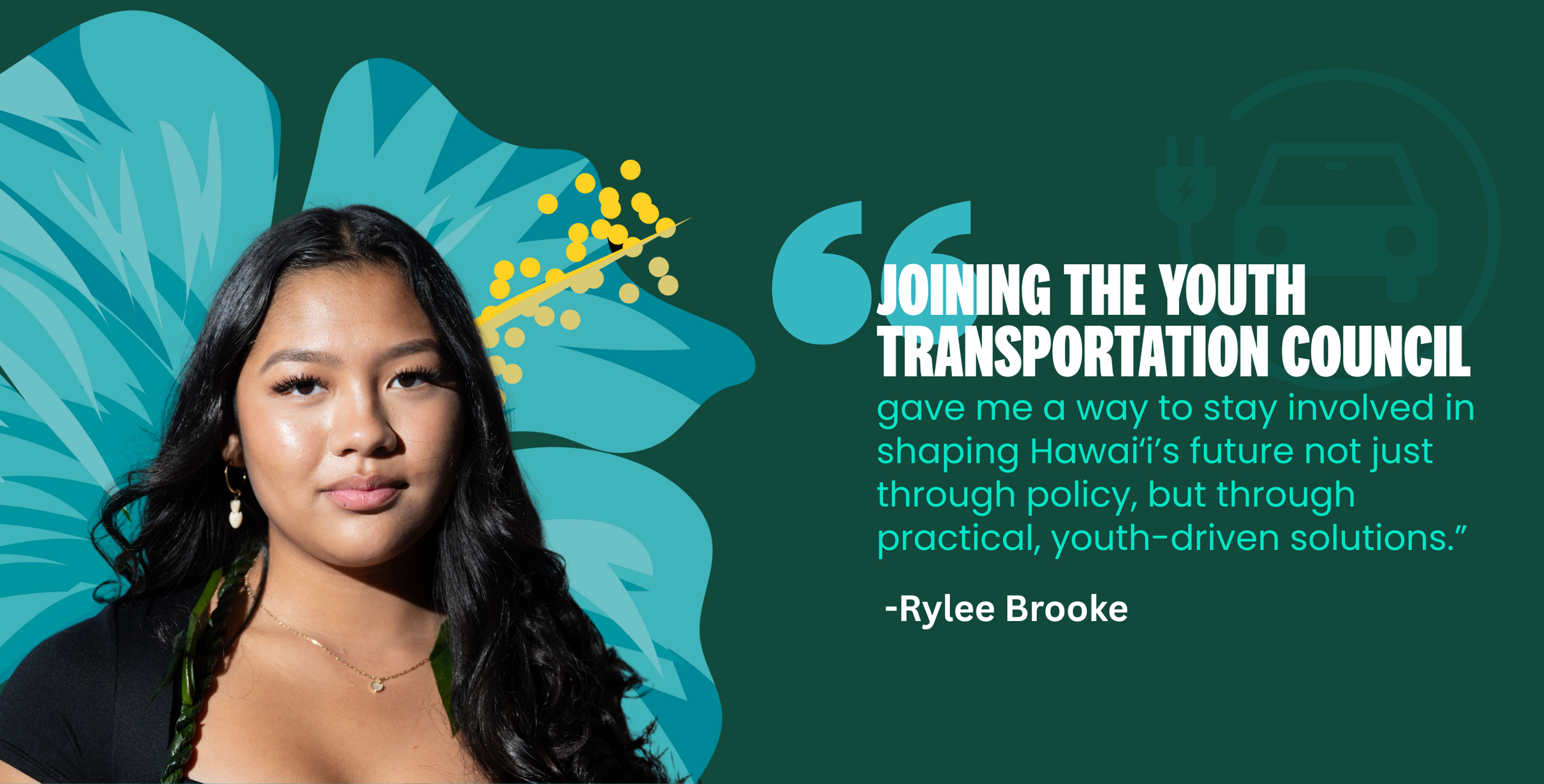
The settlement was a huge step forward, but it was only the beginning. Real change comes from sustained effort, especially from those directly impacted. Joining the Youth Transportation Council gave me a way to stay involved in shaping Hawaiʻi’s future not just through policy, but through practical, youth-driven solutions. I wanted to ensure that the commitments made in our case turned into action, and that youth had a seat at the table when it came to decisions affecting our mobility, our communities, and our planet.
3. What has your experience been like representing your community in the Youth Transportation Council and what have you participated in thus far?
It’s been both empowering and humbling. I’ve had the chance to collaborate with other passionate youth and learn from transportation leaders and community advocates. So far, I’ve contributed to brainstorming sustainable transportation ideas, engaged in site visits, and helped provide youth feedback on upcoming plans.
4. How has living in Hawaiʻi shaped your understanding of transportation challenges and environmental impacts?
Living in Hawaiʻi makes the connection between transportation and environmental harm very real. We see the impacts of over-tourism, congested roads, and dependency on fossil fuels, all while knowing we live on islands with limited space and resources. But we also know the power of community-based solutions, like walkable neighborhoods, bike paths, and accessible bus routes. Our culture teaches us balance and stewardship, and that has shaped how I view both the problems and the solutions.
5. What unique insights do you think young people bring to transportation planning that adults might miss?
Young people experience transportation differently — many of us don’t drive, and we rely heavily on walking, biking, or public transit. We understand the barriers firsthand: safety, access, affordability. We also think long-term because it’s our future on the line. Adults might focus on what’s efficient now. We’re asking, “What will still work 20 years from now?” Plus, we bring creativity and urgency. We’re not afraid to challenge the norm or reimagine what’s possible for the betterment of our future.
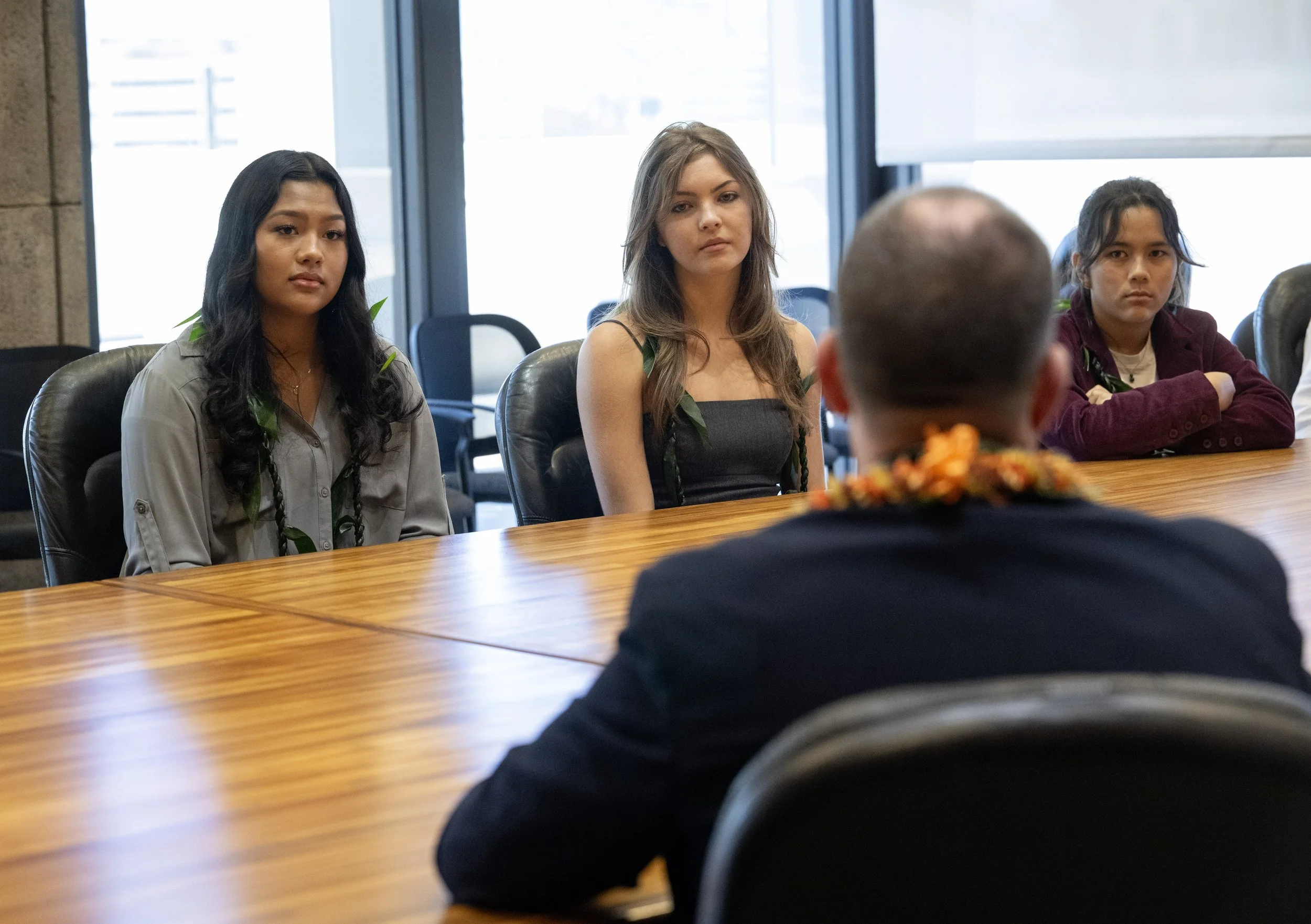
Navahine v. HDOT youth plaintiff Rylee Brooke (left), discussing the Settlement Agreement with Hawai‘i Governor Josh Green and fellow youth plaintiffs.
6. What was it like participating in the planting ceremony with native plants in the C.B. Lansing Courtyard? How did that set the tone for your work?
It was beautiful and grounding. Planting native species felt symbolic, like we were not just talking about change, but planting the seeds for it, literally. It reminded me that climate action is not only about protests and lawsuits; it’s also about restoration, healing, and care for our place. It set a powerful tone of kuleana (responsibility), that we’re here to protect and perpetuate the things that make Hawaiʻi special.
7. What issues or initiatives are you most excited about exploring or advancing through the volunteer Youth Transportation Council?
I’m especially excited about projects that make our communities safer and more connected without relying on cars, like protected bike lanes, reliable public transit, and walkable infrastructure. I’m also passionate about equity: making sure rural areas, Native Hawaiian communities, and those with limited access aren’t left out of progress. I’d love to explore how climate resilience and traditional Hawaiian knowledge can be part of transportation planning, too.
8. What advice would you give to other young people who feel overwhelmed by climate issues but want to make a difference?
Start small, but start somewhere. You don’t need to know everything or do it all at once. Whether it’s joining a local group, speaking up at a meeting, or even starting a conversation at school. Your voice matters. Don’t let fear of being “too young” stop you.
The climate crisis is overwhelming, but we are not powerless. You’re not alone, and when we act together, we build a movement that can’t be ignored.