
One Year Later: Hawaiʻi's Climate Settlement Delivers Transformative Progress
August 1, 2025
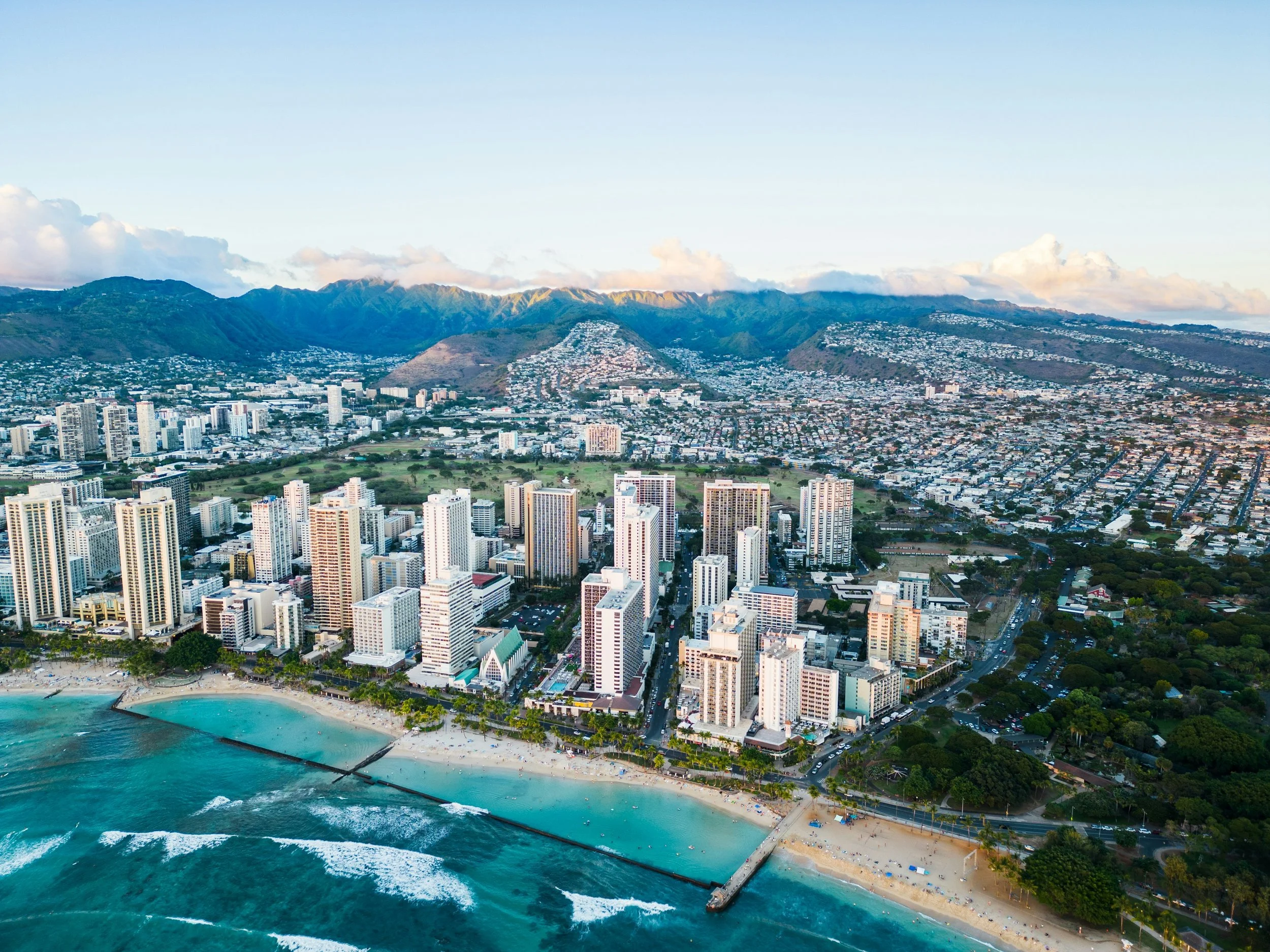
Just over a year ago, a significant moment occurred in Hawaiʻi's climate history. After thirteen youth plaintiffs, represented by Our Children's Trust in partnership with Earthjustice, took the state to the brink of trial in Navahine v. Hawaiʻi Department of Transportation, the Director of HDOT made a crucial decision: to choose collaboration over confrontation. The settlement that followed—the first of its kind in the United States—committed Hawaiʻi to reaching zero emissions from ground, marine, and interisland air travel by 2045.
Twelve months later, the transformation is undeniable and accelerating.
Building Change from the Ground Up
Meaningful climate action starts with people and institutional commitment. HDOT has established three new positions specifically focused on settlement implementation, creating dedicated oversight and direct communication channels with Our Children's Trust, community partners, and the youth advocates who sparked this transformation. This structural investment ensures sustained attention to climate commitments beyond political cycles—and it's already proving to be an integral element of the implementation efforts.
Our Children's Trust helped establish the Hawaiʻi Youth Transportation Council, one of the most innovative approaches to climate policy in the nation, and continues to support its work. This isn't symbolic participation—it's a working advisory body where twenty young people, ages 12 to 24 from across all Hawaiian islands, actively shape infrastructure decisions that will define their futures. Council members provide ongoing guidance on everything from electric vehicle charging network expansion to pedestrian safety improvements and community engagement strategies.
The Council's inaugural meeting on January 3, 2025, beautifully bridged tradition and transformation. Members began by planting native ʻilima, kokiʻo keʻokeʻo, and laʻī—literally rooting their work in Hawaiian soil and culture—before diving into substantive policy discussions with HDOT Director Ed Sniffen. They experienced Oʻahu's public transportation system firsthand and began developing their own governance protocols, setting the stage for meaningful, ongoing influence.
What makes this Council extraordinary is who these young people are. Selected from 83 applications, they represent the full breadth of Hawaiʻi's communities—rural and urban, different islands and backgrounds, ages spanning from middle school to young adults. Crucially, many have lived through the climate impacts they're now working to address: coral bleaching, the devastating Lahaina wildfire, coastal erosion. They bring authentic experience to policy discussions, including their own diverse transportation realities—some rely on public transit, others walk, still others drive the gas-powered cars they hope to help phase out.
The institutional changes extend far beyond youth engagement. HDOT has fundamentally reimagined its project evaluation methodology, now prioritizing multimodal projects that incorporate bicycle, pedestrian, or transit components through enhanced scoring systems. In addition, comprehensive greenhouse gas assessment evaluates all proposed projects, supported by the Project Island Impact Tool—an innovative planning instrument that quantifies emissions across HDOT's entire portfolio.
The shift is profound: infrastructure planning now prioritizes greenhouse gas emissions reductions and community accessibility over single-occupancy vehicle expansion.
Building a Connected Hawaiʻi
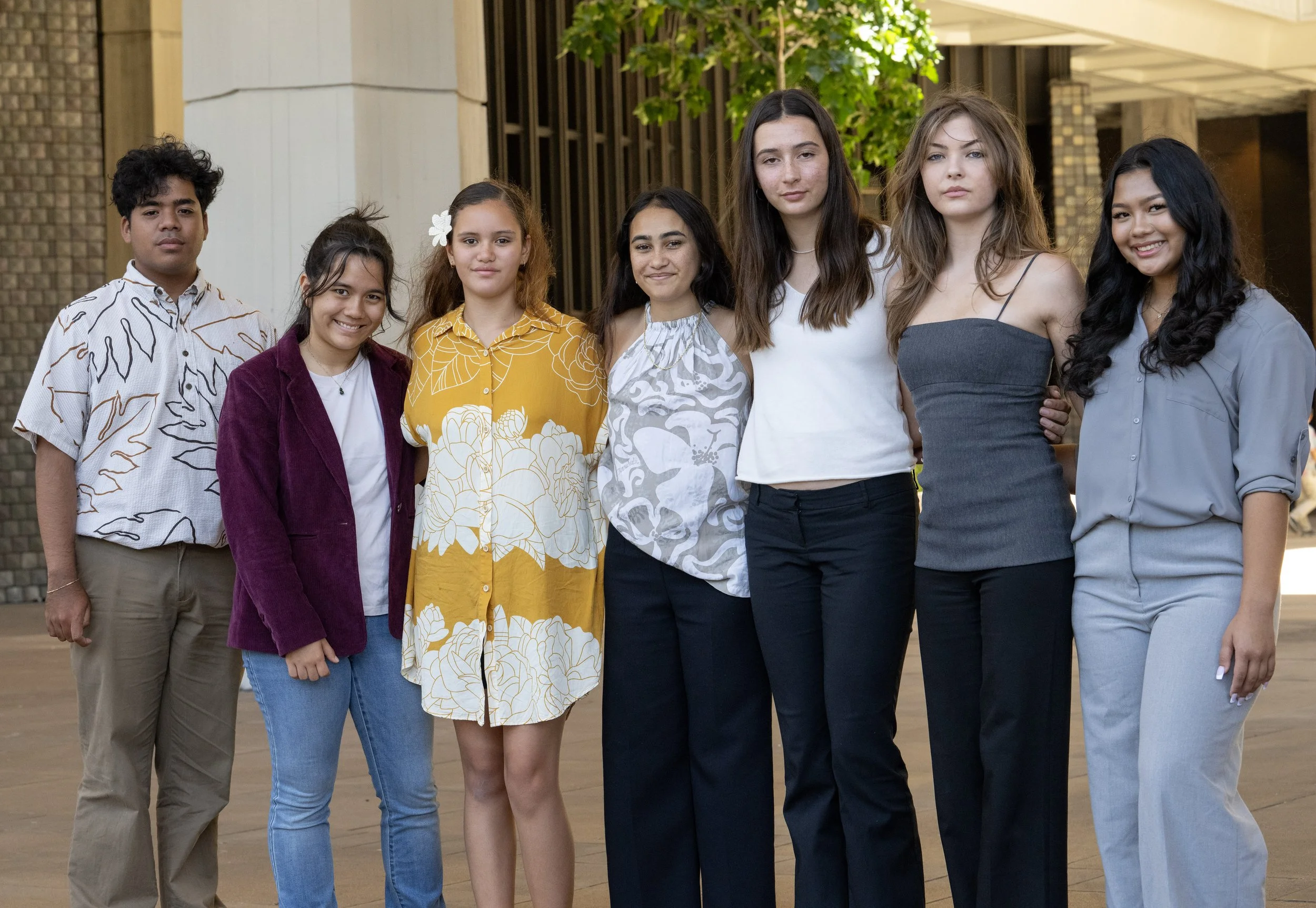
Seven of the thirteen Navahine v. Hawai‘i DOT youth plaintiffs
The settlement's most ambitious infrastructure commitment is not just on track—it's gaining momentum. HDOT has committed to completing an integrated bicycle, pedestrian, and transit network within five years, transforming Hawaiʻi's current fragmented pathway system into a comprehensive transportation alternative that actually serves people's daily needs.
HDOT will soon release detailed plans identifying priority locations for hundreds of miles of new bicycle and pedestrian infrastructure. Through coordination with county governments, the state is ensuring seamless integration between systems—creating connections, not isolated paths.
This tackles both climate goals and equity concerns. When residents have safe, reliable access to bicycle, pedestrian, and transit options for getting to work, school, and daily activities, transportation becomes accessible for people who can't afford or choose not to own cars. At the same time, it reduces the vehicle miles traveled that drive up emissions.
The Roadmap to Zero Emissions
Central to this transformation is HDOT's comprehensive 200-page Energy Security and Waste Reduction Plan, currently open for public comment through August 31, 2025. This blueprint outlines exactly how Hawaiʻi will eliminate transportation emissions by 2045, taking an "all of the above" approach that acknowledges both current realities and future possibilities.
Our Children's Trust has remained deeply engaged throughout the plan's development, meeting directly with HDOT during the drafting process and in partnership with expert analysis from renowned energy, transportation, and climate specialists.
For ground transportation, the plan prioritizes two key strategies: electrification and reducing vehicle miles traveled. The technology for electrifying cars, trucks, and buses already exists, and the plan outlines that rebates, tax incentives, and other programs are needed to accelerate the transition. Meanwhile, expanded bicycle, pedestrian, and transit infrastructure will give people alternatives to driving altogether.
The plan tackles the harder challenges, too. For marine transportation, it envisions a mix of fuels like e-Methanol and green hydrogen. Aviation will rely heavily on sustainable aviation fuel, with an eye toward electrification for short inter-island flights as the technology develops.
However, we have identified areas where the plan needs to go further to achieve true zero emissions, particularly around the continued use of fossil fuel blends, labeled as “clean fuels” in the Plan that fall short of the settlement's ambitious zero emissions goals. We will continue advocating for implementing electrification where possible, including in marine and aviation, and new technology as it becomes available over the next 20 years.
The Economics of Change
Here's what makes this transformation even more compelling: it will save Hawaiʻi residents billions of dollars. In 2024 alone, Hawaiʻi imported 24.3 million barrels of crude oil, creating a staggering $24.7 billion annual burden from ground transportation costs. Nearly $2 billion of that goes to vehicle fuel every year.
Our Children's Trust emphasizes that this economic argument is crucial for building support, particularly in rural and low-income communities where transportation costs consume disproportionate household income. As Hawaiʻi's electricity transitions to renewables by 2045, powering electric vehicles becomes increasingly affordable.
The math is simple: every dollar on fossil fuel imports could stay in Hawaiʻi's economy instead.
What Lies Ahead
The momentum is building, but the work is far from over. HDOT plans to update the emissions plan annually, then every five years as required. A legislative package for the 2026 session will propose new laws needed for full implementation.
Our Children's Trust continues monitoring settlement compliance while advocating for the strongest possible climate action. Meanwhile, a coalition of environmental and community organizations—are actively engaging in the plan's development and implementation.
The public comment period remains open until August 31, giving every Hawaiʻi resident a chance to shape this transformation. HDOT is holding public meetings and stakeholder sessions to ensure community voices are heard.
A Vision Within Reach
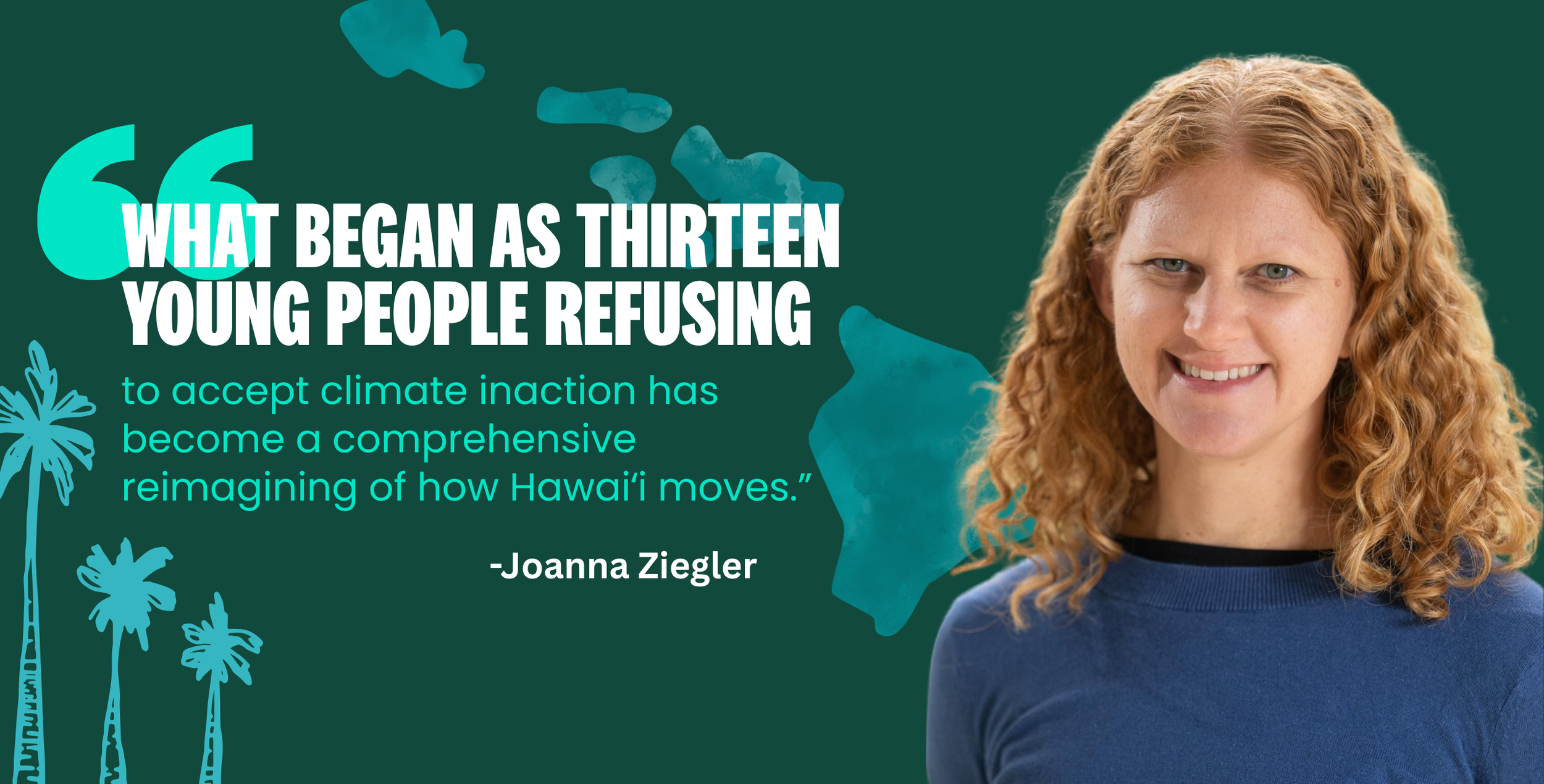
What began as thirteen young people refusing to accept climate inaction has become a comprehensive reimagining of how Hawaiʻi moves. The Navahine settlement proves that strategic legal action, youth leadership, and ongoing advocacy can achieve transformative policy change faster than traditional approaches.
We can envision a Hawaiʻi where clean electricity powers transportation, safe paths connect communities, public transit serves daily needs, and transformative transportation infrastructure becomes the foundation of economic prosperity.
The youth who started this fight knew something adults had forgotten: the future isn't something that happens to us. It's something we build, one policy, one pathway, one bold decision at a time.
Hawaiʻi's transportation transformation proves that when young people demand change and leaders choose collaboration, we can build the world we need.