

An Indigenous Youth’s Journey for Climate Justice in Canada
October 27, 2025
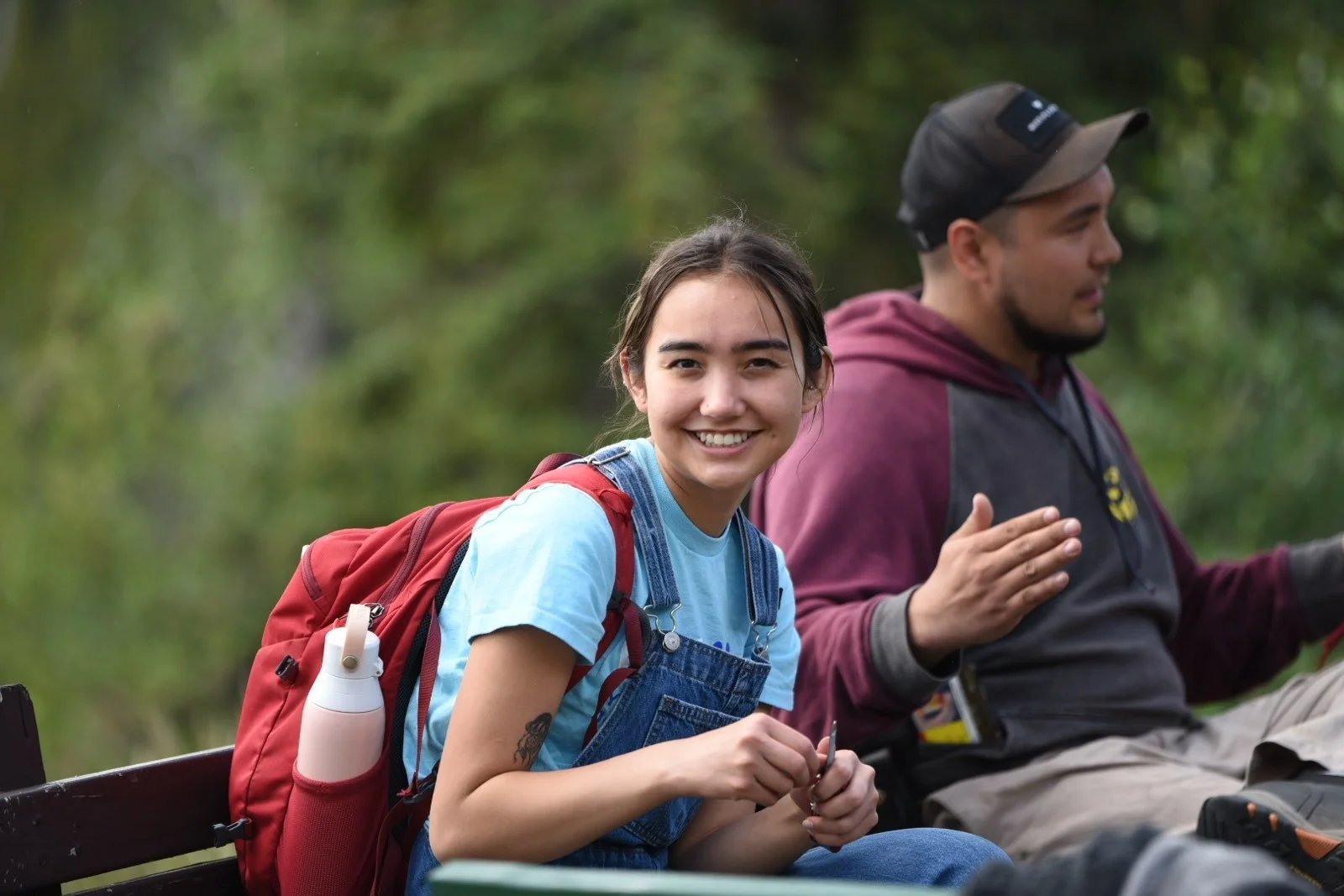
Leandrea, youth plaintiff in La Rose v. His Majesty the King.
For 21-year-old Leandrea, a member of the Taku River Tlingit First Nation who lives in Whitehorse, Yukon, the fight against the climate crisis is personal, physical and cultural.
“Climate change doesn’t just affect our land,” she says. “It affects the ways we live, heal, and connect. The climate crisis is a cultural crisis too.”
In the Yukon, Leandrea has witnessed how the seasons are no longer following their usual patterns. “Where we are in the season now, it should have snowed by now, or it always snows before Halloween night,” she explains. “Usually there’s brisk air leading up to it, but instead it has been wet and rainy the past few weeks, which has gotten dangerous on our highways, causing closures due to black ice.” These shifts affect everything—from the growth of plants, which serve as food, medicine, and cultural resources for Indigenous people, to the wildlife that her community depends on. “It’s hard to think about the future when the land, our caretaker, is changing so quickly,” she says.
In recent years, wildfires have swept through the Yukon, filling the air with toxic smoke that makes her throat and chest ache, and have cut her off from accessing her home and other communities around the Yukon when she travels for work. Flooding has also significantly impacted her community, while prolonged drought and unusual precipitation have disrupted her ability to practice cultural-land-based learning, which is important for her professional and cultural wellbeing.
“The land is where our teachings, medicines, and ways of living come from,” she explains. “When I say the land is at the center of who I am, I mean that it’s part of my identity and the person I’m still becoming as I reconnect with my culture.”
For Leandrea, the land is more than a place. “The land is our biggest educator—it’s where our stories, food, and language come from,” she says.
“The land is where our teachings, medicines, and ways of living come from,” she explains. “When I say the land is at the center of who I am, I mean that it’s part of my identity and the person I’m still becoming as I reconnect with my culture. My hope is that our knowledge and practices don’t get lost to climate change and that these practices continue to get passed down to younger generations. The land is our biggest educator—it’s where our stories, food, and language come from.”
But with each passing year, that connection grows more fragile. Extreme weather events aren’t just destroying the landscape and buildings where she lives; they’re also making it harder to fish, gather, and practice traditional ways of living, instilling deep questions about the future and whether to have children.
A Voice from the Yukon
Leandrea, who is represented by lawyers at Arvay Finlay and Tollefson Law Corporation, joined La Rose v. His Majesty the King after a former educator informed her about the case. Supported by Our Children’s Trust, West Coast Environmental Law, and the Pacific Centre for Environmental Law and Litigation, the landmark youth-led lawsuit argues that the Canadian government’s ongoing promotion of fossil fuels and failure to adequately address the climate crisis violate young people’s rights to life, liberty, and security of the person under Section 7 of the Canadian Charter of Rights and Freedoms.
“I joined because I was honored to be a part of such an important conversation,” says Leandrea. “I feel like having a voice from the Yukon is important as well. We have such a deep Indigenous culture here, and our knowledge about caring for the land is so valuable.”
As a Taku River Tlingit First Nation young person, Leandrea believes that Indigenous teachings hold vital lessons for Canada’s climate future. “As an Indigenous person, climate change directly impacts our cultural practices,” she explains. “Our ways of caring for the land have existed for thousands of years. Our core value is a deep respect for the land—we never take more than we need, we show our gratitude and give thanks. Taking care of the land is essential to our cultural survival. We are part of an interconnected ecosystem; humans, animals, and plants all work together. I can’t succeed if the land doesn’t succeed.”
In December 2023, Canada’s Federal Court of Appeals unanimously ruled that the La Rose youth deserve a trial. The court recognized that their arguments raise fundamental questions about whether Canada is fulfilling its constitutional duty to protect children’s rights in the face of the climate emergency. The case will now proceed to an 8-week trial, beginning October 26, 2026, in Vancouver, BC.
Leandrea sees the courtroom as a place to make visible what is often ignored: the cultural and spiritual dimensions of climate harm. “I want them to understand that protecting the land also means protecting culture too—our identities, our ways of life, and our future generations. Our stories, language, and teachings all come from the land.”
Looking ahead to the trial, she says she’s most excited to be heard and to connect with others. “I’m excited that our stories and experiences may be the spark of inspiration for change.”
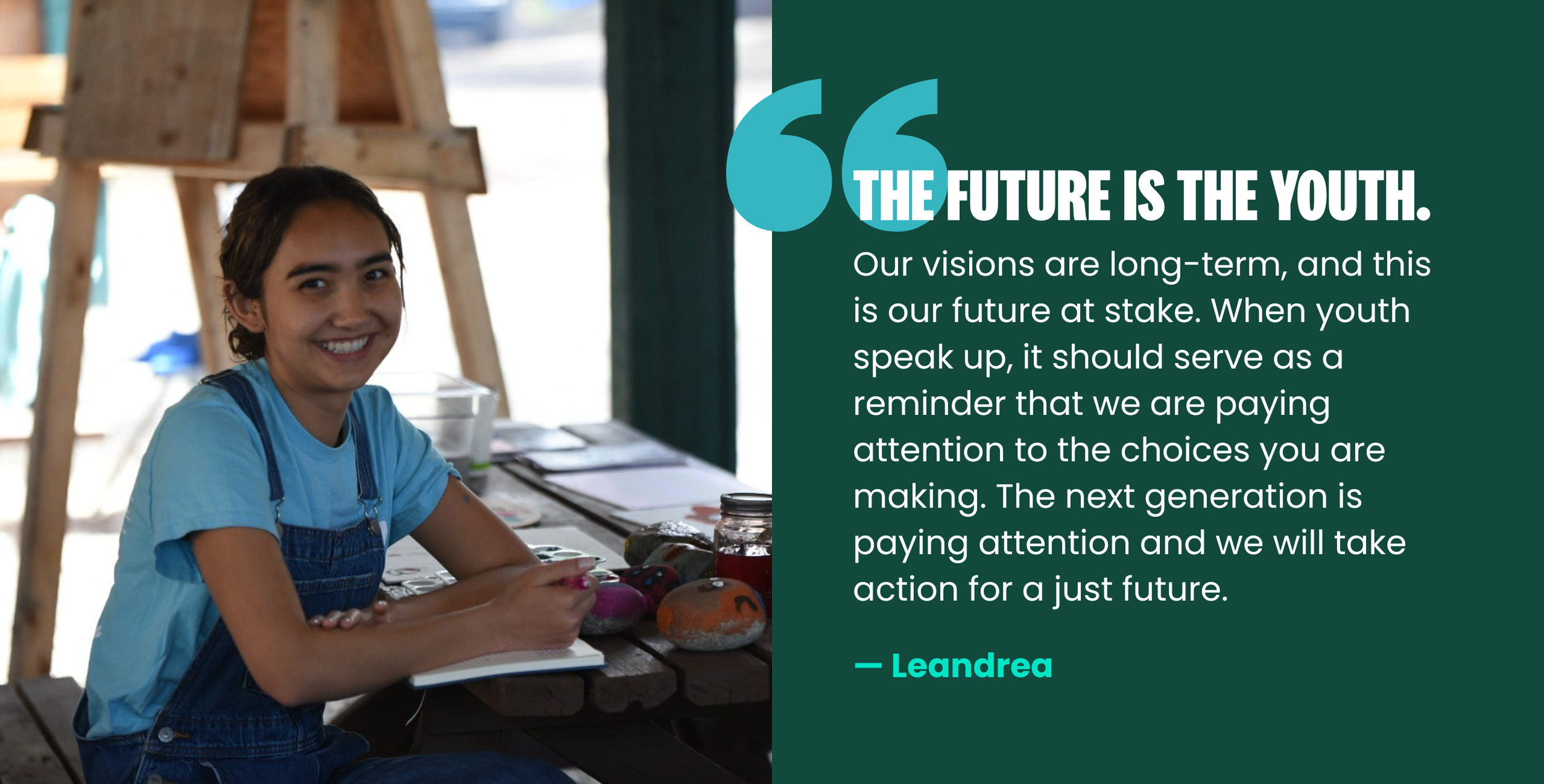
She believes that youth, who are inheriting a planet in crisis, bring a moral clarity and urgency that adults often overlook. “The future is the youth. Our visions are long-term, and this is our future at stake. When youth speak up, it should serve as a reminder that we are paying attention to the choices you are making. The next generation is paying attention and we will take action for a just future.”
Strength in Solidarity
Through it all, the support surrounding Leandrea keeps her grounded and hopeful. “It means everything,” she says. “It gives me the courage to use my voice and knowledge, knowing that I am not alone in this, and that people care about protecting what we ALL depend on. The amount of support strengthens my hope.”
“It’s easy to feel small in such a big world,” she adds, “but your voice matters. It’s your most powerful tool—and together, our voices create the strength for change.”
For Leandrea, climate justice is not just about reducing emissions; it’s about protecting the living relationship between people and the land, between ancestors and future generations. It’s about ensuring that Indigenous knowledge, stories, and ways of life continue to thrive on a planet capable of sustaining them.