

Wisconsin Youth Take Bold Legal Action for Climate Justice and Constitutional Rights
October 15, 2025
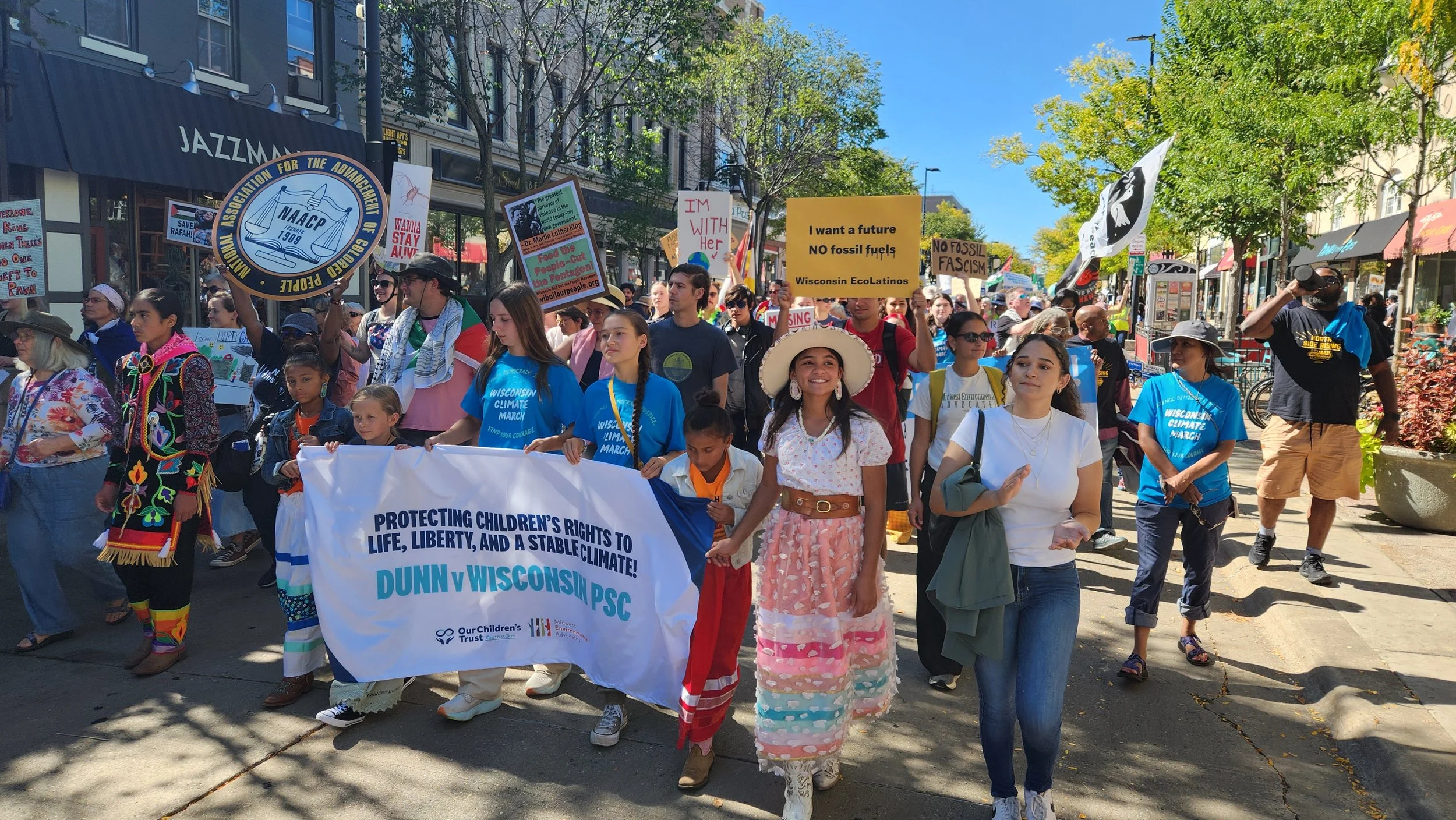
Youth plaintiffs in Dunn v. Wisconsin PSC at the Wisconsin Climate March on September 28, 2025, in Madison. Photo courtesy of Midwest Environmental Advocates.
Children across the U.S. are growing up on the frontlines of the climate crisis—losing their homes to wildfires, storms, and floods, while their health is put at risk and rights are violated by their own governments. Unable to vote, 15 children from across Wisconsin are standing up to change that, taking legal action to protect their constitutional rights to life, liberty, and a stable climate system.
In Dunn v. Wisconsin Public Service Commission, the young plaintiffs challenge state laws that ban regulators from considering air pollution and climate impacts when approving fossil fuel power plants—even as those same plants contribute to the floods, heat waves, and air pollution these young people already face.
"I didn't cause climate change, but I'm growing up with the consequences," says Kaarina, 17-year-old youth plaintiff from La Crosse County. "These laws force the government to ignore science and pollution. That's wrong and unconstitutional."
At the heart of the case are Wisconsin’s energy laws that prioritize fossil fuels and block meaningful climate action. The young plaintiffs are challenging current state statutes that prohibit the Public Service Commission (PSC) from considering air pollution or climate impacts when deciding whether to approve new fossil fuel power plants. These statutes also cap the amount of renewable energy the PSC can require Wisconsin utilities to bring online. Wind and solar are now the most affordable forms of energy.
These laws have real consequences; they entrench a fossil fuel-dominated energy system, even as Wisconsin has pledged to achieve 100% clean electricity by 2050. Today, approximately 75% of the state’s power still comes from fossil fuels, and that’s due to the PSC continuing to rubber-stamp gas-fired power plants without assessing their climate harm.
Confronted with a legal system that prioritizes fossil fuels over their futures, the young plaintiffs have turned to the Wisconsin Constitution, asserting that both the PSC and legislature are violating their obligations to protect the state’s natural resources and the health and safety of young people.
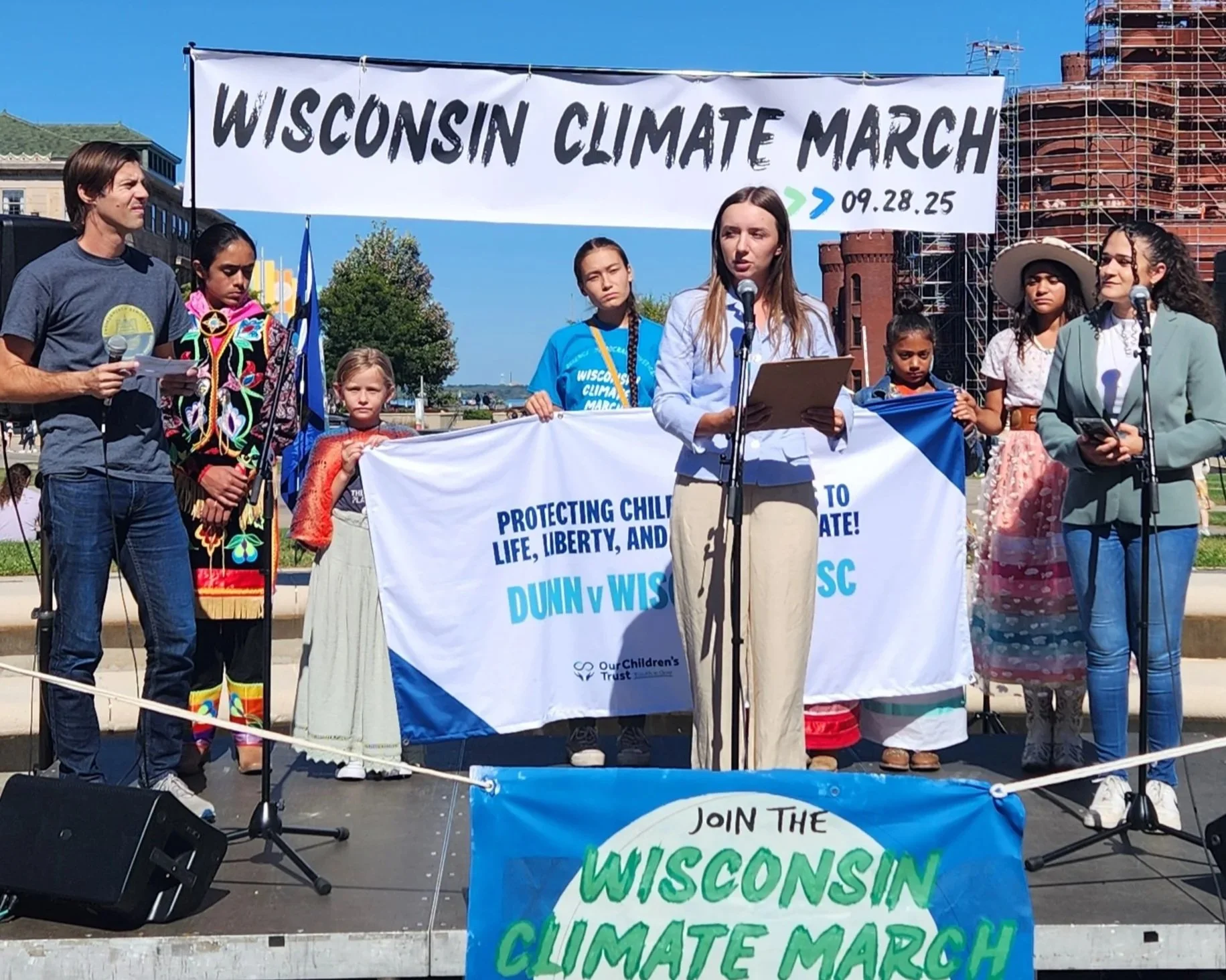
Youth plaintiff Kaarina speaking to a crowd at the Wisconsin Climate March on September 28, 2025. Photo courtesy of Midwest Environmental Advocates.
Article 1, Section 1: Rights to Life, Liberty, and the Pursuit of Happiness
The plaintiffs argue these laws harm their health, safety, personal security, and bodily integrity—all protected under this provision. They also assert an inherent right to a stable climate system, similar to rights recently recognized by courts in Montana and Hawaii.
Article IX, Section 1: The Public Trust Doctrine
Under Wisconsin’s Constitution, the state holds a duty to protect public resources, including the state’s waters, for current and future generations. This doctrine requires the government to prevent substantial impairment and environmental degradation, and climate change is already worsening droughts, flooding, and toxic algal blooms across Wisconsin’s rivers and lakes.
"The Wisconsin Constitution is clear: the state must protect our waters for all people, not just industries," explains Tony Wilkin Gibart, Executive Director of Midwest Environmental Advocates and co-counsel on the case.
Personal Stories of Impact
A Home Lost to Climate Change
For Kaarina, climate change isn't abstract. Climate-driven freeze-thaw cycles dislodged a massive boulder from the bluff above her childhood home. The boulder tumbled down, clearing trees and land, making her home unsafe. Her family was forced to move nearly an hour away, changing school districts and uprooting her entire childhood.
"I wished to live in that home forever," Kaarina recalls. "I wanted to bring my children back to this amazing home overlooking the Mississippi River."
Each summer, Kaarina lives in fear of the next 100-year flood. Last summer, her family couldn't access their dock on the Mississippi River until July because of extreme flooding. Even her beloved activities have changed—as an avid tennis player, she now schedules around extreme heat and wildfire smoke. Her high school ski season has been cut from 8-9 weeks to just five weeks as Wisconsin winters warm.
Watching Winter Traditions Disappear
Lucy, 17, from Wausau has skied her entire life, as has her family for generations. She loves the American Birkebeiner—the "Birkie"—a massive ski race and festival that for Lucy is "like Christmas" because of the joy and community it brings. But in recent years, even in northern Wisconsin, the Birkie has been canceled or shortened because there's no guarantee of snow.
Traditional Foods at Risk
Waazakone and her siblings, who are Anishinaabeg, and members of MinoAki, have spoken about impacts on traditional foods and medicines they depend on. Cold water fisheries are disappearing in Wisconsin, and it's unclear whether they'll be able to fish walleye into adulthood as their ancestors have done for generations.
“Our people are the caretakers of Aki (Earth). Today, our future and the health of Aki are in danger due to climate adaptations and lack of government controls and regulations to ensure that clean water and air are human rights,” said Waazakone. “If we do not act today, the future for the next 7 generations will be dismal.”
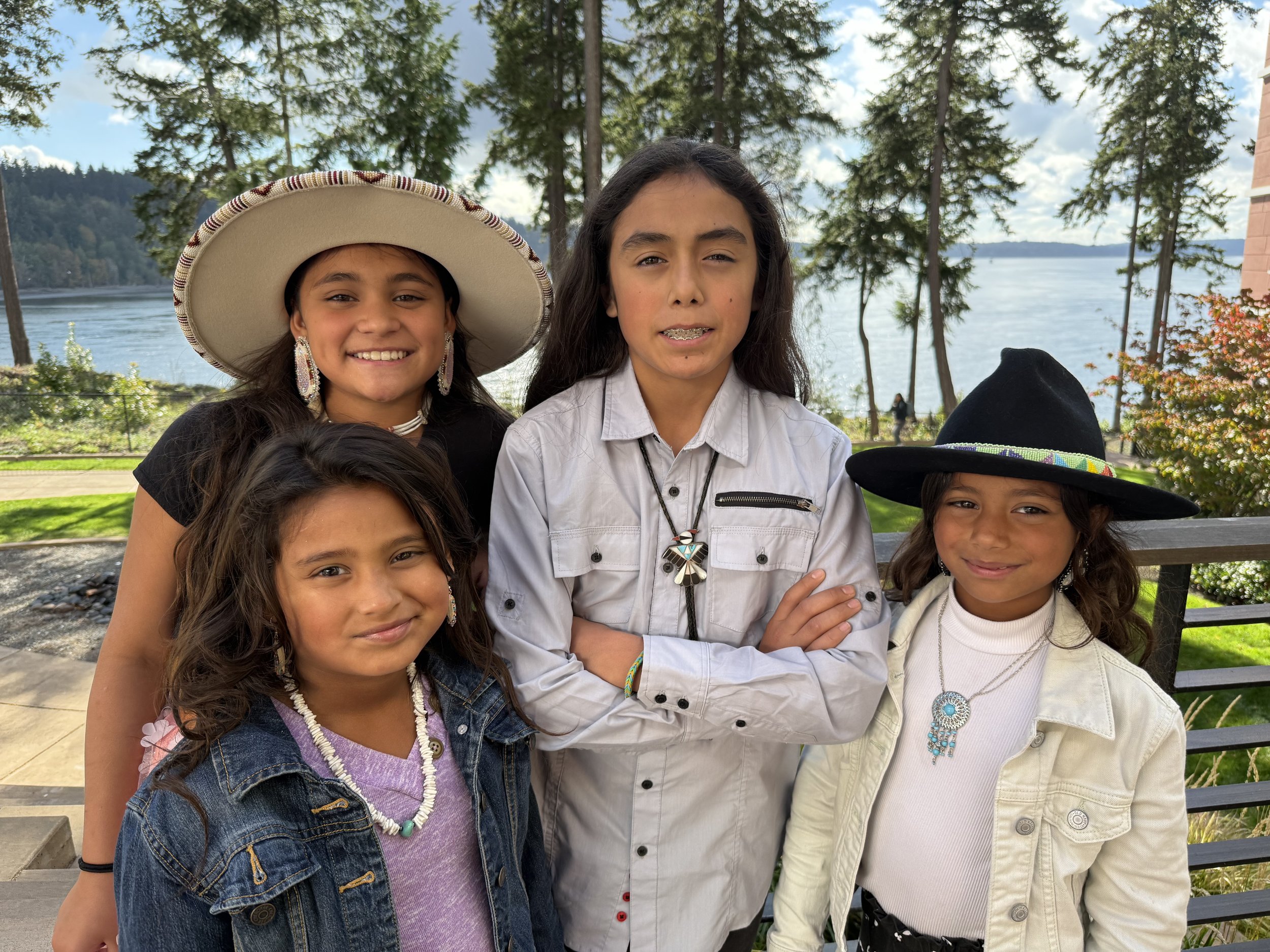
Youth plaintiff Waazakone (back left) and her siblings, also plaintiffs in Dunn v. Wisconsin PSC. Photo courtesy of Waazakone.
Farm Families Face Extreme Weather
Ted and Charlie come from Wisconsin farming families. They've watched extreme rain events and drought damage their families' farms. Now they and their families question whether they can carry on Wisconsin's farming tradition in the face of a rapidly changing climate—made worse by their own state pumping more greenhouse gas emissions into the atmosphere.
The Health Crisis
Dr. Jonathan Patz, a leading expert on climate and health at UW-Madison and former health co-chair for the first U.S. National Climate Assessment, testified at a recent community webinar about the lawsuit. His message was clear: climate change is a public health emergency, and children are especially vulnerable.
The risks begin before birth. Pregnant women exposed to extreme heat face increased risk of preterm birth, stillbirth, congenital anomalies, and low birth weight. Children are particularly sensitive to wildfire smoke, with fine particulate matter being 10 times more harmful to young children ages zero to five. Wisconsin has experienced increasingly severe wildfire smoke, with Madison and Milwaukee reaching "very unhealthy" air quality levels.
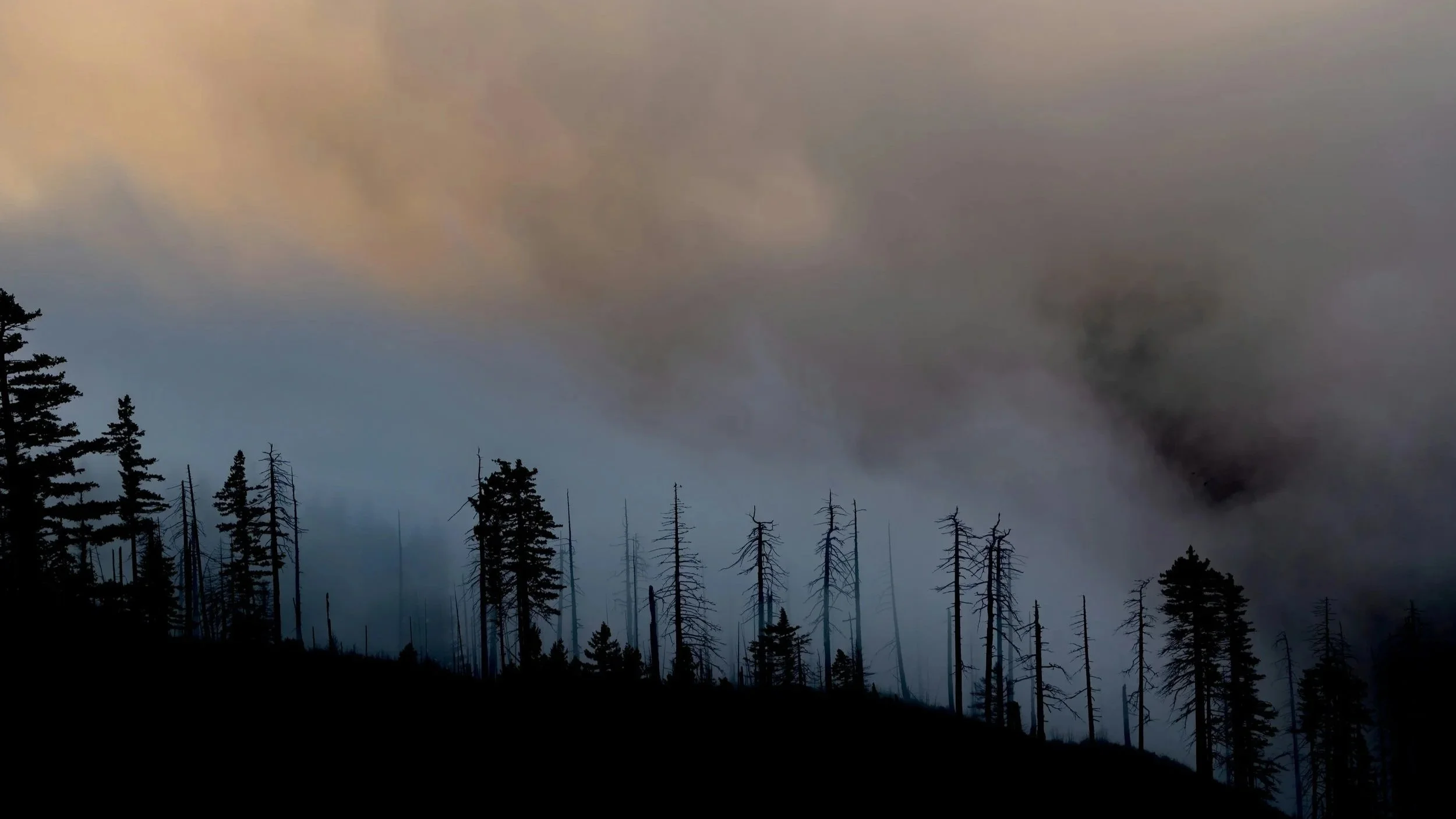
Thick wildfire smoke blanketing the sky. Photo by Chris LeBoutillier on Unsplash.
Other health impacts include impaired learning from extreme heat, extended ragweed pollen seasons (two weeks longer), waterborne diseases from extreme rainfall contaminating wells, and mental health impacts including anxiety and trauma from ecological loss. Many of the youth plaintiffs live with health conditions connected to climate change, including asthma and Lyme disease.
"You can't just build a power plant without considering the environmental and health costs," Dr. Patz emphasizes. "That is paramount to going forward." But Dr. Patz also highlighted the opportunity: If Wisconsin transitioned to in-state clean energy, the state would save almost 2,000 lives every year, prevent tens of thousands of asthma attacks, and avoid hundreds of heart attacks—along with billions in healthcare costs.
Healthcare professionals across Wisconsin have mobilized through Healthy Climate Wisconsin, an organization of doctors, nurses, and other health professionals advocating before the PSC.
Skylar Harris, attorney and climate justice fellow at Midwest Environmental Advocates, explains what communities are already telling the PSC: "A major portion of public comments includes concerns about air pollution and climate change. But because of the statutory prohibition, the PSC is basically throwing these concerns by the wayside. The PSC has cited these laws in several decisions saying, We would have listened to you community members, but here is a statute that prohibits us from doing so.
Why Sue the Government?
Nate Bellinger, supervising staff attorney at Our Children's Trust and lead attorney on the case explains: "Everything that fossil fuel companies are doing to build power plants, they are doing with permits from the government. If the government stopped issuing those permits and stopped encouraging the development of fossil fuels, none of those companies would be able to build those projects."
Rather than playing "whack-a-mole" with individual projects, the legal team is seeking systemic change by challenging the laws themselves. By tying remedies to constitutional rights, they aim to create durable protections that can't be undone when political administrations change.
The Economics of Clean Energy
Wind, solar, and battery technologies are now cheaper than fossil fuels. Yet Wisconsin laws prevent the PSC from requiring utilities to invest beyond a minimal 10% renewable energy target.
Wisconsin sends approximately $14 billion annually out of state for fossil fuels. Meanwhile, transitioning to clean energy could generate $68 billion in health savings, create thousands of jobs, and help the state meet its commitment to decarbonize the electricity sector by 2050.
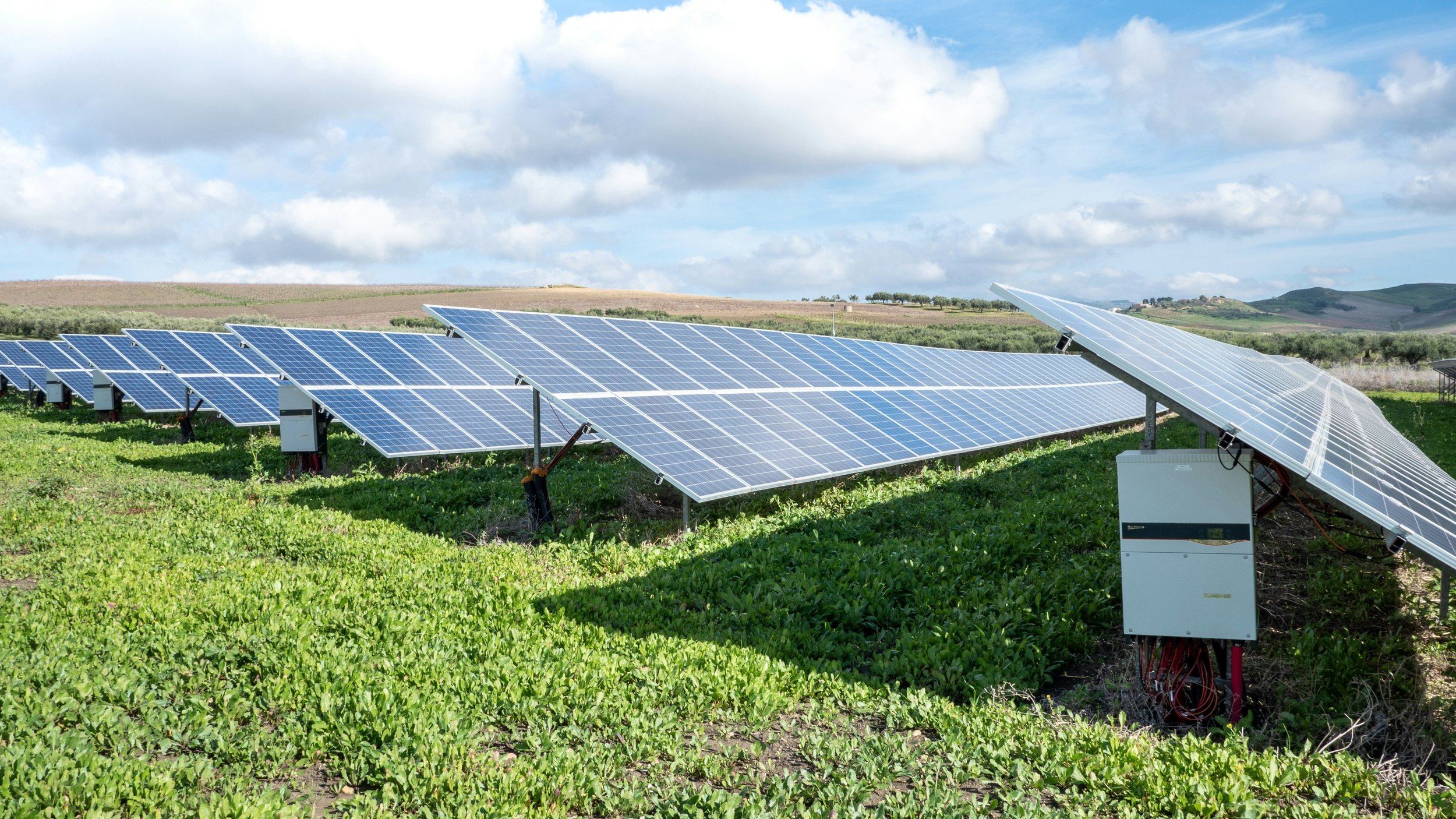
Solar panels producing clean, renewable energy. Photo by Sungrow EMEA on Unsplash.
What Victory Would Mean
If the plaintiffs prevail, the court would:
Declare the challenged statutes unconstitutional under the Wisconsin Constitution
Prohibit the PSC from enforcing those statutes, restoring its ability to consider air pollution and climate impacts
Affirm youth constitutional rights to a stable climate system and to use and enjoy Wisconsin's waterways
These fifteen young Wisconsinites—artists, tribal citizens, athletes, climate organizers, students, and scientists-in-training—are united by a shared demand for a livable future. They're not asking for special treatment. They're asking Wisconsin to honor the constitutional promises it has already made: to protect life, liberty, and the waters that sustain all Wisconsinites—now and for generations to come.
How to Support
Stay informed: Sign up for updates at midwestadvocates.org and ourchildrenstrust.org
Spread awareness: Share information about the case through your networks
Show up: Attend hearings and key decision points
Amplify youth voices: Support young climate leaders in your community
Watch the webinar to hear from youth plaintiff Kaarina, the legal team, and Dr. Patz.