
From the Courtroom to the Council: Rylee Brooke's Story
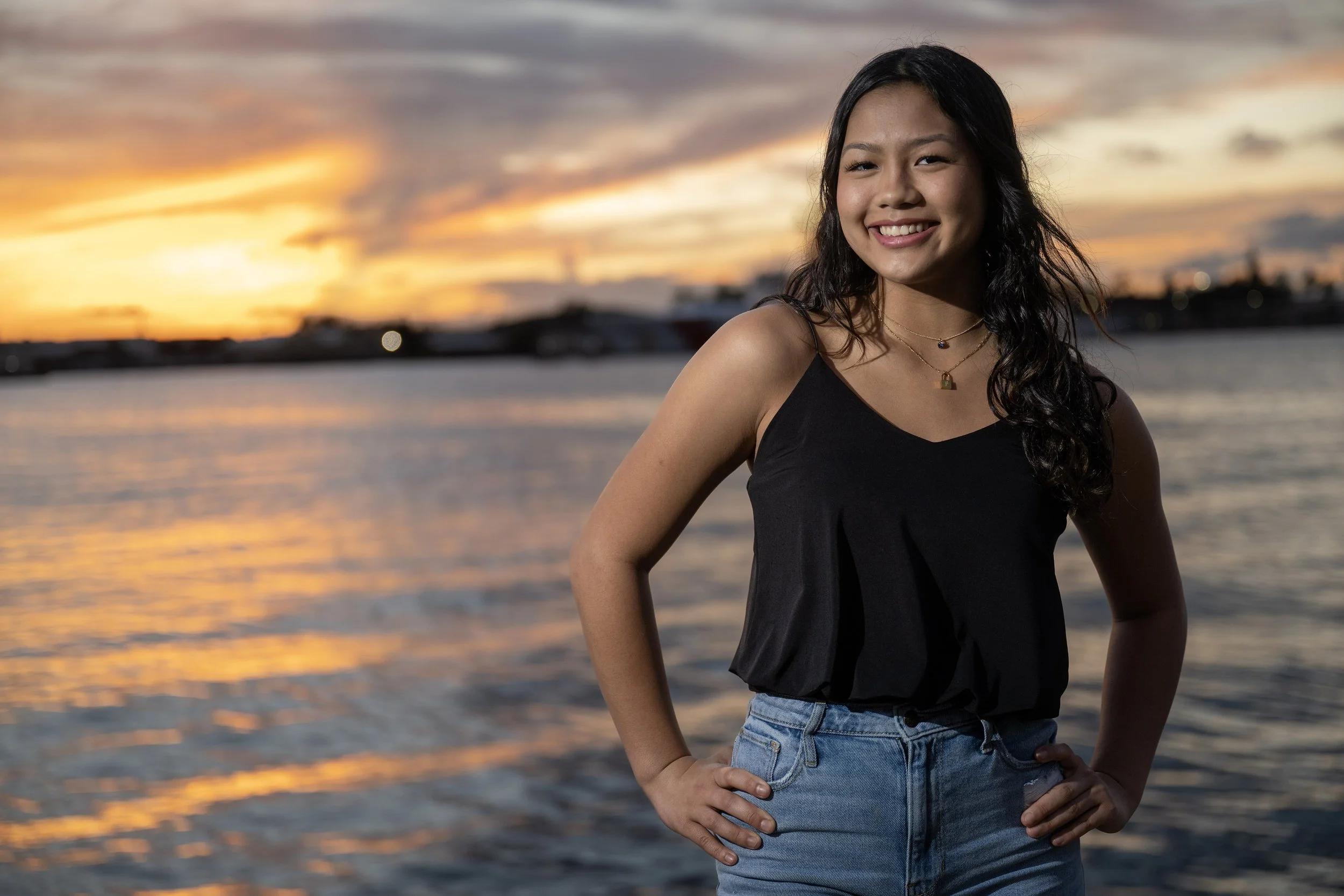
Navahine v. HDOT youth plaintiff Rylee Brooke. Photo by Robin Loznak.
June 18, 2026
By Rylee Brooke
I was 7 years old when my mom and I found a Hawaiian green sea turtle wrapped in fishing line on the beach.
I started crying. I wanted to help, but because the turtle was an endangered species, there were laws about how close we could get. My mom called NOAA, and they sent people out to help detangle the turtle from the line.
The crisis was over, but now a question was bouncing around in my head: Why was there even a fishing line in the water? You’re supposed to catch a fish and take your line, so why is it in the ocean, threatening wildlife?
I went on a deep dive researching plastic pollution, and from there I learned about the climate crisis.
I couldn’t sit back. I started signing my mom and me up for beach cleanups. I’d write it on the calendar and wake her up early so we could drive across O’ahu to participate. I had all of this energy and passion, and I knew this was my purpose: to make a difference.
My parents taught me to not just treat the symptoms of a problem, but to get to the roots. And so when I learned about the Navahine case, I knew that’s what this was. We would address the deeper issues at stake.
Navahine v. Hawai’i Department of Transportation (HDOT) is a youth-led constitutional climate case brought by 13 young people all across the state of Hawai’i, including myself. We argued that the way the state is planning and operating the transportation system is leading to increased greenhouse gas emissions and contributing to climate change, violating our constitutional right to a clean and healthful environment and our state’s public trust doctrine.
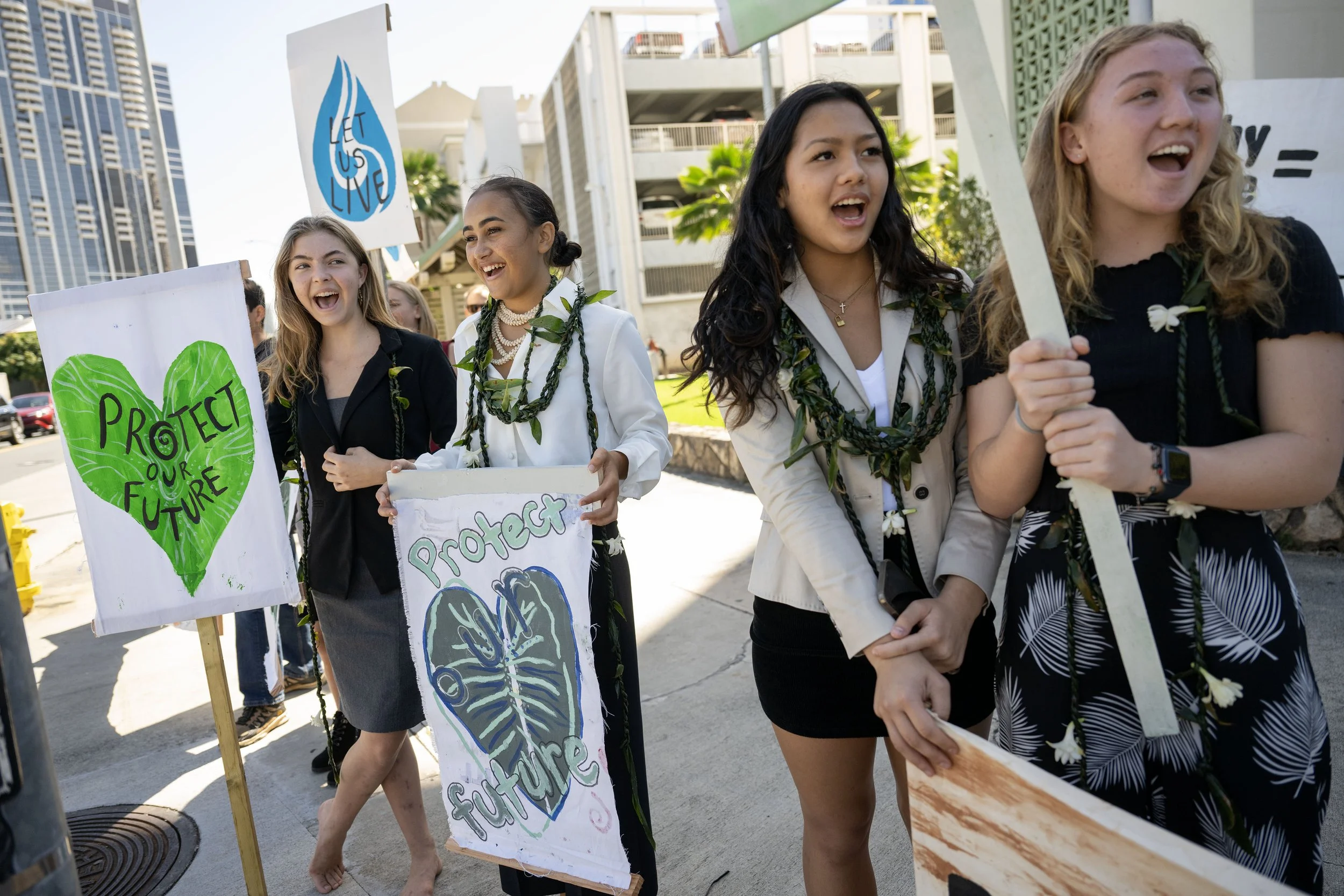
Rylee Brooke and her fellow youth plaintiffs at a rally in Honolulu, Hawai‘i. Photo by Robin Loznak.
I joined the case when I was 14, around the same time I got diagnosed with a degenerative disease called Ehlers-Danlos syndrome, which means my body produces defective collagen. Collagen affects so much in your body, so this one disease led to more diagnoses.
One is mast cell activation syndrome. During heat waves and cold fronts, I’d wake up in the night covered in hives, which would turn into welts and allergic reactions. Once a wildfire in Mililani made it so I couldn’t even go outside and ash fell into our yard. I wasn’t just seeing the effects of climate change: my body was physically reacting to it.
Before Navahine, I had no clue I had a right to a clean and healthful environment. All along it wasn’t just my preference for clean beaches, land, and air: it was my constitutional right.
Despite my passion and desire to see the world become a better place, the truth is no kid wants to go to trial and testify against their own government. We had a hearing once, and all the plaintiffs came for it. The dinner the night before was so fun, we were cracking up the whole time. But the hearing itself was long. Our legs went numb from sitting so long, and the lawyers kept using big words they’d have to explain to us afterward.
None of us were looking forward to trial. But we were ready for it. We knew what we were doing was right.
So when we got on a Zoom call with the lawyers to talk about the possibility of a settlement, all of our faces looked the same: worried. To me, settling sounded like getting less. It felt like a compromise.
But what came back wasn’t a compromise. It was everything we asked for. HDOT listened to our concerns and what the case was really about, protecting youth and future generations from the impacts we are already experiencing. I remember the wave of emotion: excitement, relief, gratitude, and undeniable hope.
We celebrated on the lawn of ‘lolani Palace, right next to the state capitol, with my fellow plaintiffs, our legal team, HDOT, and community members who showed up to be part of it. People gave us leis and flowers. They told us they’d been watching from afar and appreciated us. Standing there, surrounded by all of that support, I finally understood how many people had been rooting for us the whole time.
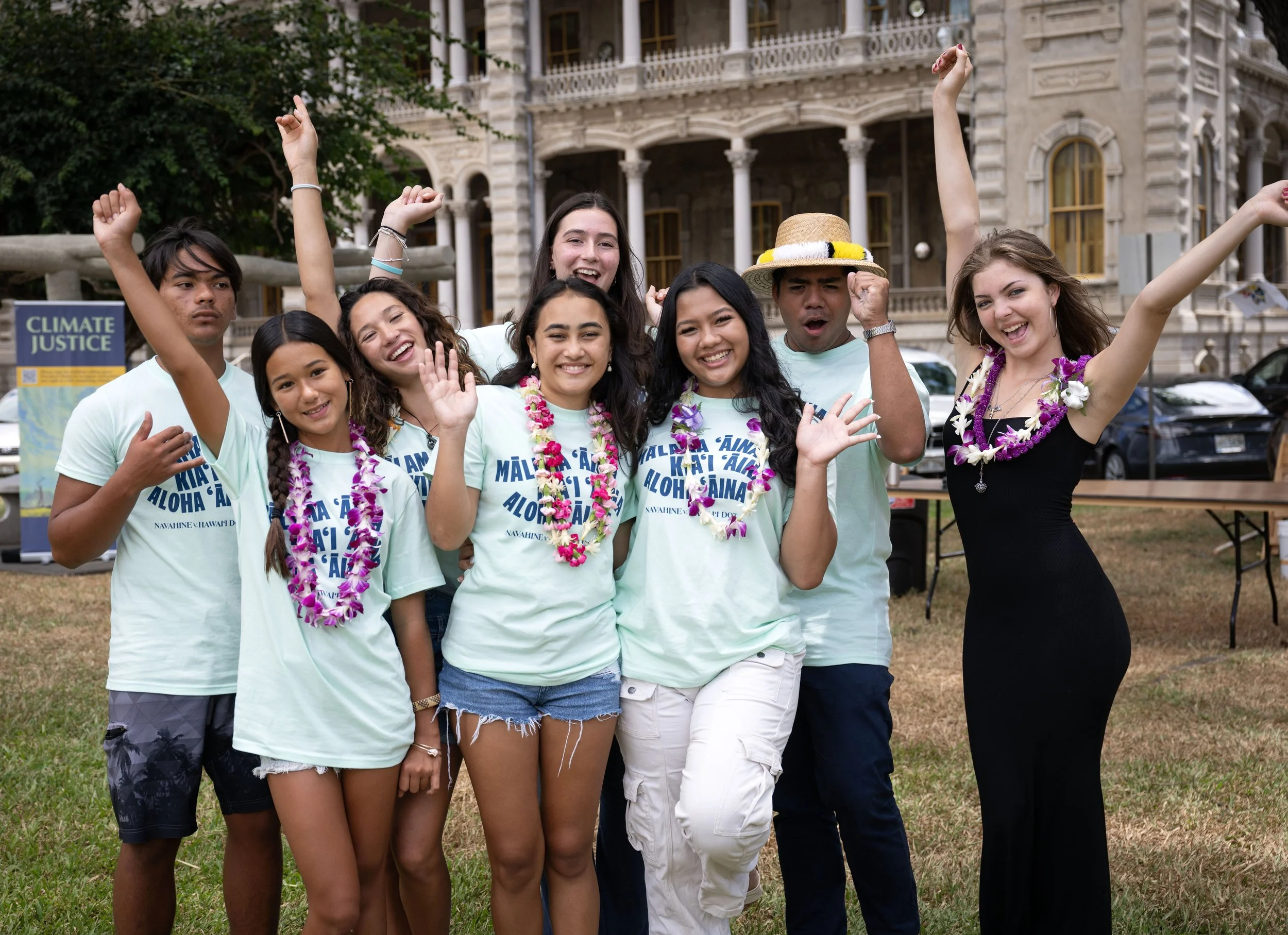
Navahine v. HDOT youth plaintiffs at the celebration in Honolulu, Hawai‘i in June 2024. Photo by Robin Loznak.
But that wasn’t the end.
Included in the settlement was the formation of a Youth Transportation Council that would advise HDOT during the progress of the settlement. Kids were going to be advising adults on issues that carried weight. It was what I’d fought for for so long.
When I was 8, I started an organization called Love is a Verb Foundation to connect young people who wanted to take action with local nonprofits that needed volunteers. But so many people didn’t want to work with kids. They thought working with us would be like babysitting. So I built the partnerships myself, one at a time.
I’d show up, work hard, and eventually say, “Hey, can my friend come? She’s like me, and we can do great work for your organization.” I had to prove over and over that we really cared and that we could make a real difference.
That’s why what happened next felt so surreal. Adults from a major state agency sitting in a room telling us, “We want your input. You’re the next generation and we want to hear what you have to say.”
I applied and was accepted to be on the inaugural council, which I served on for two years.
It felt like a turning point. As youth, we weren’t just getting to use our voice. We were being brought into the room where these huge issues were being worked on: as partners, not just as observers or people affected by government actions.
HDOT’s commitment under the settlement is zero emissions in transportation by 2045. And I believe we have the resources and the brain power to get there.
As I reflect on Navahine, I want people to remember that this is more than a legal settlement. It was young people standing up for the future and using tools available to them to create this change.
I want them to remember that youth voices matter, that constitutional rights matter, and that meaningful progress is possible when communities come together around a shared vision.
I want people to remember how young people aren't just future leaders; we're capable of being leaders now.
As told to Emily F. Miller