
Two Years Later: Hawaiʻi’s Climate Settlement Moves from Vision to Implementation
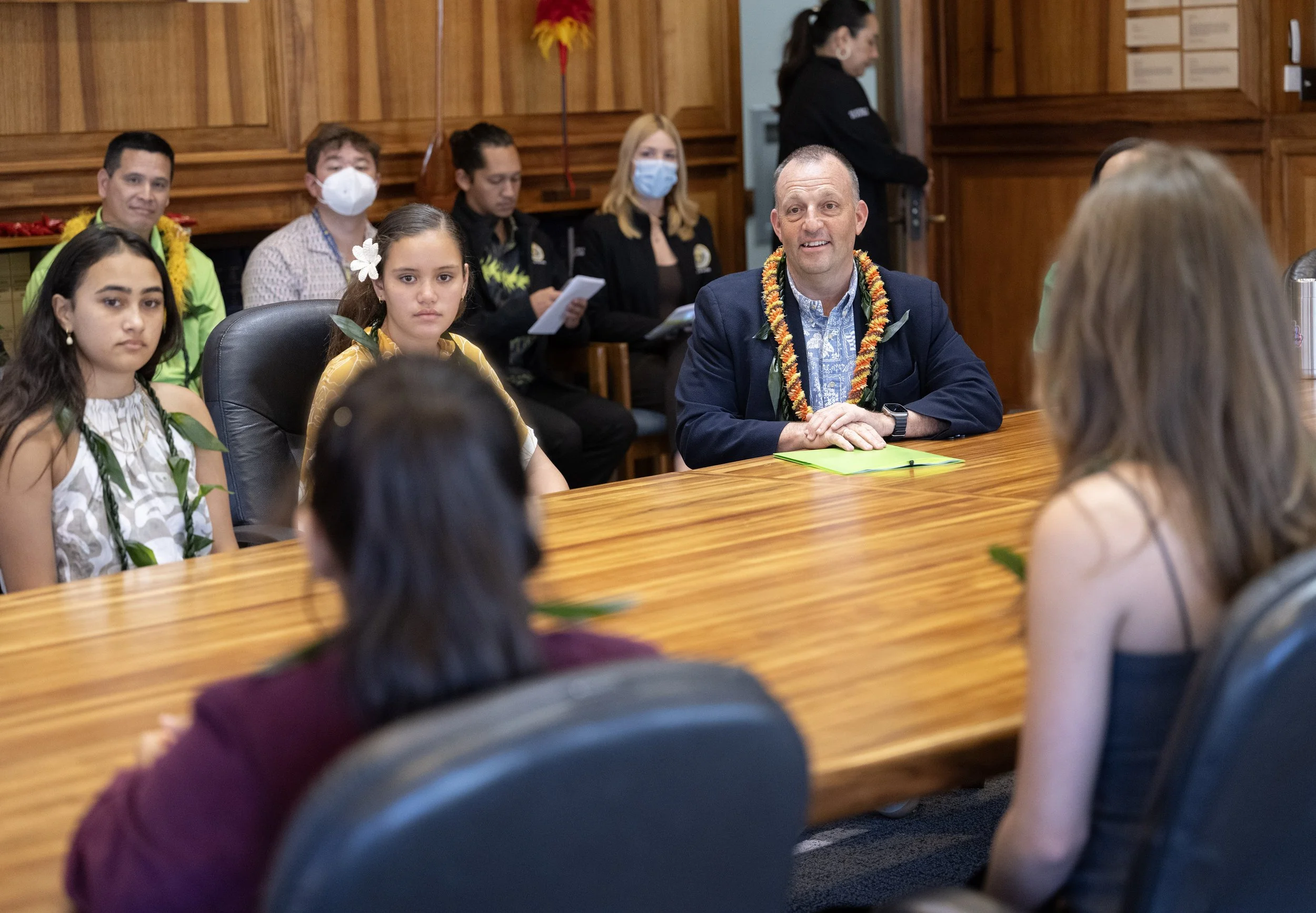
Hawai‘i Governor Josh Green and Navahine v. HDOT youth plaintiffs discussing the first-of-its-kind settlement agreement in June 2024. Photo by Robin Loznak.
June 17, 2026
By Doorae Shin
Two years ago, thirteen youth plaintiffs, represented by Our Children’s Trust and Earthjustice, brought the state to the brink of trial in Navahine v. Hawaiʻi Department of Transportation (HDOT). Ultimately, the Director of HDOT chose collaboration over confrontation. The settlement that followed was the first of its kind in the United States, committing Hawaiʻi to reaching zero emissions from ground, marine, and interisland air travel by 2045.
If year one was about laying the foundation, year two has been about building on it. The plans, tools, and partnerships that were just taking shape twelve months ago are now growing and shaping real decisions across the state.
Plans Become Permanent
A year ago, HDOT’s Energy Security and Waste Reduction Plan was a 200-page draft. Today it is final. Through six public meetings and input from the Navahine plaintiffs, community members, businesses, and government partners, HDOT listened to feedback, revised the document, and turned it into a final Plan. Ideas people shared helped shape the plan, showing community engagement isn’t just aspirational: it’s crucial. With the Plan in place, Hawaiʻi now has a blueprint identifying all of the strategies needed to reach zero transportation emissions.
Our Children’s Trust and Earthjustice have remained engaged throughout the process, meeting with HDOT staff on a regular basis, and we continue to advocate to strengthen areas of the Plan that can go further. We know the key strategies to prioritize for decarbonization include transitioning to electric vehicles and expanding transportation options for everyone, including expanding transit and bicycle and pedestrian infrastructure. We will continue to push for this type of transportation planning momentum as the central focus in the coming years. HDOT is now in the process of identifying the near-term strategies that must be implemented over the next five years to ensure long-term success.
A Transportation Network Takes Shape
One of the settlement’s biggest commitments is building a connected network of bike lanes, sidewalks, and transit. HDOT held four public meetings on the Priority Multimodal Network to hear from communities about what this network should look like and where investments should be made. Counties across Hawai’i are working together to ensure connections between systems are seamless.
When people have safe, reliable, and connected ways to get to work, school, and daily life without a car, transportation becomes accessible and affordable to people regardless of income, and emissions decline in meaningful ways, resulting in cleaner air for the people of Hawaii.
New Tools for Accountability
One of the year’s quieter but most consequential developments is the launch of HDOT’s PIʻI (Project Island Impact) Tool. The PIʻI tool lets HDOT and applicants to the State Transportation Improvement Program estimate the greenhouse gas emissions and vehicle-miles-traveled impacts of ground transportation projects before they’re built. Emissions accounting that was a promise in the settlement is now a working tool embedded in how projects are evaluated. While there are still some kinks that need to be worked out with the PIʻI Tool, it is an important first step to being able to assess impacts and prioritize projects that result in real and verifiable emissions reductions.
Alongside it, HDOT has launched its Energy Security, Community & Culture Portal, a single hub compiling the Network, the Plan, the Youth Transportation Council, and HDOT’s other Navahine Settlement implementation efforts. It now lives permanently on HDOT’s homepage, becoming a part of how the agency operates day-to-day.
Youth Still at the Wheel
The Hawaiʻi Youth Transportation Council is one of the most innovative approaches to climate action in the nation. The inaugural council members completed their first term this year. That first cohort built the Council from the ground up: establishing its foundational documents and processes, learning the ins and outs of Hawaiʻi’s transportation systems, advising HDOT on the Energy Security and Waste Reduction Plan, identifying sustainable transportation priorities to champion, and bringing a local youth perspective into countless meetings and decisions.
Representing youth ages 11-24 with diverse representation from across the Hawaiian islands, the Navahine plaintiffs who sparked this settlement made sure other youth voices continue to be represented. Now youth have a standing role in the decisions that follow and a permanent seat at the table.
Taking the Settlement to the Capitol
Implementation also involves ensuring state law reflects and supports the transition to zero emissions, including the funding needed to make the settlement commitments a reality. During this legislative session, a coalition of advocates and youth prioritized three bills that support transportation emissions reductions:
The Hawaiʻi Clean Vehicle Rebate Program (HB2030 / SB2691) would have made electric vehicles (EVs) more accessible to working families. This revenue-neutral program was designed to leverage modest fees on expensive new gas cars to fund rebates on affordable EVs. With 81% of new car sales needing to be electric by 2030 to meet HDOT’s plan projections, and only 14% electric today, the gap is urgent. This type of program has proven successful in dozens of other nations and can fill the need for EV incentives as all other EV consumer incentives have expired in Hawaiʻi.
Keiki Ride Free (SB2699 / HB1879) would have established universal free transit for all youth ages 0–18 on county bus and rail systems, cutting household costs while building the ridership and reducing single-occupancy vehicle trips. This bill was championed by the Hawaiʻi Youth Transportation Council’s Policy & Legislation Committee.
EV Charging Infrastructure (HB1620 / SB2905) would have added ten cents per barrel of imported oil to fund the existing EV charging rebate program, expanding access for renters, condo residents, and rural and lower-income communities. Hawaiʻi leads the nation in EV adoption but lags severely in charging availability. This bill provides a small investment with outsized impact.
None of these three priority bills passed, illustrating the need for further work with legislators so they understand their own constitutional obligations to protect youth from the harmful emissions coming from state transportation. Each bill moved through multiple committees, drew strong hearings, and generated hundreds of supporting testimonies including many youth telling legislators directly that they are paying attention to how the state prioritizes their future. Their testimony matters. We’ll spend the interim educating legislators about these bills and the state’s commitments under the settlement, and we’ll be back stronger next session.
Growing Capacity and Planting Trees
HDOT’s Energy Security and Community Outreach office was formed as a direct result of the Navahine Settlement, now with full-time staff and interns to support the work. The office plans to expand hiring for more positions this and next year, doubling their capacity by the end of 2027.
The settlement also committed the agency to plant at least 1,000 trees per year. In the first year, they surpassed this commitment by 300%. HDOT is tracking these efforts on its HDOT Native Planting Efforts page.
What Lies Ahead
Two years in, the pattern is clear: this settlement is not just a document that was entered and forgotten. It is generating plans, tools, councils, budgets, culture shifts and a legislative agenda that will keep returning until the policies match the promises. HDOT continues its work implementing the settlement, the Plan will be updated on a regular cycle and near-term priorities identified, and Our Children’s Trust and Earthjustice will keep monitoring compliance while pushing for the strongest possible climate action.
What began as thirteen young people refusing to accept a transportation system that harmed them has become a working model of how a state actually decarbonizes its transportation system: one plan, one pathway, one bold decision at a time. The future isn’t something that happens to Hawaiʻi’s keiki. It’s something they’re building in partnership with government agencies, legislators, and key stakeholders across the state.