

“They desire a better country”
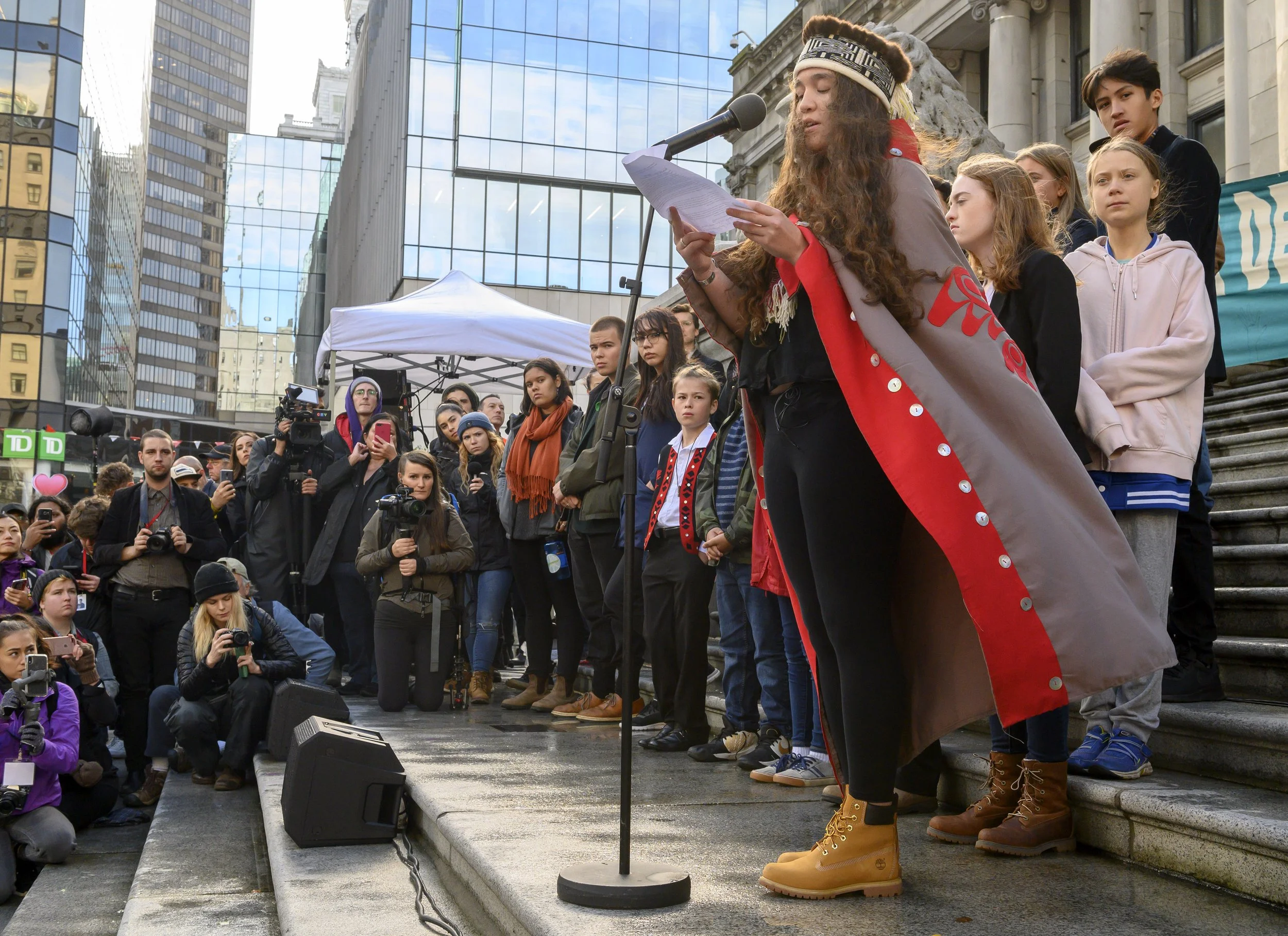
Youth plaintiffs in La Rose v. His Majesty the King speaking at a climate rally in Canada in 2019. Photo by Robin Loznak.
July 22, 2026
The Crown of Canada can bestow on worthy Canadians the Order of Canada (Ordre du Canada au français), which has the motto “Desiderantes meliorem patriam” or “They desire a better country.” I think this motto exemplifies the Canadian plaintiffs in La Rose v. His Majesty the King. The La Rose plaintiffs desire a better country and are suing His Majesty because Canada’s government has shown no such desire in its actions.
Canada likes to talk a big green talk, having goals of net-zero emissions of greenhouse gases by 2050 within its borders. Achieving such a goal is crucial to stop global warming, and Canada has put forward interim targets for 2030 and 2035 on the path to 2050. Sounds commendable, right? But that’s where this praise ends. In reality, Canada walks a poisonous sticky tar sands walk. You see, Canada’s dirty little secret is that it wants to, on paper, achieve an emissions goal that looks good to the public, but it also wants to continue expanding fossil fuel production by selling its fossil fuels to the world.
First, we should be clear that Canada is far off track from achieving its own interim greenhouse emissions targets on its path to net-zero in 2050. Climate Action Tracker, an international group that analyzes the climate plans and policies of nations, finds that Canada’s policies and actions are “highly insufficient.” This means that Canada will not achieve their proposed greenhouse gas emission reductions for 2030 and 2035. Furthermore, Climate Action Tracker concludes that those 2030 and 2035 targets, which Canada won’t meet, were too small to begin with for reaching net-zero greenhouse gas emissions by 2050. So, the plans on paper behind the green talk aren’t even good enough to achieve the green talk.
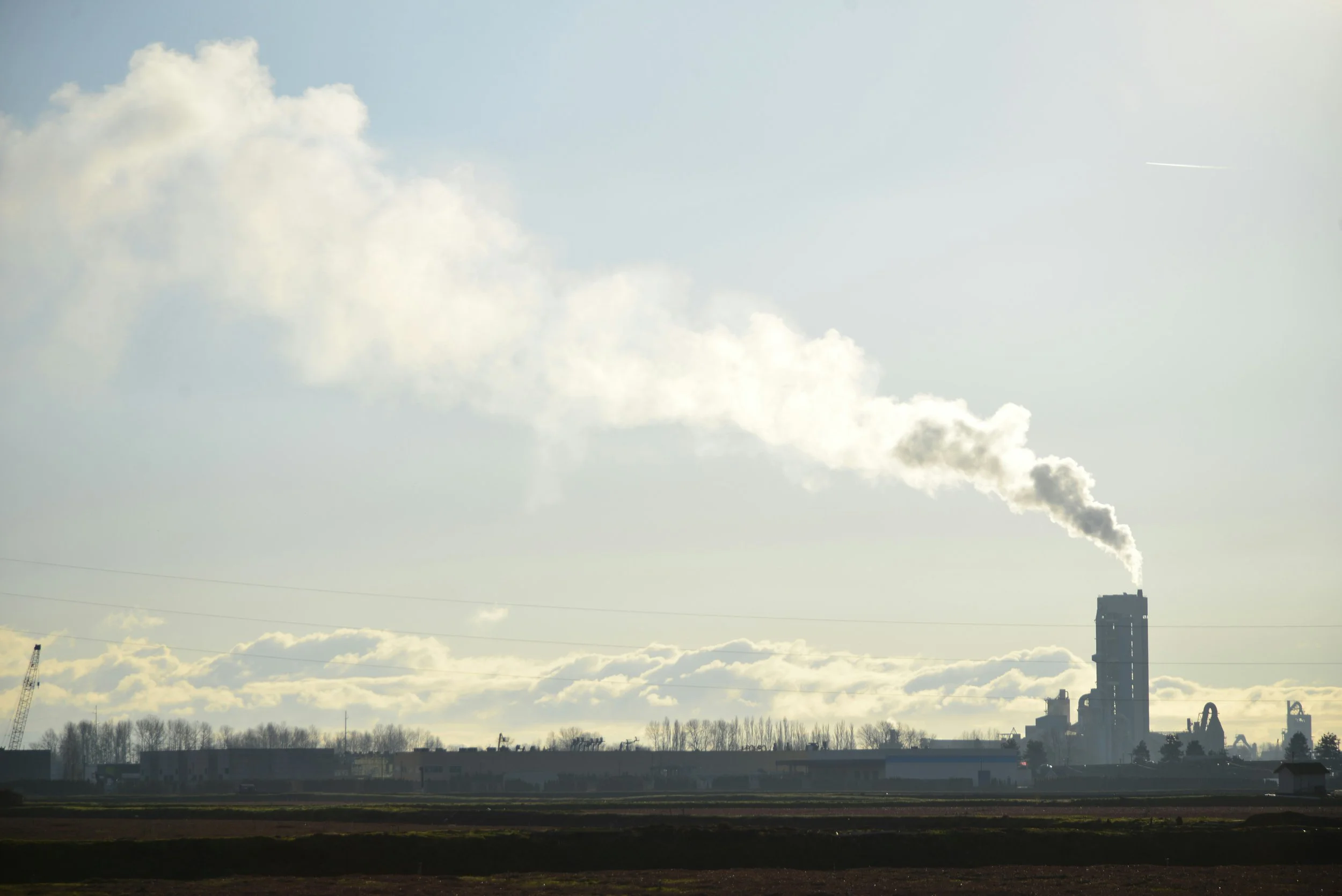
Emissions from a fossil fuel plant in Delta, British Columbia, Canada.
Second, Canada seems to have forgotten that climate change doesn’t really care where the fossil fuels are combusted because the emitted carbon dioxide impacts every part of the planet. This includes Canada, the last time I checked. Buried within Canada’s plans to reach net-zero greenhouse gas emissions by 2050 are Canada’s plans to extract and sell fossil fuels through 2050. Canada won’t let protecting the lives and well-being of Canadians get in the way of making money for the fossil fuel industry.
For the first emissions reduction target coming up in 2030, Canada wants to increase fossil fuel extraction relative to now. These 2030 extracted fossil fuels, when combusted, would emit 1.3 billion tons of carbon dioxide. 1.3 billion tons is 75% larger than Canada’s emissions of fossil carbon dioxide within its own border. 1.3 billion tons is also larger than the entire fossil carbon dioxide emissions of South America. And it only gets worse.
Between 2025 and 2050, Canada’s planned total emissions from its extracted fossil fuels are a whopping 29.4 billion metric tons of carbon dioxide. This is an average extraction emission that Canada is responsible for of about 1.1 billion metric tons of carbon dioxide a year. In fact, if Canada’s average annual extraction emissions through 2050 were a country, that country would rank fifth in the world behind only China, the United States, India, and Russia in terms of fossil carbon dioxide emissions. That is not emissions reduction, that’s emissions production!
Probably the most telling point about how unserious Canada is on stopping global warming are Canada’s plans for 2050. In 2050 when Canada has a domestic legal target of net zero emissions of greenhouse gases within its borders, they still intend to sell fossil fuels that would emit 850 million metric tons of carbon dioxide when combusted. But if Canada is selling this stuff, how can the world also achieve a similar global net-zero emissions 2050 target? Canada’s literal climate plan is to undermine the global goal of stopping global warming all the while Canada says it has a plan to stop global warming. I think a follow up to Joseph Heller’s Catch 22 should be written called Catch 22 Two: The Canadian Conundrum.
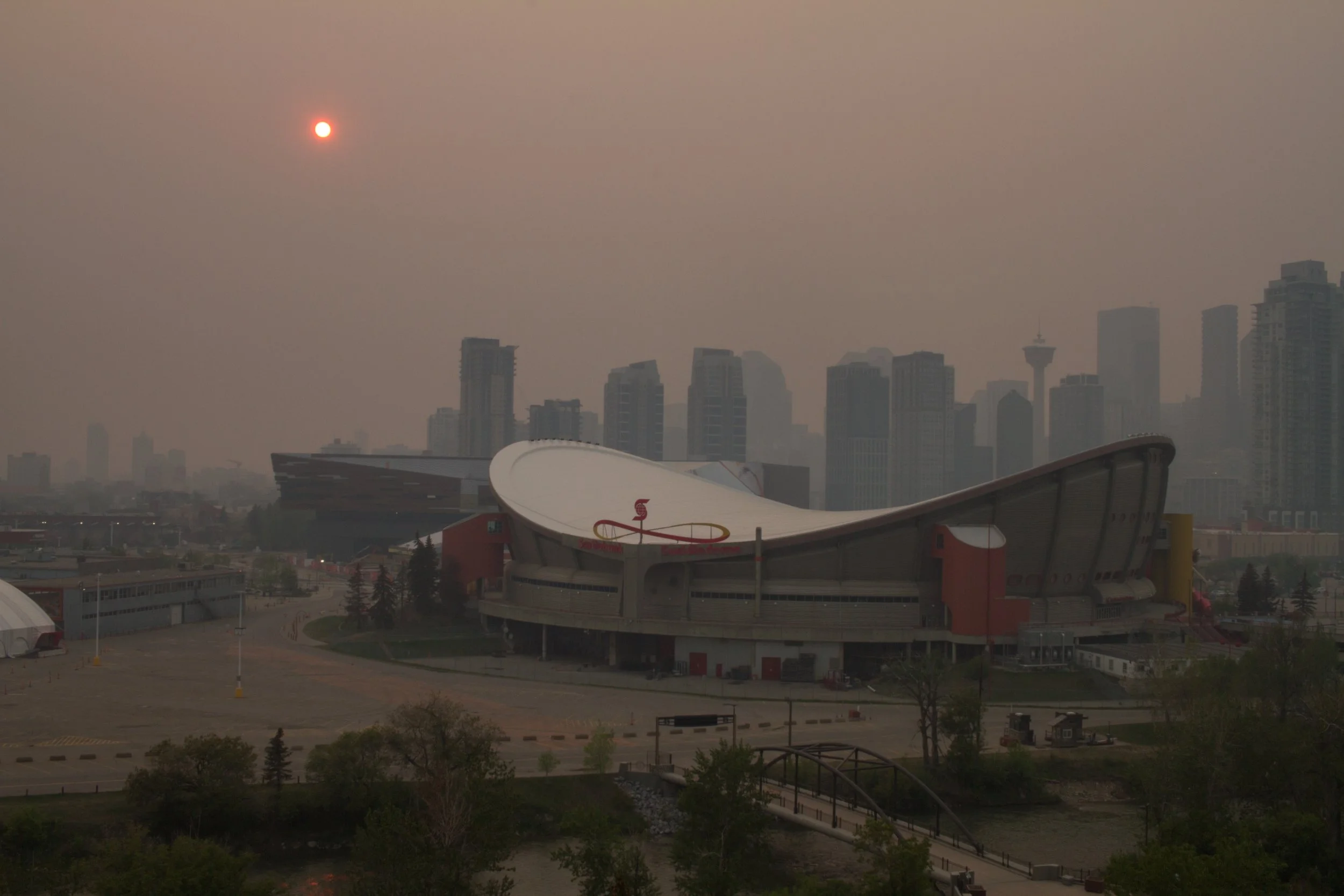
In May 2023, wildfires in northern Alberta, Canada caused significant impact on air quality as thick smoke engulfed areas across Canada and the United States. On May 17th, 2023, the day this photograph was taken, the Air Quality Health Index from the Government of Canada measured 10+, the highest rating possible. Photo by Dwayne Reilander / license.
This is why the La Rose plaintiffs are deserving of the Order of Canada. These brave youth are exposing the massive pile of lies hiding behind Canada’s hypocritical plans for addressing climate change. By holding Canada’s government accountable, these worthy young Canadians will stop the extraction of these poisonous and deadly fossil fuels, making a better Canada and better world. I salute you.