

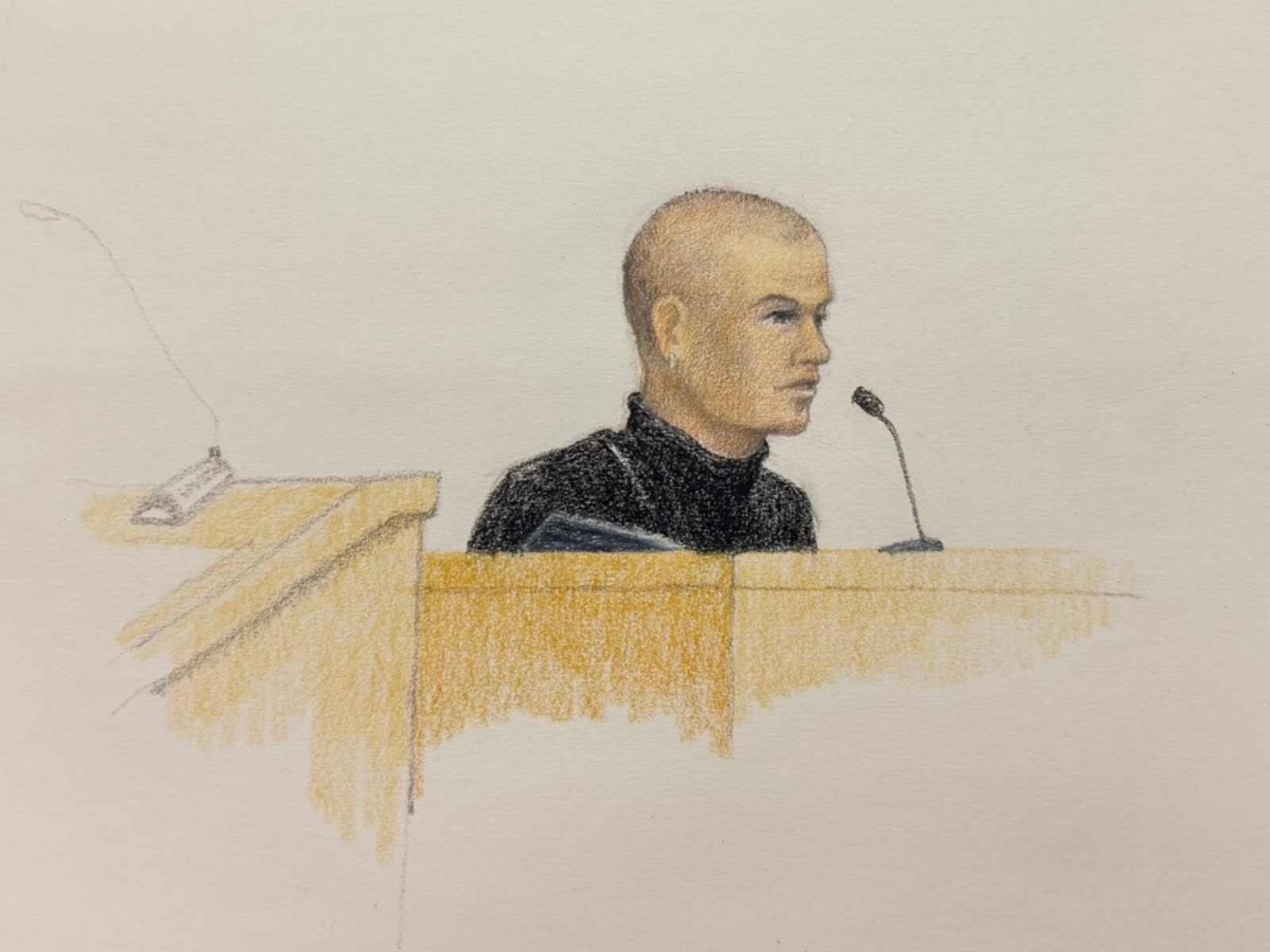
Courtroom sketch of Albert Lalonde testifying. Sketch by Jane Wolsak.
November 18, 2026
Albert Lalonde, 24, from Montreal, testified in La Rose v. His Majesty the King, the first youth-led federal climate case in Canadian history, on October 28th, 2026. Below are excerpts from his testimony.
After enduring long, harsh winters, Albert describes Montreal summers as joyful and festive. When he was 7, Albert recalled hearing about a heat wave on the radio. The temperatures were between 27-29 celsius. But Montreal has gotten much hotter since his childhood: “...now this is essentially the baseline for temperatures. It's not exceptional in any regard in the summer.”
Now, his summers are riddled with extreme heat, wildfire smoke, and the mental anguish such conditions bring. “...every activity becomes harder to do,” Albert told the court. “I work remotely on my laptop…I live in a small apartment, and I don't have AC. And so it's just hunkering down during the day for weeks at a time, because it is difficult to focus, it is difficult to get stuff done. And so I work in the evening. I work throughout the night, because that's when it's fresher, and that's when I'm not constantly distracted or when my energy level is stable and I'm able to focus…I have to reorganize my life.”
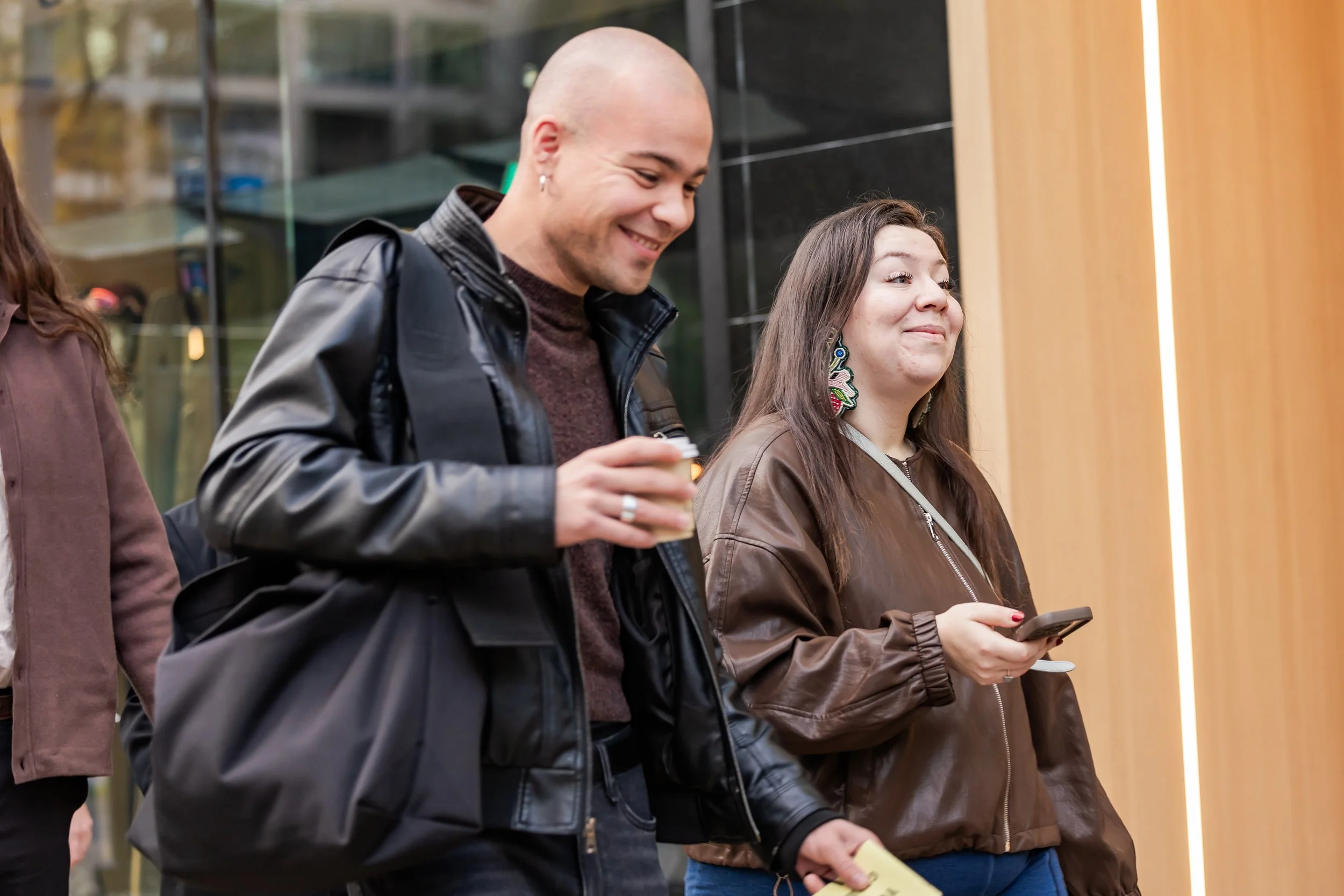
Plaintiffs Albert and Sophia walk to court. Photo by Kim Bellavance.
Biking is Albert’s primary mode of transportation, which becomes dangerous in the heat. “...it actually felt scary to be on the road. My heart would start pumping abnormally during heat waves, and I would get, like, blind spots in my vision. And I felt like I could no longer keep track of traffic to avoid accidents. And I -- two, three times -- I got really scared of having accidents, because I was completely depleted, and I was overheating on my bicycle. And I almost got hit.”
When Albert learned about climate change as a young child, he reasoned that Santa Claus couldn’t be real. “I was learning about polar bears in the arctic and watching documentaries about the icecaps melting, and I knew Santa's house is in the North Pole, of course. And the North Pole is covered by the icecap…So I figured if Santa's house had been sinking into the ocean, that would be a scandal and a priority. And that since it was not the case, that was the determining factor in figuring out that Santa, indeed, did not exist, despite my hope that he would.”
The rest of the world’s lack of understanding and urgency didn’t stop Albert. He advocated for less styrofoam products and recycling and compost bins in the school cafeteria, taught his fellow students how to sort what was on their trays into the bins, and created an eco-friendly cleaning solution for desks. He joined the green committee and student council, which he was president of senior year. He dedicated much of his life to moving the systems he found himself in (school, community, etc.) towards sustainability.
At the end of high school, his activism reached a new level and a larger audience. The global Fridays for Future movement was beginning, and he organized a protest downtown with 400 school kids in the dead of winter. The following week, there was a meeting to create a climate collective. Albert was selected as the spokesperson.
In 2019, Albert worked all summer to organize Montreal’s participation in the Fridays for Future global protest. Over half a million people joined the protest in his city. “I had upended my entire life for that movement to come through,” he said.
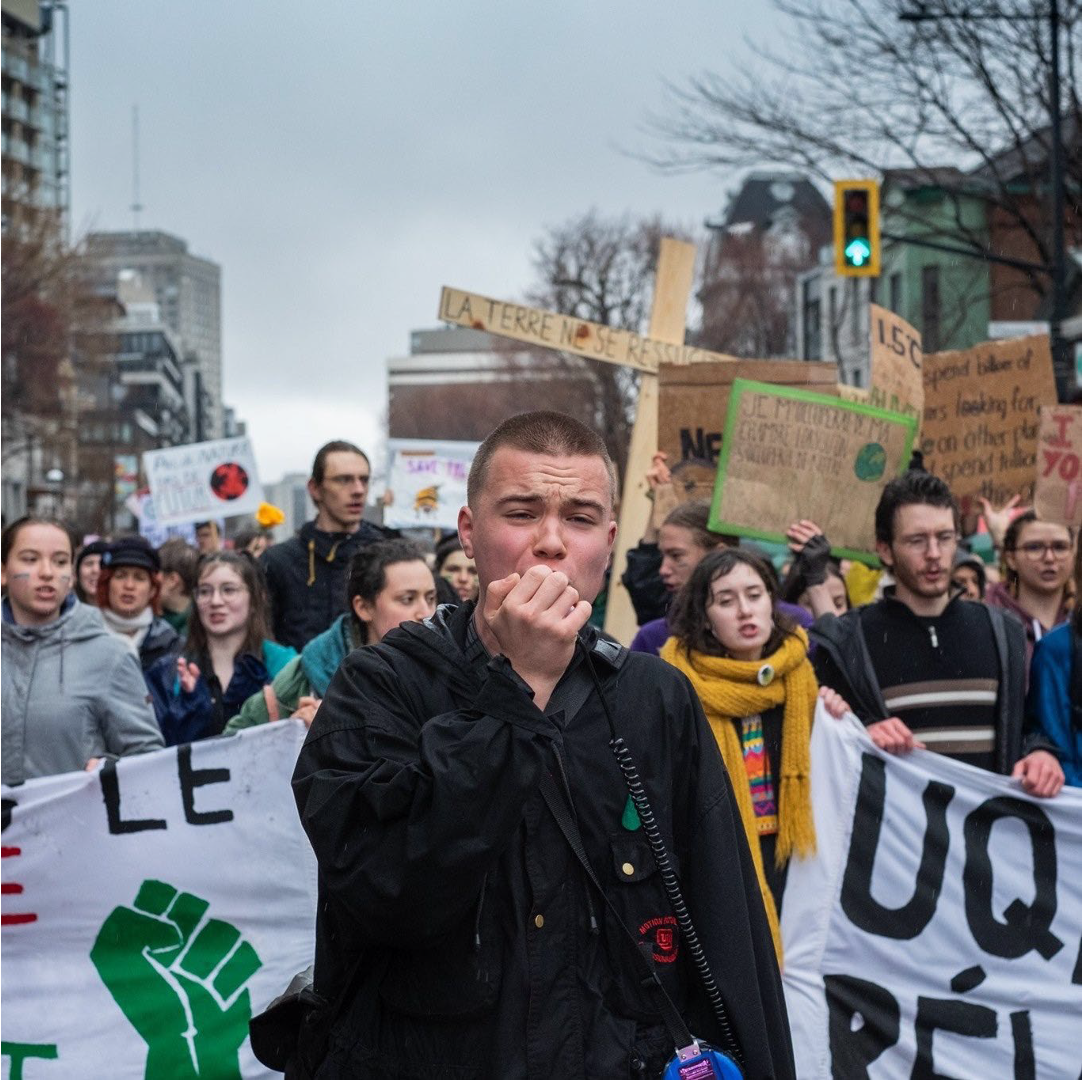
Albert leading a Fridays for Future protest as a teenager
While the government announced they’d plant 2 billion trees after the protest, Albert felt the response fell flat. “...if I'm being honest, [the announcement] felt like a little bit of an insult to our intelligence. This problem will not be fixed by planting 2 billion trees.”
Shortly after the protest, parliament declared a climate emergency, but its actions rang hollow. Albert recalled what happened right after the declaration: “...within the same 24 hours, it approved the purchase of transmountain pipeline expansion. I think that really highlighted a crisis and incoherence.”
Albert shared with the court why he wanted to be a plaintiff in La Rose v. His Majesty the King. “...it just felt like there were so many political interferences with having a debate or conversation that are founded on scientific integrity and on the state of the atmosphere. And so it felt really vital to depoliticalize this issue and to have -- to bring this question in a context where it is founded on evidence, to at least to have some kind of baseline of integrity.”
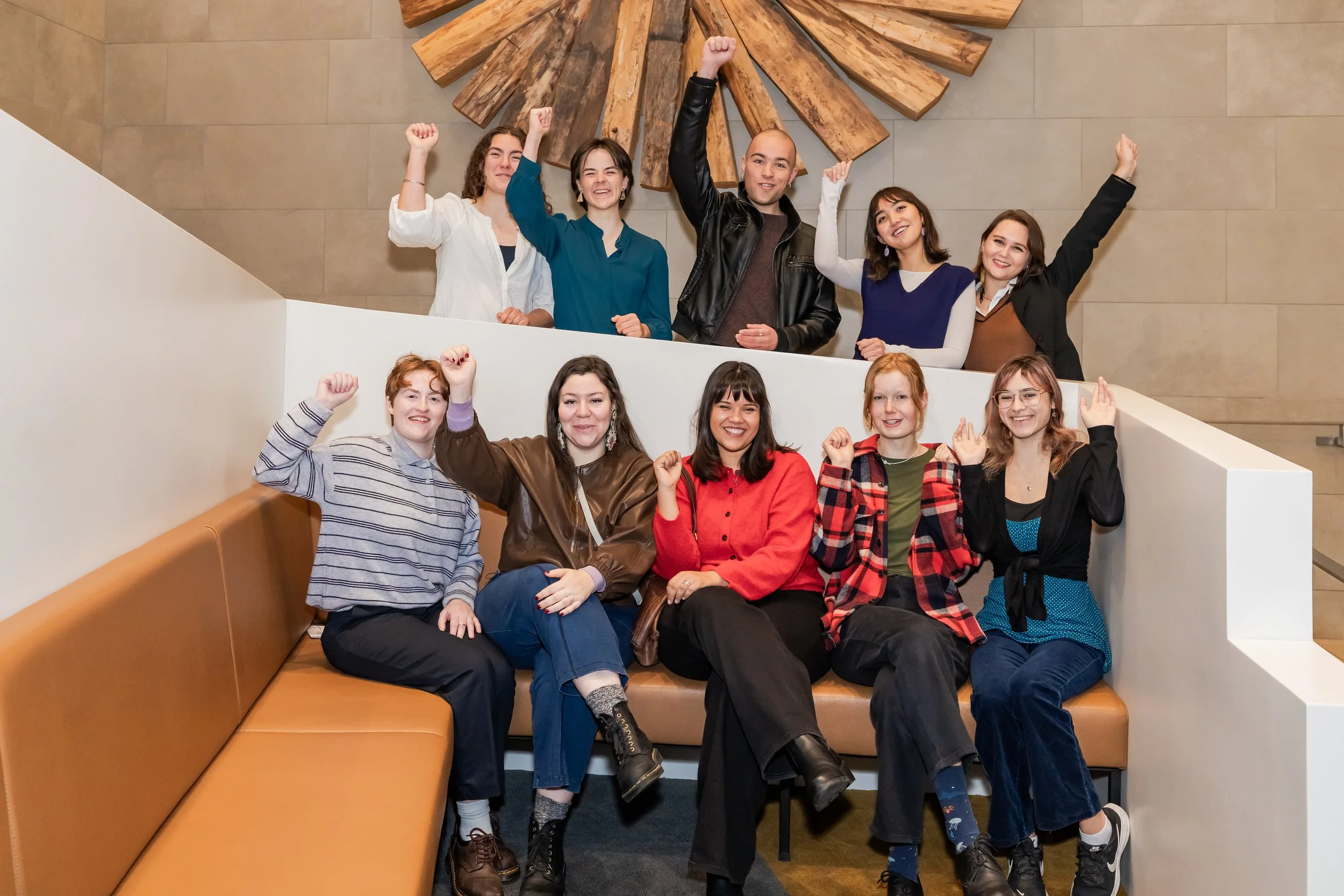
Albert (top, middle) and his fellow youth plaintiffs. Photo by Kim Bellavance.
