

Meet Emma Weibel: The Young Californian Defending Her State’s Right to Regulate Climate Pollution
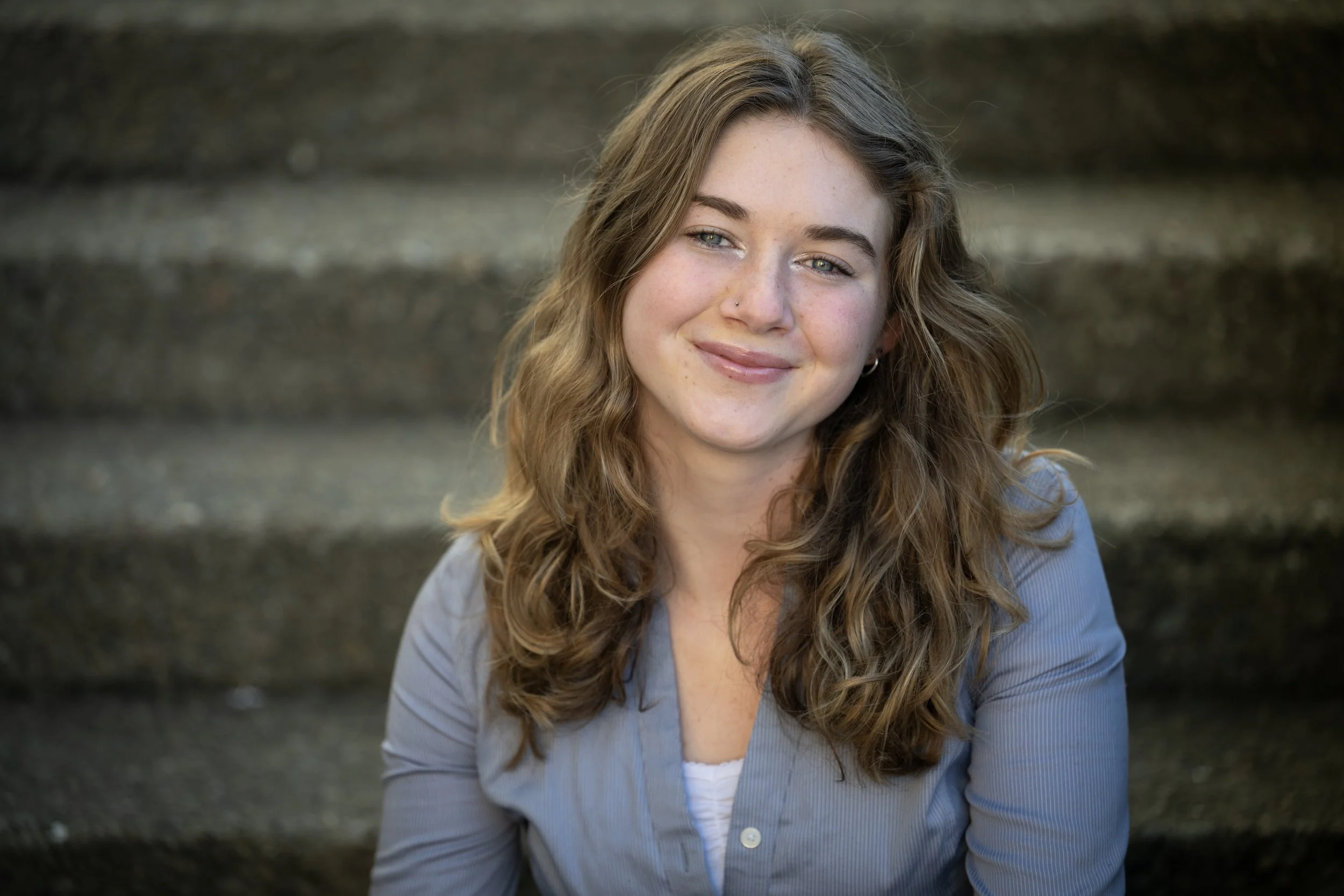
Emma Weibel. Photo by Robin Loznak.
August 27, 2026
At 18 years old, Emma Weibel has already spent years advocating for climate justice. Raised in San Diego, California, Emma is now studying environmental social sciences and human rights through the dual degree program between Sciences Po in France and UC Berkeley. A former plaintiff in Genesis v. EPA, Emma is continuing her fight for young people’s constitutional rights as the lead youth intervenor in U.S. Department of Transportation v. California Air Resources Board (CARB).
We spoke with Emma about why she joined the case as an intervenor, what she’s learned from years of climate advocacy, and why she remains committed to fighting for young people’s rights and a livable future.
1. In your own words, tell us about U.S. Department of Transportation v. California Air Resources Board (CARB)?
In this case, young people from California and Hawai`i are intervening alongside the California Air Resources Board (CARB) to defend our state’s right and responsibility to regulate climate-destabilizing emissions. In this lawsuit, the U.S. Department of Justice and Department of Transportation are seeking to strip CARB of its long-standing authority to limit tailpipe pollution and require cleaner vehicles, claiming these requirements are preempted by federal law.
Our federal government has failed all Americans, but especially young people, by removing all checks on those who have been systematically denying us our rights to a stable future for a century. Now they are trying to go a step further and impose their will on the states, subverting both their responsibility to their constituents and the Constitution. California is rightfully standing up against this imposition, and the young people of the state will support CARB in protecting the state’s ability to regulate emissions and protect children from pollution.
2. Why did you feel compelled to join the CARB case?
As a lifelong Californian and climate activist, I have always been fiercely proud of our state for leading the nation in pursuing policies of environmental justice. Though California’s policies are far from perfect, CARB’s regulations guarantee that even when the federal government fails to protect our rights, or pursues policies that actively deny us our rights, California will protect its citizens from pollution. The federal government’s attempt to undermine California’s sovereignty is not just an attack on crucial climate policies; it is also an attempt to strip us of our constitutional rights to life and liberty. The federal government clearly does not care about the lives and health of Californians and youth across the country, so it is up to the states to lead the fight for their people.
3. You are joining the case as an intervening defendant. Could you briefly explain what that means? Does this change the way you think about the case and your involvement?
This case is a bit different from others because the youth represented by Our Children’s Trust are petitioning to become intervenors alongside CARB, the defendant. The role of plaintiff falls to the US Department of Transportation, which is suing CARB for regulating tailpipe emissions and requiring cleaner vehicles, claiming federal law preempts CARB’s authority. We are essentially coming in to back up CARB’s right to regulate emissions by offering our unique constitutional and children’s rights arguments. And we are not the only ones: the court is also reviewing petitions to intervene on the side of the federal government by parties representing polluter interests. I see this case as an opportunity to come together against a federal government and corporate lobby committed to cementing injustice.
4. You were a plaintiff in the federal case Genesis v. EPA, which came to a close earlier this year. How will your experience in Genesis inform the way you move forward in CARB?
My experience in Genesis has profoundly shaped how I see our judicial system and my responsibilities as a citizen. For all its imperfections and the pain that these imperfections cause, I believe that the mechanisms laid out in our Constitution to protect our rights can align to bring about justice. However, I also believe that this justice is not inevitable; it will take continued effort and resistance from an active citizenry. That is why I have taken every opportunity to demand change from all sides, whether it is through community organizing, legislative action, or the courts: I refuse to be passive in the face of injustice.
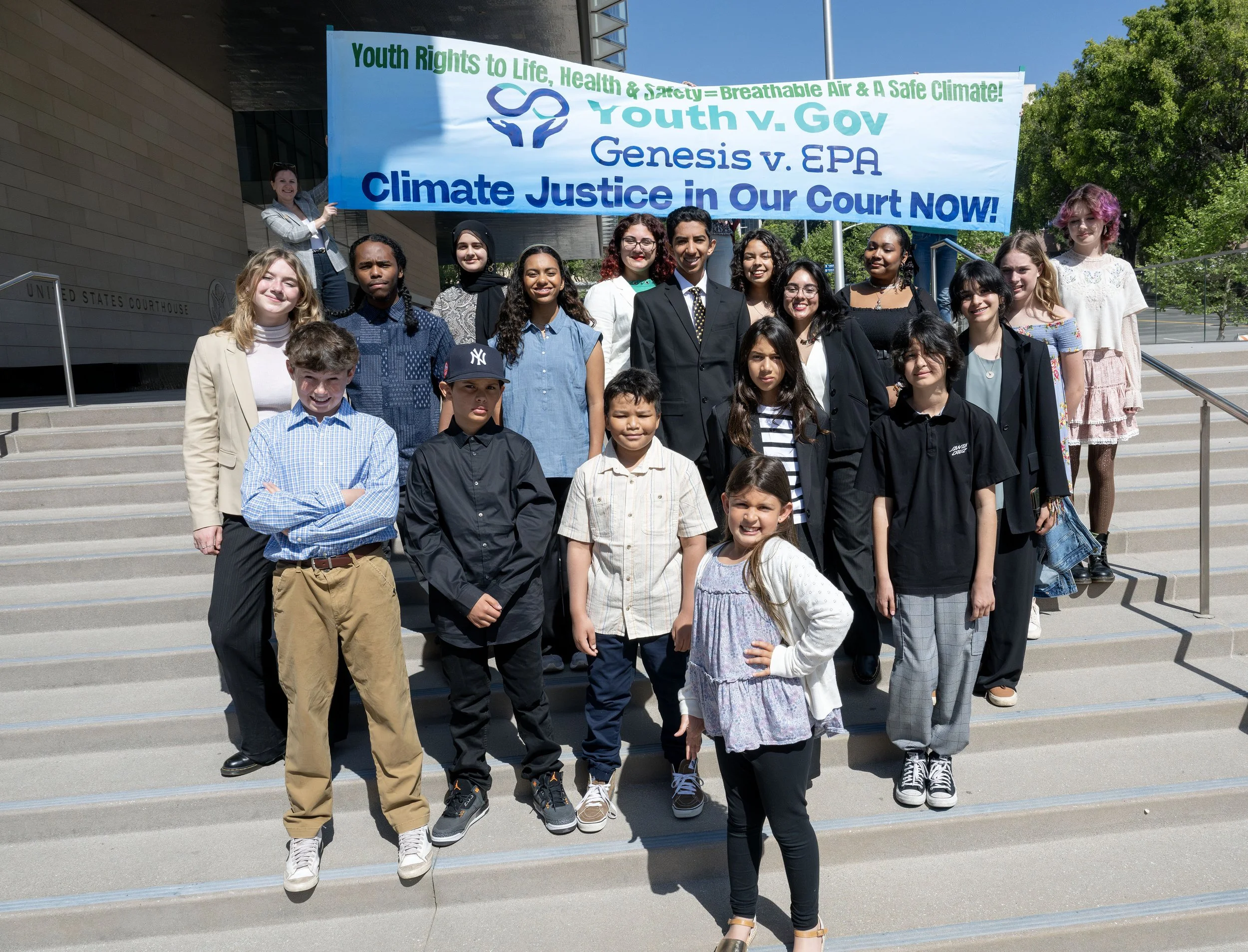
Emma and her fellow Genesis v. EPA youth plaintiffs. Photo by Robin Loznak.
5. How did you get involved with advocacy?
I was exposed to social justice causes from a young age by my mom, but it wasn’t until I was in middle school that my advocacy started to hone in on environmental justice. I say “hone in” very lightly, because I truly believe that the environmental movement sits at the intersection of every social justice movement I grew up learning about. My involvement really accelerated as I moved into high school, mostly because I was dealing with increasing and often crippling climate anxiety. Community organizing gave me an escape and a sense of control when the issues facing us seemed too big for one 14-year-old to bear. So I founded an environmental club at my high school and joined a local climate non-profit where I eventually led a youth policy campaign (shoutout Youth v. Oil!).
Through this work, I found myself leading walkouts at my school, speaking in front of my school board, passing resolutions through city councils, meeting with legislators, and testifying at our state capitol.
It was through these advocacy networks that I first learned about Our Children’s Trust. That was just the beginning of my journey: I have done research on the environmental impact of AI data centers, joined climate organizing efforts in Europe, and made strides towards my own career in environmental law. For most of the time that I’ve called this planet my home, I have been involved with the fight to protect it, and while it should never have been my responsibility in the first place, I am so grateful for the community and experiences that have accompanied this movement.
6. What gives you hope in regards to the cases you're involved in?
It can be hard to have hope when all the cards seem stacked against you. When a loss threatens to push me back into crippling anxiety, I refer back to the quote that changed my life:
“Hope is not the conviction that something will turn out well, but the certainty that something is worth doing no matter what.” - Václav Havel
My hope has nothing to do with whether or not I think we can succeed—though I know we can—it comes from my unwavering belief that fighting for our planet and the futures of every young person in our country and across the world is right and worth pursuing no matter what.
7. Do you have a favorite place in nature you like to go? How do you feel when you’re outside in nature?
As a Southern Californian, I am very partial to the ocean: I love to swim, scuba dive, (fail to) surf, or even just sit on the beach and read or sketch. But I’m also originally from Switzerland, so mountains and forests have always felt like home. Being in nature is calming and inspiring, but also heartbreaking when I remember that it is all at risk: it always serves as a reminder of what we stand to lose and what we are fighting for.
8. How does it feel to be lead intervener on this case? What inspired you to accept this role and what lessons from Genesis/Venner are you carrying with you in this new role?
I’m so grateful to Our Children’s Trust and my fellow intervenors for entrusting me with the role of lead intervenor. While every young person in this case deserves recognition for their bravery and commitment to justice, I am honored to have the opportunity to lend my voice and experience to this important cause. Every step of my journey as an activist has cemented my conviction that the fight for climate justice is one I am willing to risk everything for, and someone’s name has got to come first on the filing papers, so why not me? I know that through it all, I will have the support of the incredible team at OCT, my co-intervenors, the youth from Genesis and Venner, my family, my friends, and my activist community. If my experiences in past cases have taught me anything, this journey will be long and bumpy, but our commitment to justice and community will guide us through it all.