
Turning Rights into Action: Empowering Hawaiʻi’s Next Generation
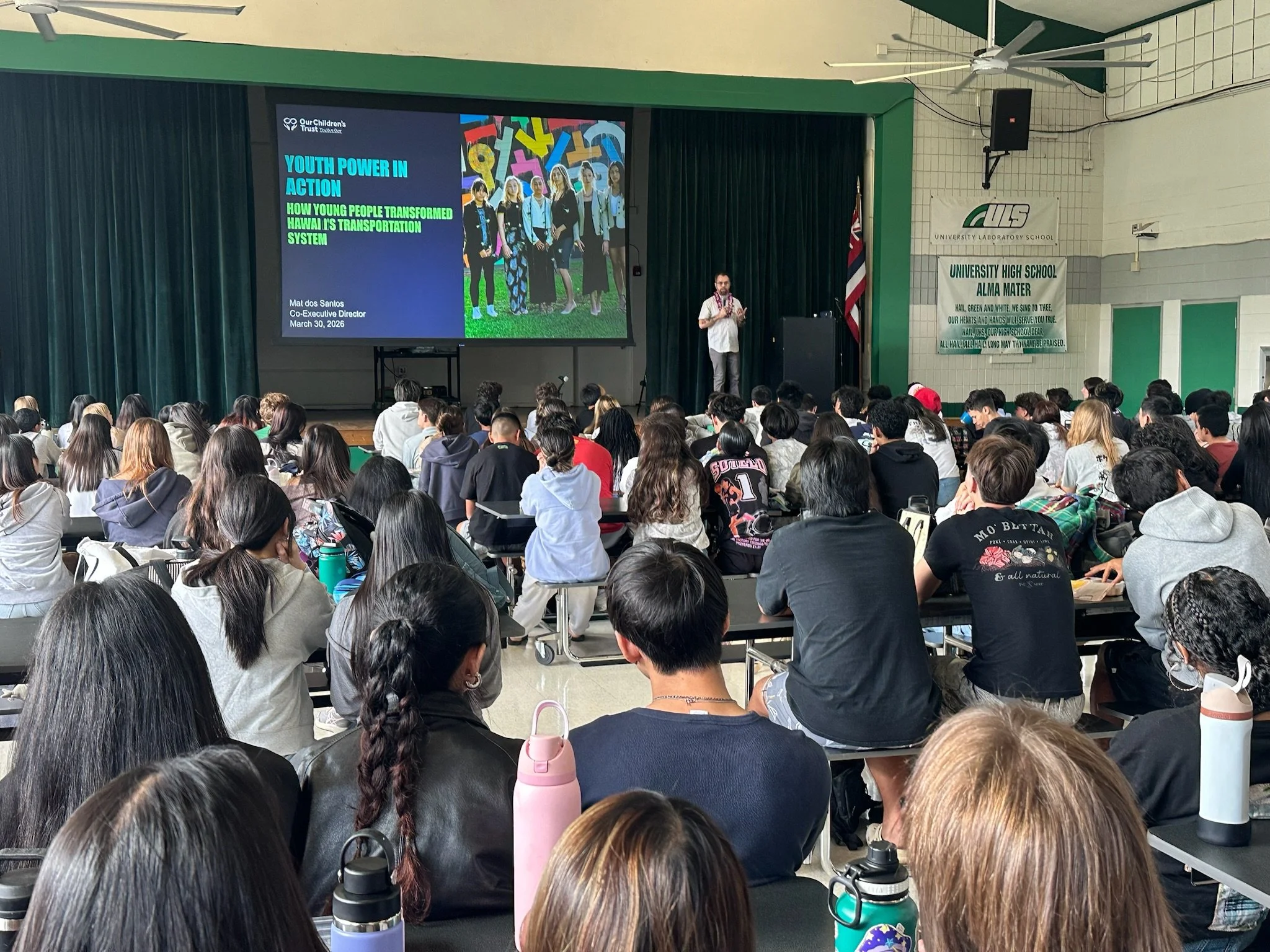
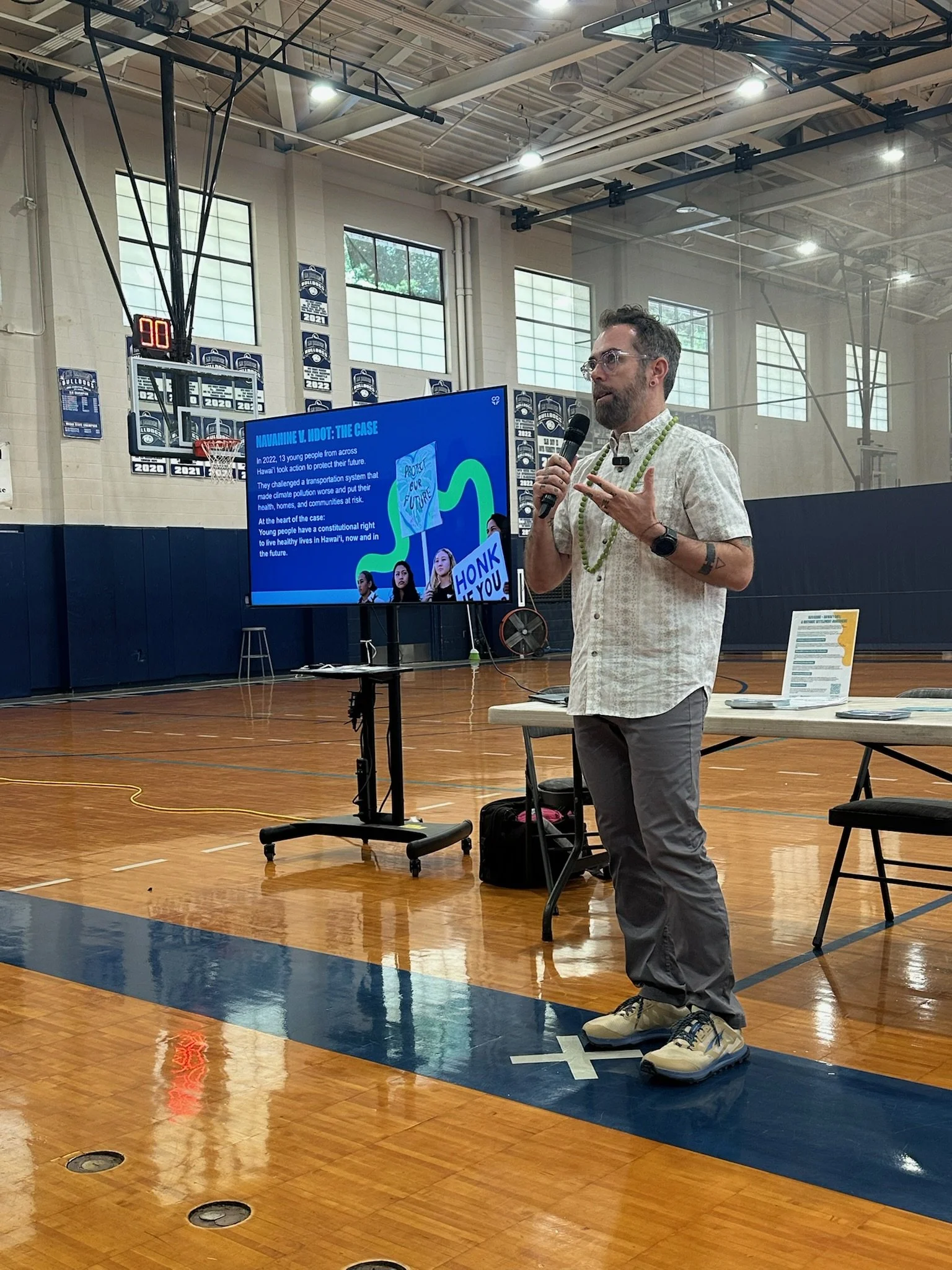
Mat dos Santos, Our Children’s Trust Co-Executive Director & General Counsel, presenting at a school in Hwai‘i during the learning tour in March 2026. Photo by Doorae Shin.
May 1, 2026
By Emily Miller
Fewer than 5% of the students we met this spring knew that Hawaiʻi's Constitution guarantees every person the right to a clean and healthful environment. That number stayed with us — not as a failure of civics education, but as an opportunity. Because once students learned that right existed, something shifted in the room.
Since the historic settlement of Navahine v. HDOT, Our Children’s Trust has been collaborating with stakeholders across the Hawai’i Islands to ensure youth and educators on all the islands know about their rights to a clean and healthful environment—and how young people used those rights to make a tangible difference. Many dedicated people and organizations are contributing to this initiative, like youth, Davis Democracy Institute, Punahou Schools, Debbie Millikan, and so many more.
This spring, Our Children’s Trust continued those efforts as they traveled across Hawaiʻi to Hawai’i Island, Oʻahu, and Maui to nine schools, visiting roughly 1,100 students from 4th grade through 12th. We weren’t just there to explain a court case. We were there to help young people understand something that too few of them had ever been told: the places you love are protected by law, and you are the ones who can defend them.
From the Courtroom to the Classroom
Navahine v. HDOT is a youth-led constitutional climate case brought by 13 youth across Hawai‘i. In 2024, the case reached a first-of-its-kind settlement agreement with Hawaii’s Governor Green and HDOT to decarbonize the state’s ground, sea, and inter-island air transportation by 2045.
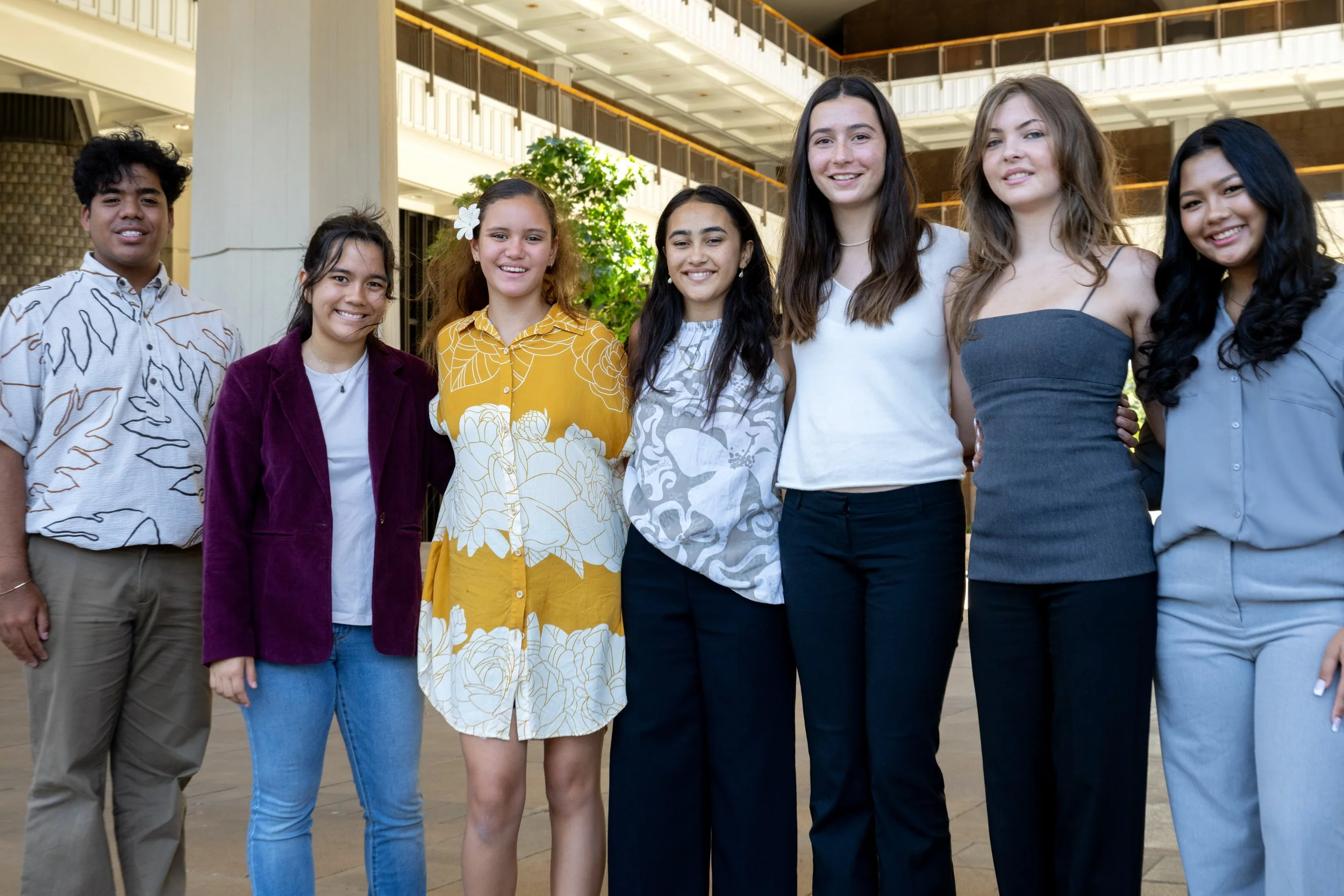
Navahine v. HDOT youth plaintiffs. Photo by Robin Loznak.
The Navahine settlement agreement is unparalleled in its nature, scope, and duration. It provides a step-by-step plan for the next 20 years of climate action for the state of Hawai’i. The settlement includes establishing two new jobs and a Youth Council to oversee and provide feedback on implementation of the settlement. The Department of Transportation has committed to investing in clean transportation infrastructure and establishing a greenhouse gas reduction plan for zero emissions by 2045. Through collaboration and mission alignment, the settlement will serve as a leadership model for states and countries around the world to address one of the most important sectors driving the climate crisis: transportation.
But a settlement, however landmark, lives on paper until someone carries it somewhere. That's what this tour was about.
Constitutional Rights: From Symbolism to Implementation
When students learned about their constitutional right to a clean and healthful environment, there was a huge shift: environmental protection was no longer framed only as a matter of personal concern or public policy, but as something connected to rights, accountability, and lawful governance.
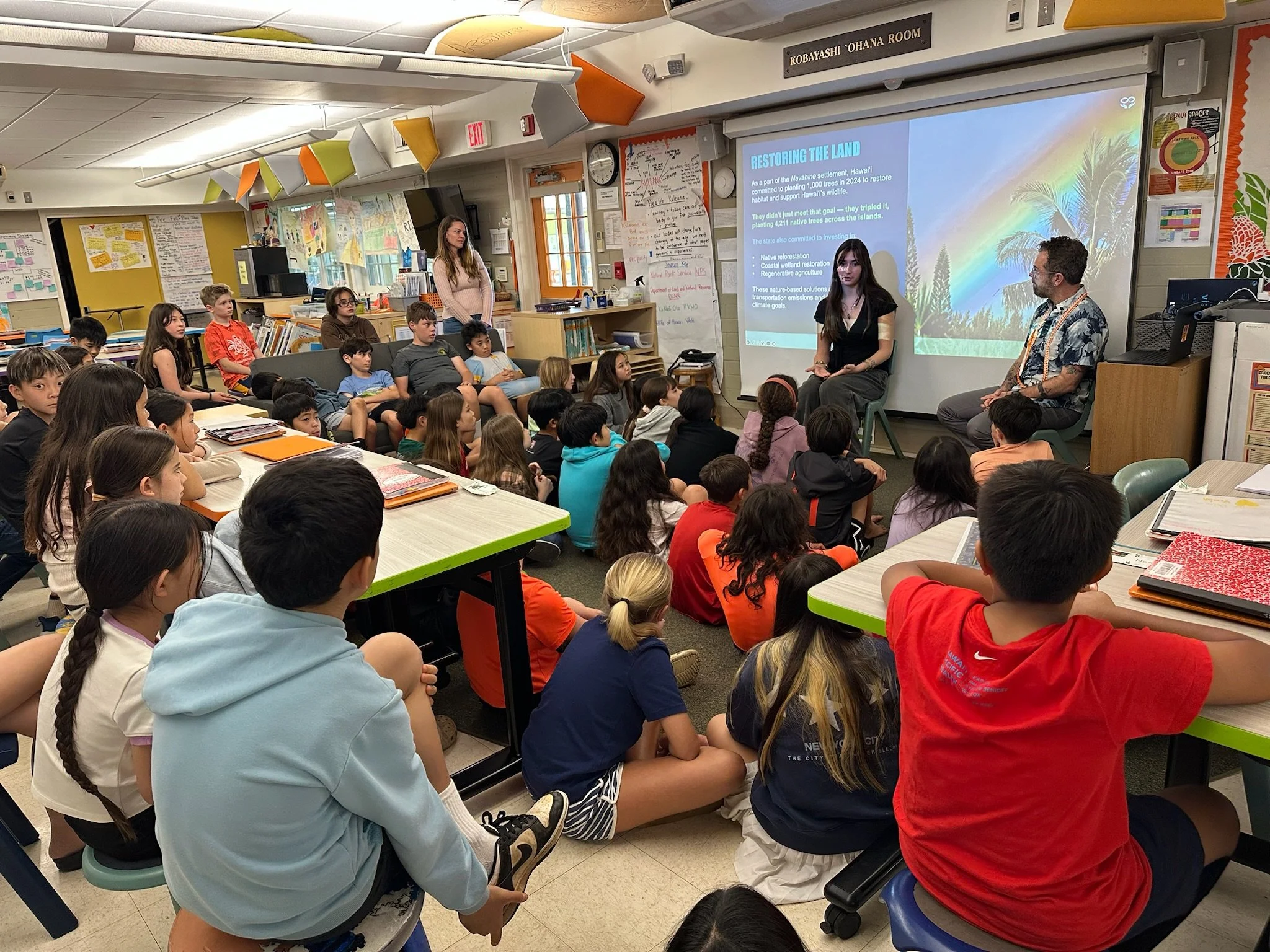
Charlotte M., Navahine v. HDOT youth plaintiff and Hawai‘i Youth Transportation Council member, alongside Mat dos Santos, Our Children’s Trust Co-Executive Director & General Council, during a presentation at a school in Hawai‘i in 2026. Photo by Doorae Shin.
More than knowing they have those rights, Navahine showed youth what it looks like when young people successfully use that right: that the settlement was not just a statement of values, it came with enforceable accountability, annual reporting, and concrete public-system changes. Through the story of Navahine, students saw that democracy, law, science, courage, and collective action can produce tangible outcomes in the world around them.
“When I learned that I could make a difference in the climate crisis, everything shifted. I went from being overwhelmed by what was happening, to empowered to step up and take action now,” said Charlotte, Navahine v. HDOT youth plaintiff and Hawai‘i Youth Transportation Council member.
Overwhelm to Agency
Too often, climate education leaves young people with the message that things are getting worse and there is little they can do about it. During the tour, students were not only hearing about harm. They were hearing what young people have already done to create real change.
Educators also craved an avenue to impact, not just information on the climate crisis. This pairing helps people metabolize difficult climate realities in a way that creates a stronger sense of possibility and action, and helps students connect what they are learning to the world they are living in.
“As adults, our job is to not only hear the voices and concerns of youth, but to take action on those concerns. We get to show them how they have real power to make lasting change in this world, because it's just as much theirs as it is ours.”
- Mat dos Santos
Young people need a roadmap from passion to action. Many students care deeply. They feel the stakes. But they do not always know what to do with that care. They need help seeing where they fit, what action can look like, and how change actually happens. Work lands most powerfully when it does more than inspire: it needs to equip.
“Hearing about this case was shocking to me; I didn’t know that as a child, I could affect decisions made by our government. I am completely in awe of the teens and tweens who took part in solving a global issue and I am inspired by them,” said Cassie G., a student at Seabury.
The tour demonstrated that youth-led climate litigation can do more than win precedent. It can open up new ways for young people to understand their rights, their voice, and their role in shaping the future.
Most importantly, this work helped carry the meaning of Navahine out of the courtroom and into classrooms, educator spaces, and community relationships across Hawaiʻi. That is part of what lasting impact looks like: not just legal change, but young people who are better equipped to understand what they are entitled to, what they can do, and how they can act to protect the places they love.
Read a blog from Punahou school about our visit!
The youth were represented by Our Children’s Trust and Earth Justice. To read more about the case, visit the settlement website!