
Our Children’s Trust: 2026 Impact Report
Every Court. Every Child. A Livable Climate.
Our Children’s Trust empowers youth to secure their rights to life and a livable climate in courts around the world, enshrine the best science in law, and compel government action to protect their futures.Our Children’s Trust empowers young people to enforce their constitutional rights in court when governments endanger their lives, health, and futures by fueling the climate crisis.
DEAR FRIENDS,
For decades, governments have known the cost of fossil fuel dependence and have chosen to make children pay it. That isn’t inaction. It’s a choice, made again and again, to treat a generation as an acceptable loss.
Our young plaintiffs refuse to accept that deal. They are not asking courts to invent new rights. They are asking governments to honor the rights their constitutions already promise–and insisting that those promises mean something in a warming world. Without a stable climate, no other right can be meaningfully exercised.
This year, their courage moved our work forward in remarkable ways. In Canada, young people took the stand in a historic federal climate trial. In Pennsylvania, they challenged a gas-fired power plant proposed to power an AI data center, bringing constitutional rights into one of the defining debates of our time. And in Hawaiʻi, young people continued the work of turning a landmark legal victory into real changes in transportation policy.
These are not just lawsuits. They are part of something much bigger: building lasting legal protections, elevating young people’s leadership, and ensuring that victories in court translate into meaningful change in our communities.
The path isn't always easy. We've faced setbacks, and we know there will be more. But what inspires us most is the determination of the young people we stand with. They are living with the consequences of decisions made long before they could vote, yet they refuse to surrender their futures. Their courage challenges all of us to imagine something better, and to do the difficult work of making it possible.
None of this happens alone. Your support makes it possible for us to pursue ambitious cases, stand alongside these extraordinary young people, and stay in the fight long after the headlines fade. Every victory, every new opportunity, and every step toward a more just world belongs to all of us.
We’re building a future where children come first, not last: case by case, community by community. We’re grateful to be building it with you.
With gratitude and fierce determination,
BY THE NUMBERS

LEGAL
CASES
13 ACTIVE CASES
Across state, federal & international courts
SCOPE
8 Jurisdictions
From individual U.S. states to the Inter-American Commission on Human Rights
COMMUNITY
11,800+ Pro Bono Hours8 Jurisdictions
From over 50 law firms & partners
REACH
[#] Media Hits
Stories published in [#] countries
IMPACT
2B+ Children
Impacted by active cases
EDUCATION
1,100 Students Reached
Across nine schools in Hawai’i
PUBLIC
POWER
PEOPLE
140 Youth Supported
From 16 states and 2 countries
TRAINING
350+ Climate Corps Members
building power nationally
CARE
[#] Hours of Support
Trauma-informed care providedAcross nine schools in Hawai’i
Enforcing Constitutional Rights
Courts exist for moments like this. When governments knowingly endanger children, young people can demand accountability, and we stand with them in state, federal, and international courts. Every case is different, but all rest on one truth: youth have enforceable rights to a safe climate, right now.
State Courts
We bring constitutional climate cases in state courts, where many constitutions already protect a clean and healthy environment and young people have won historic victories. This year, we represented youth from Alaska to Wisconsin, challenging the systems doing the most harm: fossil fuel extraction, transportation, and the utilities behind both. And we enforce every win, so hard-won protections hold.
federal Courts
In federal court, we’re defending children against a sweeping rollback. The administration and the fossil fuel industry are working to stop every level of government from limiting fossil fuels: rolling back federal rules, blocking states from acting, and ending damages suits. This year, we challenged that plan on every front, from the Endangerment Finding repeal to states’ authority to protect their own children, and we were the only organization bringing young people and pediatric evidence into these cases.
ACTIVE U.S. CASES
ACTIVE U.S. CASES
-
ALASKA: Sagoonick v. State of Alaska II
The Case: 8 youth plaintiffs (ages 11-22 at filing) suing to stop the Alaska Liquified Natural Gas Project, which would triple the state’s greenhouse gas emissions for decades to come.
Status: Awaiting a decision from the Alaska Supreme Court on whether their case will proceed on the merits
Key Impacts:
Prevent a proposed pipeline from adding roughly 3.9 billion tons of CO₂ over 30 years
Protect Native communities whose homes, food sources, and cultural practices are threatened by rising temperatures and melting permafrost
Hold accountable a state whose fossil fuel combustion (91.3 million tons annually from fuels extracted in Alaska) exceeds the emissions of 176 countries
-
permit to build one of the nation's largest gas-fired power plants to power a 3,200-acre data center campus.
Status: In Discovery Phase of Litigation
Key Impacts:
Prevent 17+ million tons of annual CO₂e from one of America's largest gas plants
Stop one of the nation's largest AI data center (3,200 acres, 24/7 operations) from locking Pennsylvania into decades of fracking, water contamination, and toxic air pollution harming children's developing lungs
Establish precedent that states cannot sacrifice children's constitutional rights to health and safety for profits—protecting youth nationwide from similar projects
-
The Case: 10 youth plaintiffs (ages 13-22 at filing) challenging the hundreds of oil and gas permits issued by state regulators since the Utah Supreme Court’s March 20, 2025 decision in Natalie R.
Status: Case is temporarily paused while the Utah Supreme Court considers the constitutionality of a newly-created three-judge panel system, which the youth are challenging
Key Impacts:
Youth will force the Department of Oil, Gas, and Mining to comply with Utah Supreme Court guidance in Natalie R.—ending over 365 permits issued since March 20, 2025 that ignore the Court’s ruling that Utah need not maximize fossil fuel production and must consider the harms from fossil fuels to plan an energy future with a focus on human wellbeing and quality of life
Victory halts the permitting surge that already exceeds 2024's record-breaking year of 65.5 million barrels of oil extracted
-
The Case: 16 youth plaintiffs (ages 13-24 at filing), including 13 of the Held plaintiffs, are challenging laws passed in 2025 that attempt to undermine the Held victory by preventing state agencies from adequately considering or regulating greenhouse gas pollution as unconstitutional. Plaintiffs also seek an order requiring the Department of Environmental Quality to adopt a plan, consistent with Held, to prevent and abate Montana’s greenhouse gas pollution
Status: Briefing venue in Montana Supreme Court on the State’s interlocutory appeal; Defendants’ partial motion to dismiss is pending
Key Impacts:
Youth enforcement will strike down unconstitutional laws allowing fossil fuel permits that lock in decades of pollution and irreversible harms—ending the state's defiance of the Supreme Court ruling
State agencies will be forced to stop using unconstitutional laws to justify ongoing fossil fuel project permits at a time when Held found each addition ton of greenhouse gas pollution causes further constitutional injuries to youth
State agencies will be required to prepare a plan to reduce Montana’s greenhouse gas pollution
Enforcement transforms historic legal victory into immediate protections—preventing more permits for projects emitting unconstitutional levels of climate pollution
As to venue, ensure that Plaintiffs are not forced to litigate cases in the venue of the bill sponsor, as 2025 laws allow
Held v. Montana Win:
Held v. Montana was the first litigated constitutional climate victory in U.S. history, finding that laws promoting fossil fuels are unconstitutional—upheld by the Supreme Court of Montana
Established youths’ constitutional right to a clean and healthful environment includes the right to a stable climate system
Landmark precedent: every ton of CO₂ matters, harms youth, and must be accounted for; comprehensive factual record shows climate change is causing unconstitutional degradation of Montana's environment and harms to Montana youth right now
State has affirmative obligation to prevent harm and must now weigh climate harms in fossil fuel decisions and reduce greenhouse gas emissions
State cannot continue to increase GHG emissions absent compelling government interest
-
The Case: 15 youth plaintiffs (ages 8-17 at filing) challenging laws banning consideration of air pollution in fossil fuel approvals and capping clean energy.
Status: Youth are appealing the wrongful dismissal of their case after the Circuit court found their claims were nonjusticiable political questions
Key Impacts:
Victory would transform Wisconsin's electricity away from 75% fossil fuels to clean energy—cutting the 86.2 million tons of CO₂ emissions generated in 2023
Relief from summer droughts, wildfire smoke, reduced crop yields, and Lyme disease cases that tripled in 15 years
Success would align state law with Wisconsin's 100% carbon-free electricity goal by 2050—updating outdated statutes that have forced authorization of 127.7 million tons of CO₂ despite clean energy commitments
-
The Case:
13 youth plaintiffs (ages 9-18 at filing) challenged Hawaiʻi's operation of its transportation system
The Win:
Groundbreaking settlement affirming the constitutional right to a life-sustaining climate
Legally requires HDOT to achieve zero emissions for ground, sea, and inter-island air transportation no later than 2045
Systemic shift in how HDOT evaluates, prioritizes and funds projects
Transportation Youth Council launched with 20 young people empowered with oversight over HDOT settlement implementation activities
200-page "Energy Security and Waste Reduction Plan" with strategies to reduce emissions
Obligation to complete multimodal transit networks within five years
$40M for public EV charging by 2030
1,000+ native trees planted annually
-
The Case: 6 Miami-Dade youth plaintiffs (ages 18-25 at filing) challenging the systematic approval of fossil fuel energy plans.
Status: Youth are appealing the wrongful dismissal of their case
Key Impacts:
Unlock the Sunshine State's solar potential—transforming from just 6.5% solar to a clean energy leader and reducing the 75.4% fossil fuel dependence
Curb the power sector's 89.5 million tons of annual CO₂ emissions—more than Chile or Belgium and 39% of the state's total
Lower cost of utility bills
-
The Case: 14 youth (ages 14-22 at filing) intervening as defendants alongside CARB as the federal government seeks to preempt CARB’s ability to regulate vehicle greenhouse gas emissions from motor vehicles and set zero emissions vehicle mandates
Status: The youth are awaiting the court’s decision on their motion to intervene
Key Impacts:
CARB has regulated vehicle emissions since 1968. Youth intervenors argue this authority is constitutionally required for states to continue to protect children’s constitutional rights and their rights as public trustee beneficiaries
A loss could result in the inability for any state to regulate greenhouse gas emissions or require automakers to sell cleaner cars, leading to no meaningful limits on vehicle pollution anywhere in the country
California is warming faster than the national and global average over the past decade, and continuing to weaken vehicle emissions standards will directly worsen the heatwaves, droughts, and wildfires already harming these youth
-
The Case: 18 California youth plaintiffs (ages 8-17 at filing) challenging EPA's discounting practices that devalue children's lives and their future health and wellbeing
Status:
Leading children’s rights scholars, economists, and medical experts filed three amicus briefs emphasizing the legal, ethical, and scientific necessity of protecting children from disproportionate harms caused by government-sanctioned climate pollution
A panel of judges at the Ninth Circuit affirmed dismissal of the case, stating that the youth plaintiffs lack Article III standing.
Key Impacts:
Youth fought to hold the EPA accountable for the 277.5 billion tons of fossil CO₂ authorized since 1970—a 280% increase over all pre-EPA emissions
Victory would have helped to ensure the federal government does not discriminate against children when deciding whether and how to regulation greenhouse gas emissions
-
The Case: 22 youth plaintiffs (ages 7-25 at filing) challenging three Executive Orders to unleash fossil fuels, suppress climate science, and delay deployment of renewable energy that harm children’s health, our climate, and abuse presidential power
Status:
After the district court recognized that the youth plaintiffs were experiencing a “children’s health emergency” caused by the Executive Orders, the Ninth Circuit affirmed dismissal of the case, without deciding whether the Executive Orders are constitutional. Instead, it held that the youth plaintiffs could not challenge the President's sweeping Executive Orders and their coordinated implementation in a single case
Following an en banc petition for a rehearing, the full Ninth Circuit Court of Appeals declined to rehear Lighthiser v. Trump, allowing an unprecedented three-judge panel decision to stand—the first federal circuit court opinion in U.S. history to deny Article III judicial power to review an allegedly unconstitutional executive order that was found to have caused injuries
The panel’s decision was unpublished, meaning it is not precedent for future cases. By declining rehearing, the full Ninth Circuit did not endorse or correct the panel’s reasoning. The constitutional questions at the heart of the youth plaintiffs’ case remain unanswered.
Key Impacts:
For the first time in U.S. history, 22 young Americans in a constitutional climate case presented live testimony in federal court at a two-day hearing in September 2025
The court accepted the plaintiffs’ evidence in full:
The youth are already being harmed by climate change
President Trump’s Executive Orders are worsening those harms
Climate change poses a “children’s health emergency”
-
The Case: 18 youth (age 9 months to 22 at filing) from 10 states filed a petition on constitutional grounds asking a federal court to reverse and vacate EPA’s Repeal Rule rescinding the 2009 Endangerment Finding, a landmark determination that greenhouse gas pollution threatens public health and welfare, and simultaneously eliminating all greenhouse gas emission standards for cars and trucks
Status: The youth petitioners were the only party to file a motion for stay, asking the court to pause the EPA’s Repeal Rule while their case is litigated on the merits. Youth are awaiting a court decision
Key Impacts:
Youth will restore the 2009 Endangerment Finding, securing climate science-based protections that have existed for decades
Youth will block 8.81 billion metric tons of otherwise avoided greenhouse gas emissions and 942.2 million metric tons during the stay period alone
-
The Case: Boulder County and the City of Boulder sued Suncor Energy, Exxon Mobil, and other fossil fuel companies in Colorado state court, claiming the companies knowingly deceived the public about the climate impacts of their products for decades while continuing to produce, market, and sell fossil fuels at levels they knew would cause harm.
Status:
Suncor et al., are now asking the U.S. Supreme Court to throw out Boulder's lawsuit, arguing that claims like Boulder's cannot be brought at all, and that states and local governments have no independent authority to address harm caused by climate change.
Our Children's Trust, on behalf of eight young people from Boulder, Colorado, and a national pediatric climate health expert, filed an amicus curiae brief with the U.S. Supreme Court in Suncor Energy Inc. v. County Commissioners of Boulder County, a case that could decide whether states and local governments retain the power to hold fossil fuel companies accountable for climate harm
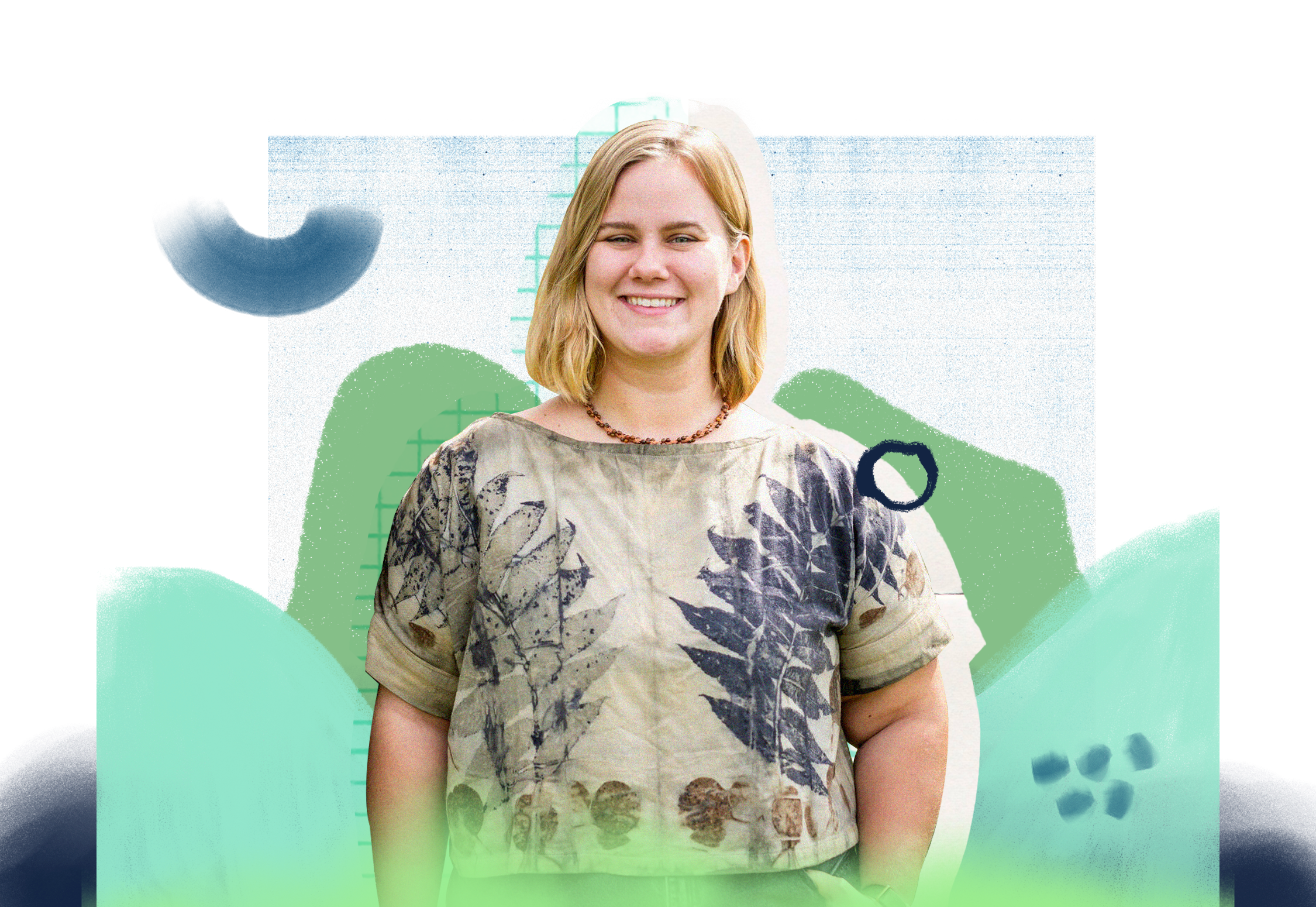
“You don’t have to just move on: you can challenge it and fight. That is one of the only ways to make change happen.”
- Ashley Funk, Mother of Appellant, McIntosh v. Pennsylvania Department of Environmental Protection
At 18, seventh-generation Pennsylvanian Ashley Funk pleaded with her legislators to protect the environment, then became lead youth plaintiff in Funk v. Wolf. Now she’s back in a new role: mother. Her one-year-old daughter is an appellant in McIntosh, challenging a massive gas-fired power plant on a former coal site, built mainly to fuel a 3,200-acre data center and poised to pour millions of tons of climate pollution into the air her daughter breathes.
Extreme heat, wildfire smoke, and tick-borne disease already keep her outdoors-loving toddler inside. Rather than give in, Ashley is passing down the lesson she learned at 18: ordinary people have the power to hold institutions accountable, and some fights are worth carrying forward.
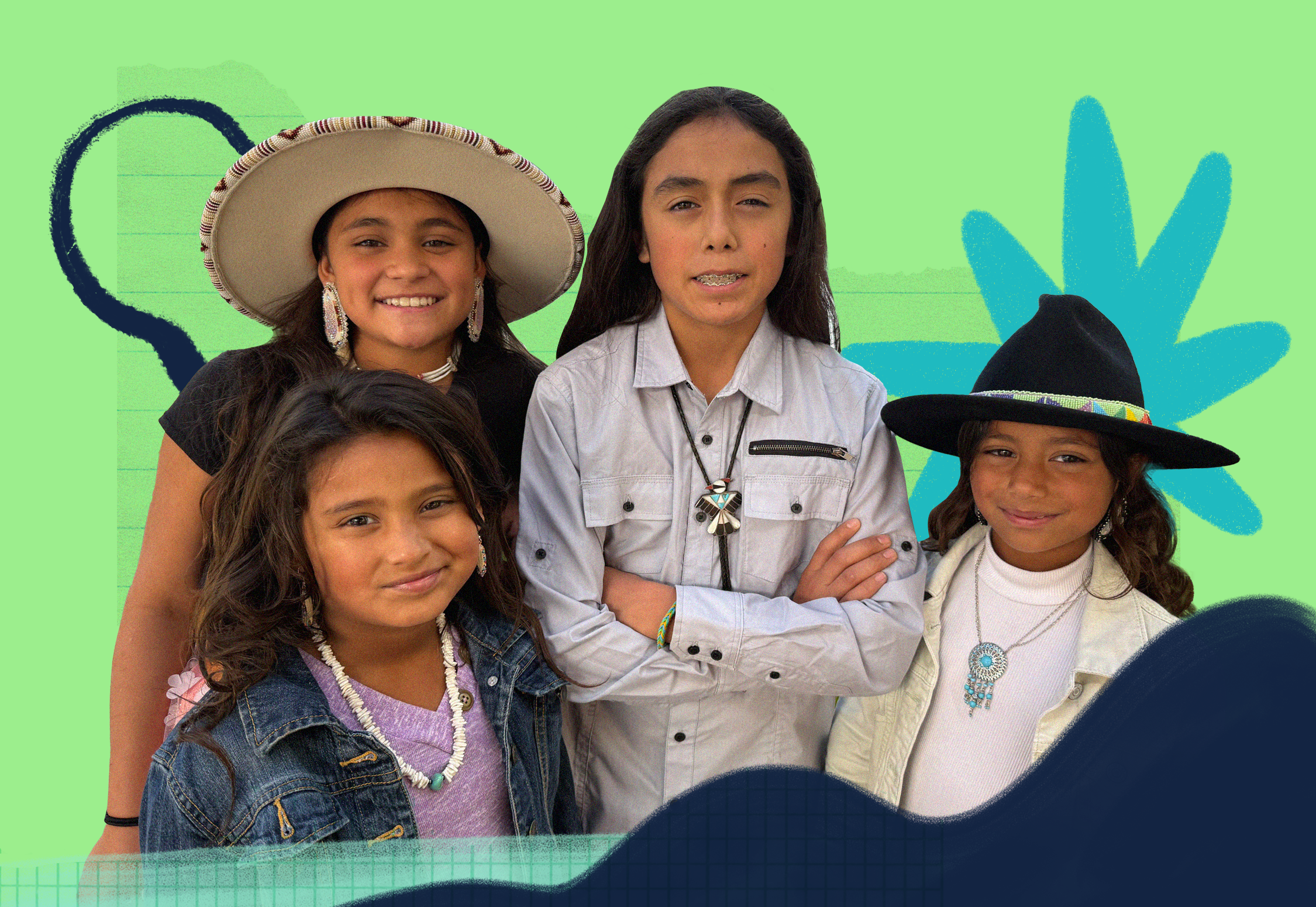
“We are the water protectors. We protect the water, and we try our best to get it clean. And that’s why I want to sue the state.” - Gookoonz C, Plaintiff, Dunn v. Wisconsin Public Service Commission
Nine-year-old Gookoonz and three siblings, members of the Anishinaabe people, are challenging Wisconsin laws that force regulators to ignore air pollution in fossil fuel approvals and cap clean energy. These laws, they argue, violate their rights to life, liberty, a stable climate, and the use of Wisconsin’s public trust waters.
For their family, climate change threatens tribal lifeways passed down for generations. Some winters, there isn’t enough snow to tap the maple trees or enough ice to go ice fishing, and fish, wild rice, and maple sugar are all at risk. So the siblings are taking their state to court for their family, their culture, and the generations to come.
“My ties with the land are forever,” says 13-year-old Waazakone. “Kids speaking out is a way to protect it.”
“Working in climate has taught me,
if nothing else, that meaningful change is bigger than any one person.” - Nicolas N, Plaintiff, Venner v. U.S. Environmental Protection Agency
Nicholas has lived by that lesson since middle school, when he first began championing sustainability and youth leadership. While interning with the Hawaiʻi Department of Transportation, he saw what the historic Navahine climate settlement, secured with the help of Our Children’s Trust, made possible: young people reshaping public policy and earning a permanent seat at the table.
Now he’s helping to lead that work. As Chair of Hawaiʻi’s Youth Transportation Council, Nicholas works directly with the department to carry out the settlement. And this year, he stepped forward as a youth petitioner in Venner v. U.S. Environmental Protection Agency, challenging the federal repeal of the 2009 Endangerment Finding, the government’s own determination that climate pollution endangers public health. At an age when most people are still finding their footing, Nicholas is shaping climate policy in his home state and defending it in federal court.
For Nicholas, it has never been about going it alone.
“So I chose to put my trust in Our Children’s Trust, their amazing legal team, and all the other youth petitioners across the country.”

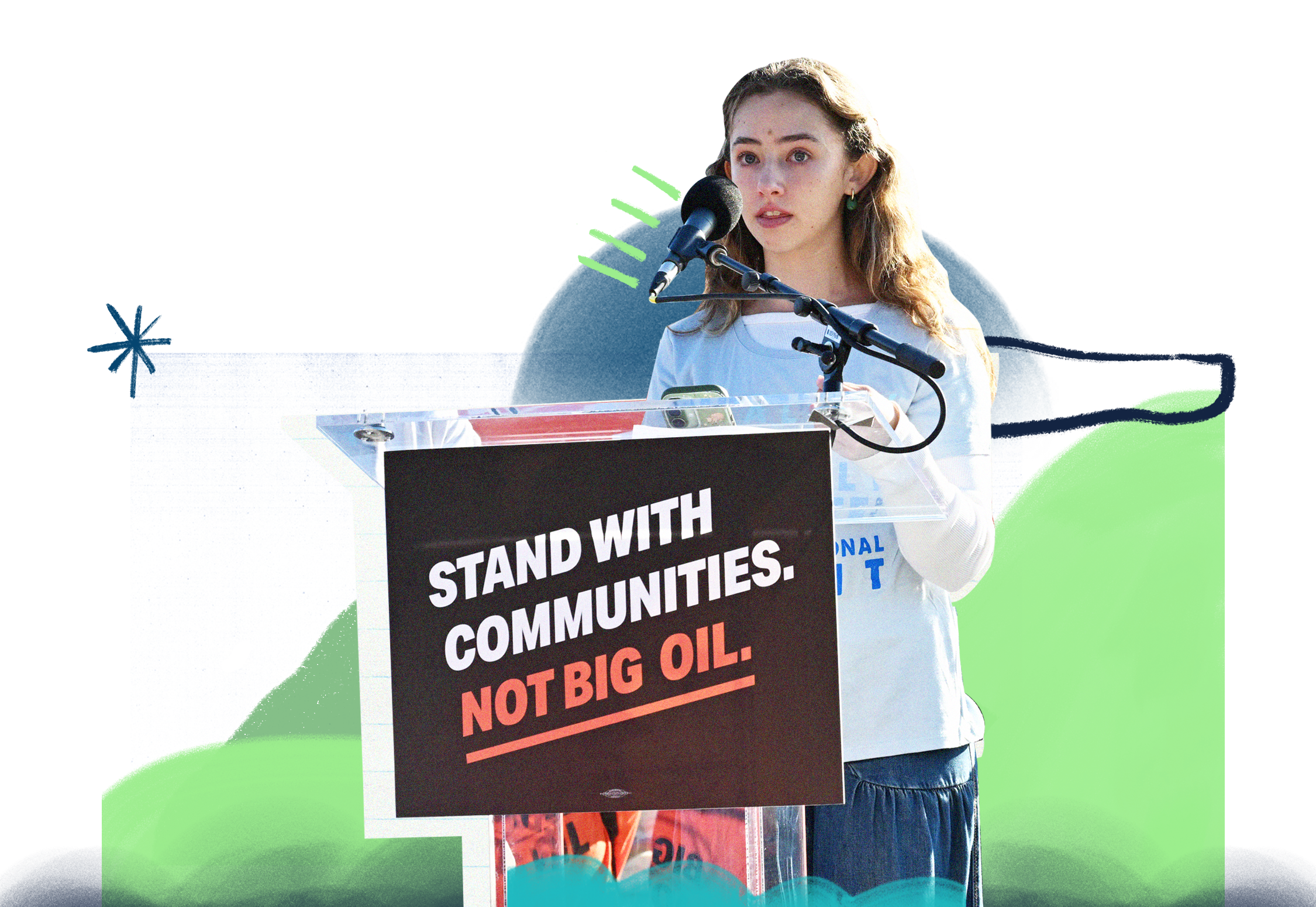
“When I was 16 years old, my home and entire town burned down in the most destructive fire in Colorado history. It was exacerbated by climate change...I believe my state has a right and duty to protect my health and hold corporations like Suncor responsible for the damage they’ve caused by prioritizing profit over long-term climate health.”
- Alina, Youth Amici
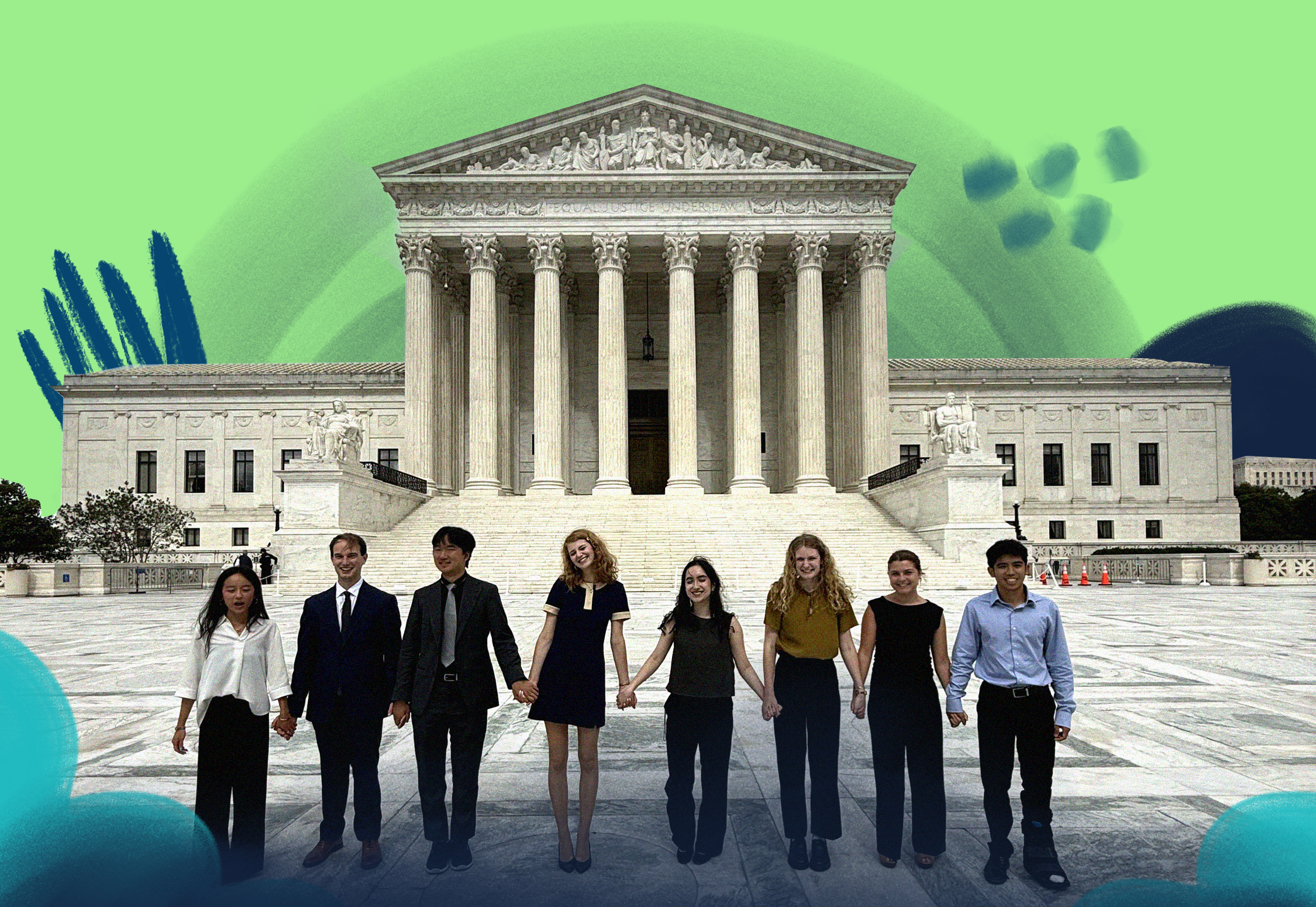
Our Children's Trust and youth amici, Alina Miranda, 21, and Maddison Schink, 26, joined 100+ supporters outside the U.S. Supreme Court for the People v. Big Oil rally, as the justices heard oral arguments in Suncor Energy Inc. v. County Commissioners of Boulder County this summer. Boulder youth, ranchers, and other community members—paying the price for climate harms and at the heart of this case—shared their emotional stories at the rally garnering press on the communities and young people harmed by fossil fuels.
Alina and Maddison are two of eight young people from Boulder County who, together with Dr. Lisa Patel, a national pediatric climate health expert, and Our Children's Trust, filed an amicus brief arguing that states and local governments have always had, and still have, the authority and the duty to protect children from fossil fuel harm.
Both amici’s voices were also heard in the offices of the Congressional legislators they spoke with later, working to get more cosponsors to the Children’s Fundamental Rights to Life and a Stable Climate System resolution.
Because every federal decision about fossil fuels
affects children’s lives, we filed 50+ public comments to federal and state agencies, including the Department of Transportation, Environmental Protection Agency, and Department of the Interior, putting young peoples’ health and rights on the record.
International Courts & Bodies
International Courts & Bodies
We take children’s climate rights to the world’s highest courts and human rights bodies, because international rulings set standards that reach across borders and strengthen the legal foundation at home. This year, we stood with youth in Canada’s first federal climate trial, filed a petition before the Inter-American Commission on Human Rights with former Juliana plaintiffs, urged the African Court on Human and Peoples’ Rights to recognize binding climate obligations, and supported youth litigation from Mexico to Uganda. In every forum, we press for the best available science, so no government can claim it didn’t know.
-
The Case: 15 youth plaintiffs (ages 15-23 at filing) arguing that federal legislation violates their constitutional rights to life, liberty, and security of the person under Section 7 of the Canadian Charter of Rights and Freedoms by continuing a trajectory of greenhouse gas emissions that causes serious and significant harm.
Status: An historic trial began in Vancouver, British Columbia in October. Closing arguments will be held in February
Key Impacts:
Despite Canda’s plan to have net-zero greenhouse gas emissions within its border by 2050, it is not on track to meet its 2026, 2030, or 2035 targets, which were already too weak to achieve net-zero by 2050
A win means a judicial declaration that Canada’s current course of conduct is unconstitutional and a court-ordered Climate Recovery Plan to reduce Canada’s greenhouse gas emissions and decarbonize its energy system in line with what scientists say is necessary to protect Canadian children.
A ruling in favor of the youth would set a landmark precedent for climate accountability in Canada and beyond, giving Canada the opportunity to lead internationally on clean energy, constitutional innovation, and the protection of young people’s rights
-
The Case:
21 youth plaintiffs (ages 8-19 at filing) challenging the federal government's systematic promotion and support for fossil fuels
Landmark case that launched the global youth climate litigation movement
Status: Because domestic remedies have been exhausted, Plaintiffs have filed a petition with the Inter-American Commission on Human Rights
Key Impacts:
Youth fought to hold the U.S. accountable for 24% of global historical emissions from just 4.2% of the world's population
Case helped build the record on federal government authorization of roughly one quarter of global warming, sea level rise, glacier loss, and climate-related deaths worldwide
Plaintiffs documented experiences of home loss from floods, rising sea level, displacement from hurricanes and wildfires, and exposure to hazardous air pollution
-
The Case: In an advisory opinion request on the climate crisis, the court has been asked to clarify what obligations African States have to protect human rights as climate impacts worsen across the African continent, especially for children and future generations.
Status: On March 30, 2026, Our Children’s Trust submitted an amicus (friend-of-the-court) brief. Our submission draws on the best available science and global legal precedent to make one thing clear: climate change is a human rights crisis.
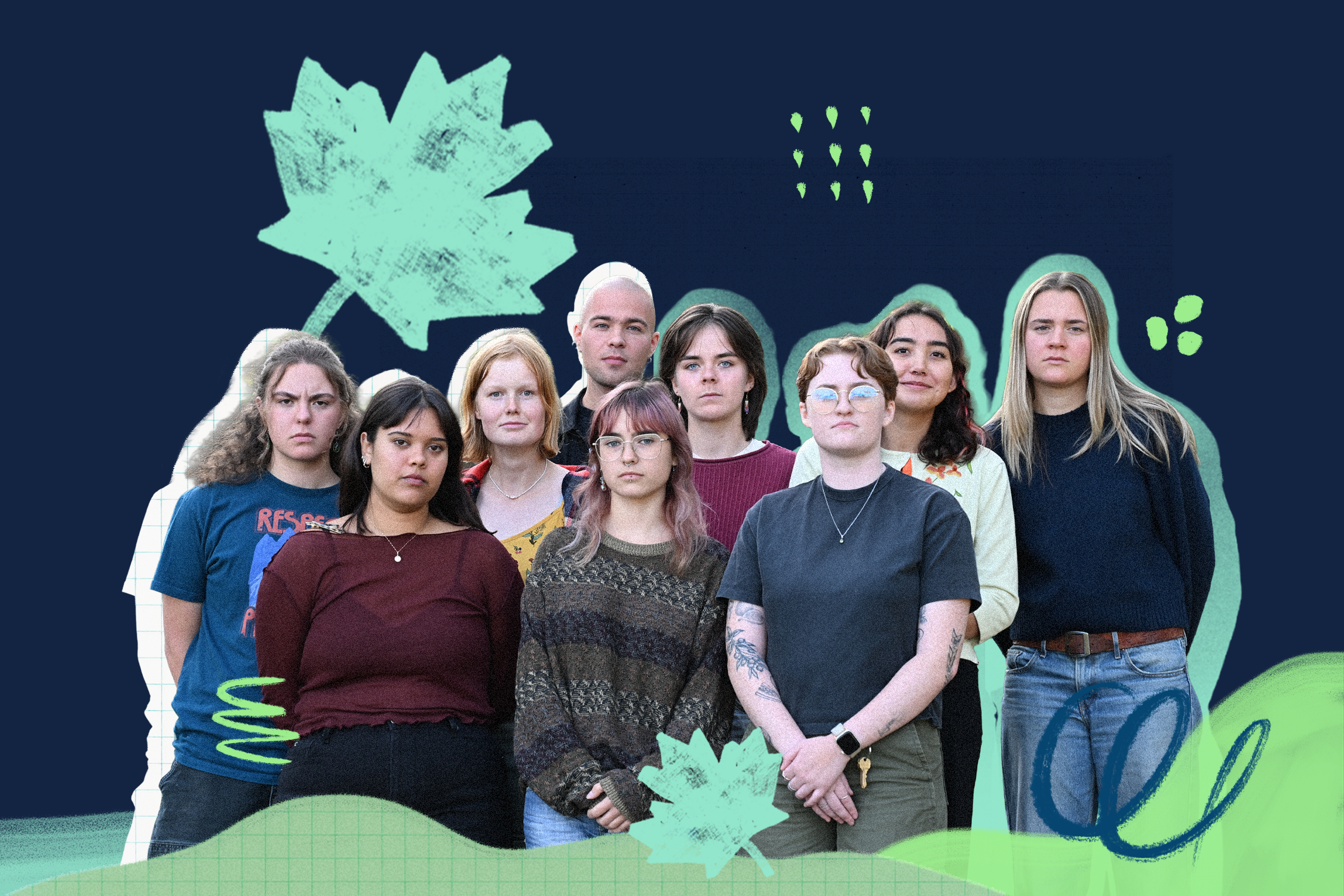
Opening quote from youth plaintiff in Canada. Opening quote from youth plaintiff in Canada. Opening quote from youth plaintiff in Canada - TB
For the first time in Canadian history, a federal climate case went to full trial. Fifteen young people stood before the court and declared that their rights were being violated. They refused to stay silent, to let climate harms compound, or to accept that their generation gets no say in its own future.
Over four weeks, the plaintiffs took the stand and told their stories. Lawyers argued a case years in the making. Expert witnesses showed the court that the climate crisis is harming children’s lives and health right now, and that Canada can still change course.
[Real moment of a youth plaintiff taking the stand - TBD]
Canada has made promises on climate. When it’s time to keep them, it delays, deflects, and walks them back. These young people have stood their ground. Now it’s the court’s turn to rise to its role.
Their constitutional rights are not suggestions. They’re obligations a court can enforce. The youth aren’t asking for better policy or stronger commitments. They’re demanding a declaration that their rights are being violated now, and a science-based climate recovery plan to fix it, ordered by a judge, not offered by a government.

“As my Ph.D. advisor, a member of the National Academy of Sciences, said to me, this work of bringing scientific findings into the courtroom is more important than any academic study.”
-Anders Carlson, Senior Climate Scientist, Our Children’s Trust
Anders spent years as a professor adding to climate research that too often sits in academic libraries. Now he brings it where it can’t be ignored.
Governments too often set climate goals by what’s politically convenient, not by what children need to survive. That’s why, from domestic courtrooms to the world’s highest international courts, we insist that justice be measured against the best available science. And that science is clear: end fossil fuels, protect carbon sinks, and return atmospheric CO₂ to 350 ppm to restore a livable planet.
Alongside pediatricians, energy experts, and historians, that science stands behind every young plaintiff who takes the stand, confirming what they’re living through and why. Their stories and the science become one record: sworn, tested, and permanent. Once the truth is on the record, no government anywhere can claim it didn’t know.
“As a scientist for Our Children’s Trust, I get to bring that massive body of research out of its dusty archive and directly into the courtroom, where it can change the course of history.”
Building the Conditions for Victory
A court ruling is only as strong as the public will behind it. That’s why every case is paired with strategic campaigns that build public awareness, youth power, and cross-sector alliances, all grounded in trauma-informed care for the young people at the heart of the work.
We turn young people’s stories into public will.
Lasting change has always been powered by people. Rights movements have won not only in courtrooms but in kitchens, classrooms, and town halls, where public understanding became public will. Through our communications, partnerships, and civic education, young people’s stories reach families, educators, faith leaders, and communities far beyond the courtroom.

In 2026, our work was featured in X articles in x languages, reaching X people.

This April, the Sierra Club named Our Children’s Trust a 2026 Trail Blazer, recognizing more than a decade of youth-led constitutional climate litigation alongside honorees Nancy Pelosi, Morgan Freeman, and Dolores Huerta. As Mat dos Santos put it, the honor “reflects the courage and creativity of young people across the world who are using courts to secure their future.”
Watch our speech
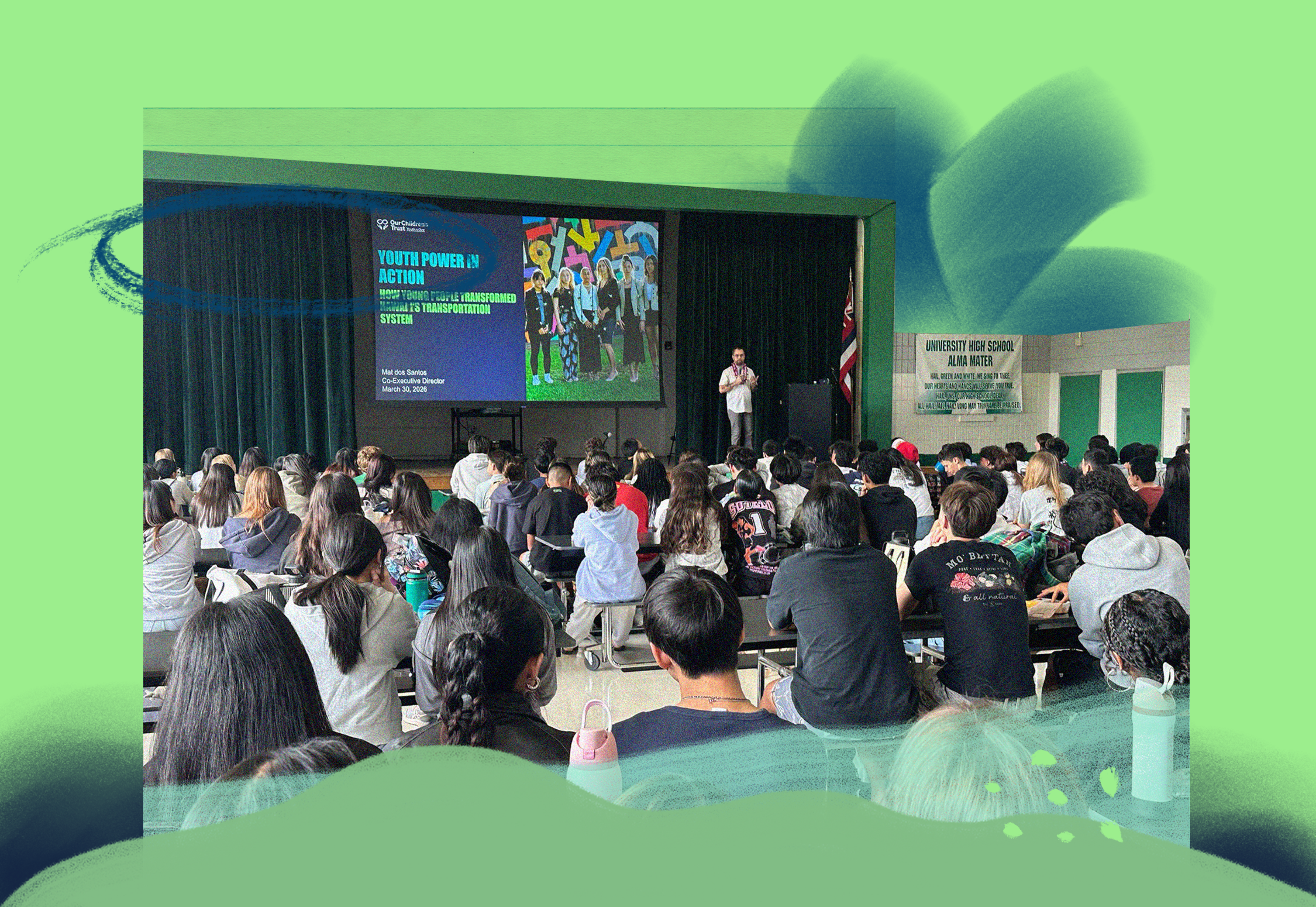
Fewer than 5% of Hawaiʻi students we met knew their constitution guarantees a clean and healthful environment. Since 2024, our team and Navahine plaintiffs have taught 1,100+ students across nine schools on three islands, and we’re working to bring the case to 165,000+ students statewide and to classrooms across Canada.
Read about our 2026 Hawaiʻi school tour
Download the Canadian educator’s guide
We nurture young people’s courage into lasting power.
Every young person we work with decides how they want to show up. We meet each one where they are, helping them build the skills they want, whether that’s speaking in court, writing an op-ed, or sharing their story on a global stage. This year, we also created new pathways for young people who want to keep growing as leaders, long after their time as plaintiffs.
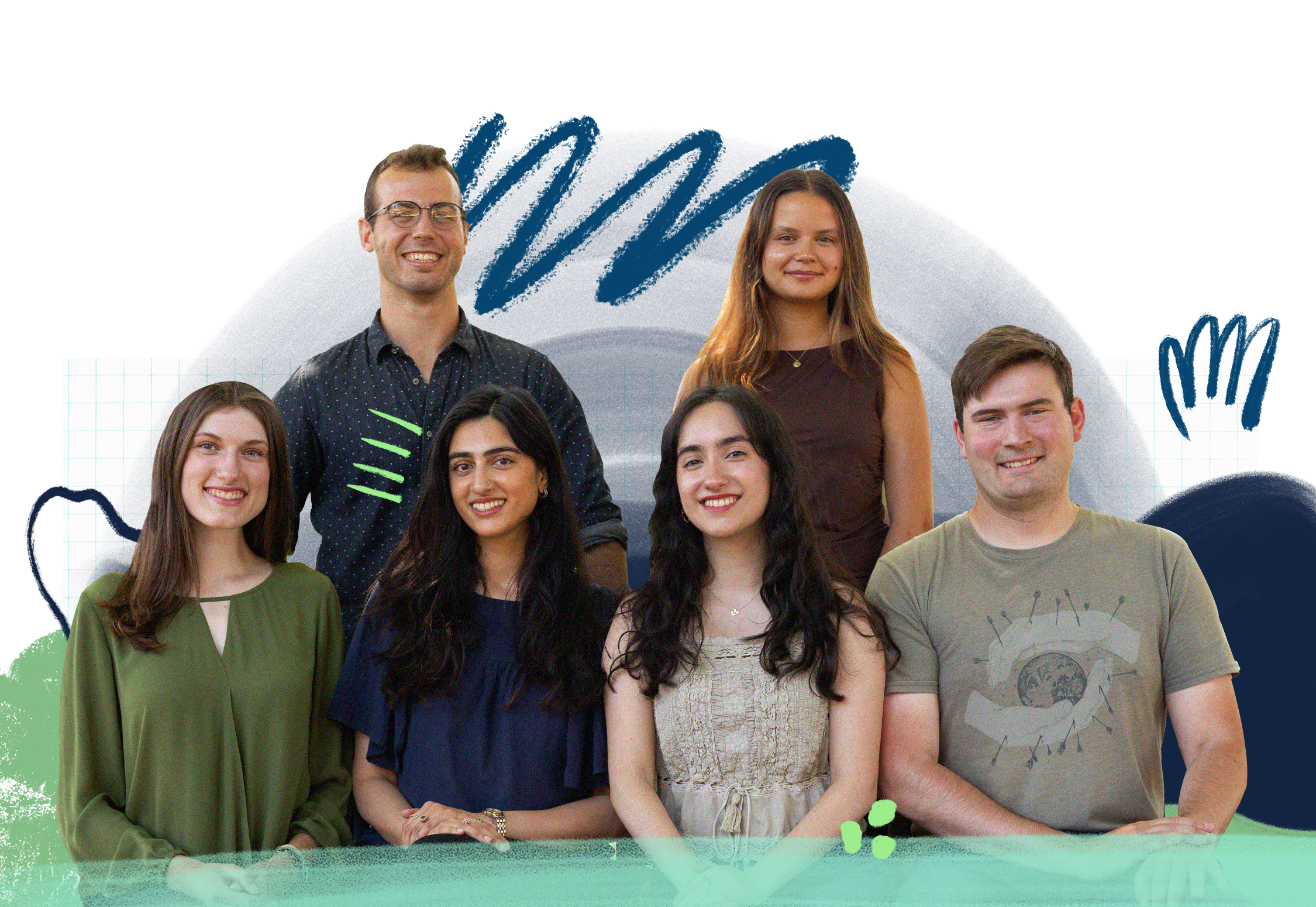



“I’m really proud to be part of the YAC… it has been inspiring to be a part of a group of youth like me who are driven to make real change.”
-LUCY R.
We launched our Youth Advisory Council in January 2026 to give young people a real seat at the table. Selected from nearly 100 applicants, nine members from across the country meet monthly to help shape our priorities, strategy, and programs. In July, they joined our Board of Directors in person for the first time to help shape Vision 2030, our strategic plan, and recommended ways to open this work to more young people through internships, mentorship, and school outreach.
This year, 35 law clerks, legal fellows, and interns, including three from Canada, trained alongside our team. Clerks and fellows worked with our attorneys at every stage of litigation, from motions and discovery to trial.
Partnering with our Former Intern, Lake Liao, founder of the Federal Climate Amendment Institute (FCAI)
Our interns and law clerks continue building upon our mission by establishing their own nonprofits, forging programs with their law school clinics, and mobilizing their student clubs to advocate for children's health and safety. Founded by former OCT Communications intern Lake Liao, FCAI is a national youth-led movement building the constitutional right to a livable climate through a proposed 41-word Federal Climate.
Amendment: FCAI collaborated with OCT on the resolution language and joint education campaign. Lake educates FCAI chapters across the U.S. and brings youth directly in front of their legislators to emphasize the importance of an amendment to explicitly reinforce children’s rights to a stable climate.

Partnering with our Former Intern, Lake Liao, founder of the Federal Climate Amendment Institute (FCAI)
Our interns and law clerks continue building upon our mission by establishing their own nonprofits, forging programs with their law school clinics, and mobilizing their student clubs to advocate for children's health and safety. Founded by former OCT Communications intern Lake Liao, FCAI is a national youth-led movement building the constitutional right to a livable climate through a proposed 41-word Federal Climate.
Amendment: FCAI collaborated with OCT on the resolution language and joint education campaign. Lake educates FCAI chapters across the U.S. and brings youth directly in front of their legislators to emphasize the importance of an amendment to explicitly reinforce children’s rights to a stable climate.
We bring every voice that matters into the courtroom.
The climate crisis touches everything, and our cases reflect that. Scientists and pediatricians turn young people’s lived harm into evidence a court can weigh. Economists and energy experts show that cleaner alternatives exist. Indigenous and community partners keep each case grounded in the people and places most affected, and amicus coalitions show judges the stakes reach far beyond one courtroom.
When young people go to court, others stand with them.
$4.73 million in pro bono support and 18 expert witnesses putting
the science on the record
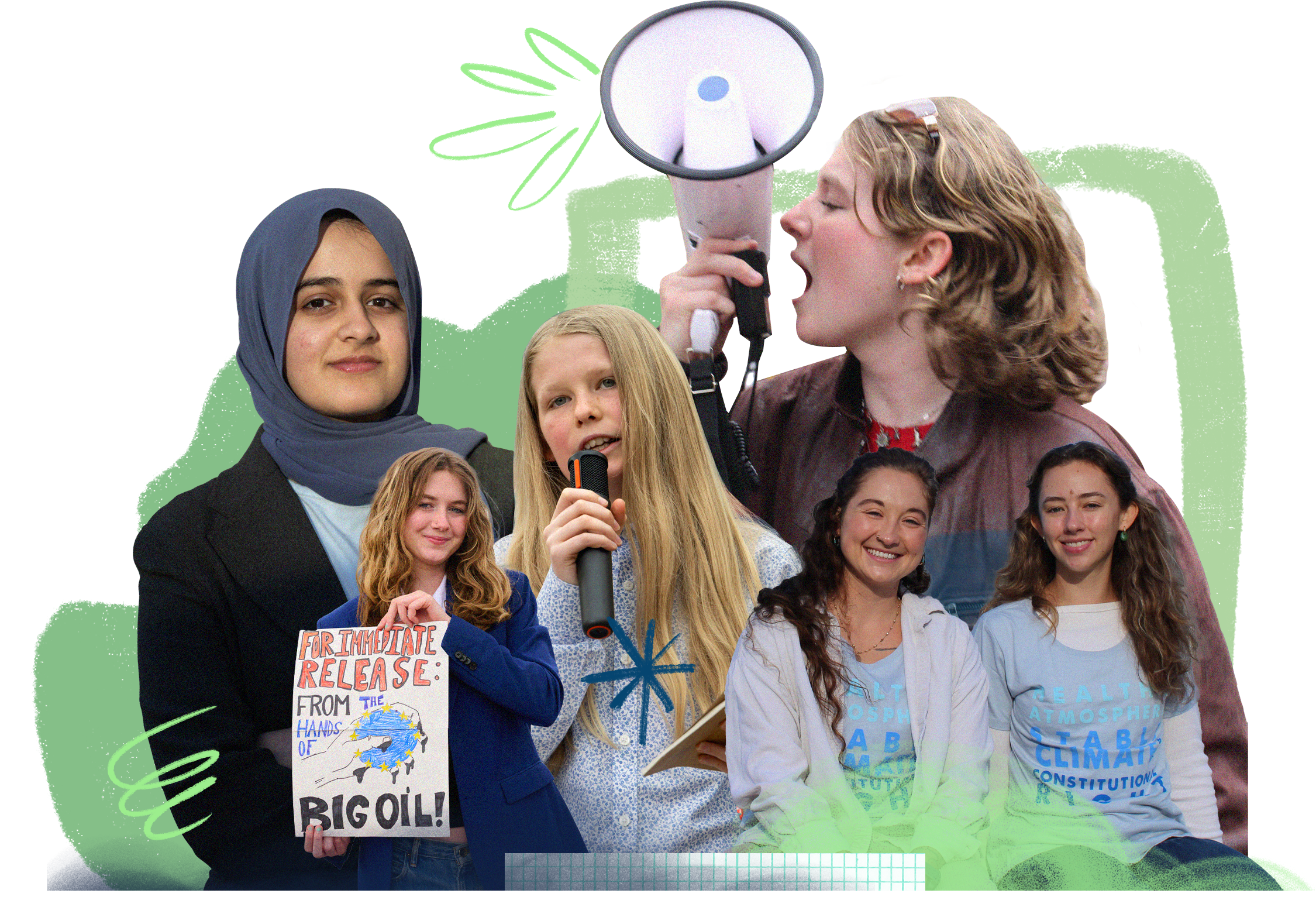
To amplify youth voices across the judicial system, Our Children’s Trust submitted an amicus brief directly to the U.S. Supreme Court this year on behalf of young people in Suncor Energy v Boulder County. Our own cases were bolstered by 18 amicus briefs signed on by 254 key supporters, including former senior officials, legal scholars, scientists, pediatricians, and 140 faith leaders and communities, backing our youth from Florida to Wisconsin to federal court.
We also engage activists through our Climate Rights Corps: an intergenerational coalition of volunteers, students, scientists, teachers, and organizational partners, with over 350 members. In our newly launched coordinator program, 25 volunteers are leading their own campaigns to mobilize legislators and students.
Together, we’re telling courts what young people already know: children’s lives are worth protecting.
This summer, our Climate Rights Corps, the Federal Climate Amendment Institute, and High School Democrats of America cohosted several D.C. congressional events advocating for a Federal Climate Amendment and the Children’s Fundamental Rights to Life and a Stable Climate System resolution.
Over 70 volunteers, youth advocates, Hill interns, and partners gathered to learn about youth-led constitutional climate lawsuits and legislative advocacy. They also heard from two of our Youth Advisory Council members and were inspired by Katherine McIntosh from Pennsylvania, who spoke about her current challenge against a permit for the massive Homer City gas-fired power plant to primarily fuel a 3200-acre data center.
“Childhood is a narrow window. These harms will be immediate… Their significance and irreparability cannot be ignored.”
— Dr. Elizabeth Pinsky, Child and Adolescent Psychiatrist and Pediatrician,
Massachusetts General Hospital
Climate cases are often argued in terms of emissions and ecosystems. Ours are argued in terms of children and their futures. We partner with pediatricians, psychiatrists, and public health experts who show courts what climate pollution does to a developing body and mind.
Dr. Pinsky is one of those partners. She served as an expert in Genesis v. EPA, testified at the La Rose trial, and this year submitted a declaration supporting the Venner petitioners. Her testimony is unmistakable: because children are still developing, even small exposures can cause lifelong, sometimes irreversible harm to their lungs, brains, and mental health.
Read Dr. Pinsky’s declaration
We care for the young people carrying this work.
Serving as a youth plaintiff carries heavy public and emotional burdens. Our Trauma-Informed Care program builds the agency, community, and support that turn activism into resilience. With a three-year grant from the Tow Foundation’s Innovation Fund and our partners at Alvarado Consulting and Treatment Group, we expanded the program in 2026.
This year, we engaged in over [X] hours of support through individual sessions, on-site care at hearings and trials, and monthly staff cohorts.
Your support sustains the young people carrying this work. This year, we engaged in over [X] hours of support through individual sessions, on-site care at hearings and trials, and monthly staff cohorts.
WE ARE SHAPING INTERNATIONAL LAW AND REDEFINING HUMAN RIGHTS IN THE ERA OF CLIMATE CRISIS
We bring youth voices before courts and human rights bodies across four continents, linking constitutional climate rights in the U.S. to a growing global movement. From the European Court of Human Rights to the Inter-American Commission, we're ensuring climate science and youth experiences shape the future of law.
Filed a "Communication" to the Council of Europe urging implementation of KlimaSeniorinnen v. Switzerland in line with the Court’s holding that Paris Agreement temperature targets fall short of States’ human rights obligations.
February 2025
15 former Juliana plaintiffs filed a historic petition with the Inter-American Commission on Human Rights, arguing decades of U.S. energy policies violated fundamental rights.
September 2025
Filed amicus brief with Ecuador's Constitutional Court in Waorani v. Ecuador, arguing oil and gas development on indigenous lands constitutes an internationally wrongful act.
November 2025
Supporting youth at trial in La Rose v. His Majesty the King in Vancouver, Canada.
October 2026
-
THE CASE
15 youth plaintiffs (ages 15-23 at filing) challenging federal government's promotion and expansion of fossil fuels
Canada is the 4th largest producer of oil and the 5th largest producer of gas in the world
STATUS
Preparing for trial in October 2026
KEY IMPACTS
Youth will hold Canada accountable for emissions from fossil fuel extraction—in 2022 alone, extracted fuels produced 1.23 billion tons of CO₂ when combusted, more than every country on Earth except China, U.S., India, and Russia
Victory enforces Canada's net-zero by 2050 goal by stopping planned extraction increases that would average 1.18 billion tons annually with no end date
Protection from warming twice the global average (northern Canada 3x faster) that caused the 2021 extreme heatwave reaching 121.3°F—killing hundreds and ruining crops
Prevention of catastrophic wildfires like 2023's record burns—twice any previous year's area, emitting more CO₂ than every country except China, U.S., and India
Western Canada has already lost 23% of glacier mass since 2000; a victory could help prevent the 75% loss projected at current warming levels—securing the water, climate stability, and future that Canada's youth-led movement is fighting for
Protection of youth mental and physical health, traditional practices, and community safety threatened by fires and flooding
WE'RE HEADING TO TRIAL IN CANADA AND MAKING HISTORY
"Climate change doesn't just affect our land—it affects the ways we live, heal, and connect" - Leandrea, Youth Plaintiff, Taku River Tlingit First Nation, Whitehorse, Yukon
La Rose v. His Majesty the King's 8-week trial begins October 26, 2026, in Vancouver, BC. Fifteen young Canadians argue that Canada's fossil fuel activities and longstanding failure to meet their own emission reduction targets violates their constitutional rights to life, liberty, and security in a groundbreaking constitutional climate lawsuit against the federal government.
Leandrea shares how disrupted seasons prevent traditional land-based practices, wildfires fill the air with toxic smoke and forced evacuations, and rapidly changing land threatens intergenerational knowledge transfer. "The land is our biggest educator. Taking care of the land is essential to our cultural survival."


WE TOOK THE U.S. GOVERNMENT TO INTERNATIONAL TRIBUNAL FOR CLIMATE HARM
“This is not neglect—it is deliberate harm." - Levi, Youth Petitioner
After a decade fighting in U.S. courts, 15 former Juliana v. United States plaintiffs filed a climate rights petition with the Inter-American Commission on Human Rights in September 2025. The petition alleges the U.S. government has deliberately perpetuated a fossil fuel system for 50+ years while blocking youth access to justice. Petitioners seek urgent precautionary measures and a finding of human rights violations. A favorable ruling would have a powerful influence across the Americas, establishing that when national courts fail to protect children's fundamental rights, international tribunals can hold governments accountable—opening a critical pathway for youth worldwide facing barriers to justice.
WE CREATED REAL POWER FOR YOUTH IN HAWAI‘I
“Your voice matters.” – Rylee Brooke, Youth Plaintiff
Our historic settlement created real power for youth by establishing the Hawaiʻi Youth Transportation Council, giving 20 young people ages 12-24, including plaintiff Rylee Brooke, direct influence over the state's path to zero-emission transportation by 2045. Selected from 83 applications across all islands, Council members provide quarterly guidance on electric vehicle infrastructure, pedestrian safety, and climate policy.
Since January 2025, they've translated our courtroom victory into reality—youth aren't just advocates, they're policymakers practicing aloha ʻāina (love of the land) as they shape Hawaiʻi's sustainable future.

Our programs cultivate future constitutional climate rights attorneys and environmental justice advocates
Through our fellowship program, early-career attorneys receive one- or two-year appointments, with alumni becoming climate law professors, environmental litigators, and permanent team members. Law clerks and interns contribute directly to cases, gaining invaluable experience over the course of a semester or longer.
IN 2025:

3 Law Fellows

9 Law Clerks from 7 law schools

12 Government Affairs Interns

3 Engagement Interns/ Volunteers
WE PROVIDE TRAUMA-INFORMED SUPPORT THAT REFRAMES CIVIC ENGAGEMENT AS THERAPEUTIC INTERVENTION
“Activism is my medicine” - Olivia, Youth Plaintiff
Young people face unprecedented climate anxiety: 75% find the future frightening, 45% say it affects daily functioning.* Climate distress stems not just from ecological disaster but from governments' failure to protect them—creating a "moral injury" of institutional betrayal when those in power dismiss young people's legitimate concerns.
Empowering youth to challenge the systems causing their distress becomes a pathway to healing. Our model combines peer support, legal advocacy, and mental health expertise—addressing root causes that traditional therapy alone cannot fix. Youth call it "life-changing" because it restores their voice and connects them to something larger.
192+ hours of trauma-informed support provided to plaintiffs, families, and OUR team by Alvarado Consulting and Treatment Group

WE'RE BUILDING POWER THROUGH COLLABORATION
Recognizing that children's rights and climate justice are fundamentally interconnected, we've built a collaborative network uniting academics, climate scientists, legal professionals, medical experts, and youth advocates to advance children's rights

Alliance Strategy


Broader Influence
& Public Engagement
Professional Networks
& Movement Leaders
Plaintiffs, Families
& Core Partners


38 Attorneys joined us as pro
bono counsel

22 experts provided pro bono testimony and scientific advice to courts

6 amicus briefs were filed on our plaintiffs’ behalf

4 clinics across
4 states strengthened our cases’ strategies

~$3M in pro bono support received from lawyers, experts, and allies to support our youth plaintiffs

Voices from the Historic Lighthiser Hearing
WE MOBILIZED THE WORLD'S LEADING AUTHORITIES TO DEFEND YOUTH RIGHTS
Dr. Steve Running, Nobel Prize-winning climate scientist: "Every additional ton of CO₂ matters."
CLIMATE SCIENCE
EXECUTIVE ORDERS
John Podesta, Former Senior Advisor to the President: "The intent of these orders is clearly to unleash fossil fuels and restrain renewable resources. Greenhouse gas emissions will rise substantially."
Dr. Mark Jacobson, Stanford professor: "Transitioning to 100% clean renewable energy would eliminate almost 100,000 air pollution deaths per year in the U.S."
ENERGY SYSTEMS
Dr. Geoffrey Heal, Columbia University economist: "Burning one ton of coal produces $125 worth of electricity but imposes external costs of at least $500."
ECONOMICS
Dr. Lori Byron, pediatrician: "There's grave risk to youth by unleashing more fossil fuels."
PEDIATRIC MEDICINE
Nicole Hughes, Executive Director of Renewable Northwest: "Since January 20th, 35 renewable energy projects have been canceled, resulting in 16,589 jobs lost and over $22 billion in investment losses."
RENEWABLE ENERGY
Courtroom sketches by Shauna Layton
WE’RE BUILDING A ROBUST PARTNERSHIP ECOSYSTEM
Following the historic Navahine settlement, we held 50 partner meetings over the year, coordinated weekly with the Hawaiʻi Department of Transportation (HDOT) and our partners at Earthjustice, and engaged 30+ organizations across state and county government, community groups, and academic institutions. We facilitated coalition participation in Safe Routes to Schools, Drive Electric Hawaii, and Transportation Choices Hui, and helped mobilize public comment from 350 Hawaii, Greenpeace Hawaii, Hawaii Bicycling League, and others on HDOT's Energy Security and Waste Reduction Plan.

WE PARTNER WITH DOCTORS TO PROVE CLIMATE HARM VIOLATES CHILDREN'S RIGHTS
"Just as doctors don't wait when a child presents with a rising fever, we cannot delay climate action. Every hour matters for children's lives." - Dr. Lisa Patel, pediatrician
Climate change is the most profound health threat facing children. We collaborate with leading medical experts who provide testimony and file amicus briefs documenting how fossil fuel pollution harms children: air pollution causes asthma, neurodevelopmental delays, and premature death, while climate disasters drive heat-related illness, respiratory distress, and mental health crises. Their testimony proves every ton of climate pollution directly impacts children's health, making the constitutional case clear: government action expanding fossil fuels violates children's fundamental rights.

WE EMPOWER PEOPLE THROUGH STRATEGIC OUTREACH, MULTIMEDIA RESOURCES, AND ACCESSIBLE EDUCATION
Our landmark cases have sparked a global movement, inspiring films, books, and curricula from elementary to law school while connecting civic participation with environmental protection.
IN 2025:

26+ Blog posts

57 Events

7 Awards
WE SPARKED A CONGRESSIONAL RESOLUTION RECOGNIZING CHILDREN'S CLIMATE RIGHTS
In July 2025, Senator Merkley and Representatives Schakowsky, Jayapal, and Raskin introduced the Children's Fundamental Rights to Life and a Stable Climate System resolution in response to Lighthiser v. Trump, recognizing children's constitutional rights to life and a livable climate and opposing federal policies that expand fossil fuels.
National youth organizations and interns joined youth plaintiffs to visit 250 congressional offices, garnering 11 Senators and 54 Representatives as cosponsors, with over 100 organizational endorsements. Nearly 100 attendees joined the first-ever Youth Climate Rights Hill Briefing, while 150 supporters and 50 high schoolers rallied at the Capitol.

WE'RE TEACHING HAWAIʻI'S STUDENTS THEIR CONSTITUTIONAL CLIMATE RIGHTS
We're building civics literacy infrastructure to ensure Hawaiʻi's next generation understands their rights and their power. Our pilot lesson plans integrate climate rights into formal education, while professional development workshops feature insights from attorneys and youth plaintiffs. We're working to advance statewide curriculum development, potentially reaching over 165,340 public school students—ensuring they understand the Navahine settlement and their power to hold government accountable.


We submitted over 30 public comments to federal and state agencies on their constitutional obligations to protect children and the scientific evidence showing how proposed rules would impact young people's health and safety. These comments addressed motor vehicle standards, power plant emissions, National Environmental Policy Act revisions, and fossil fuel project permitting.
We launched the Climate Rights Corps, an intergenerational collective of passionate volunteers, to train and empower supporters to engage with the government and participate in advocacy efforts alongside the plaintiffs.
WE SHAPED GOVERNMENT POLICY AND EMPOWERED
PUBLIC PARTICIPATION
WE WERE LOUD, MAKING OUR MISSION HEARD

IN 2025, WE HAD:
340+ pieces of unique coverage
in 8 different languages

2500+ reprints amplifying
our reach

97 million+ total online
coverage views


70,000+ unique website visits
14,700+ audience growth across social media platforms (855%+ increase)

2,698,000+ impressions (136%+ increase)

229,000+ likes, comments, shares, saves (196%+ increase)

YOU ARE PART OF SOMETHING BIGGER
SINCE JANUARY 2025:

4,400+ donors from 48 states & D.C. and 17 countries

276 were monthly supporters with an average $46 donation
Democracy's pulse beats stronger with every youth voice demanding justice—and 2026 will amplify that heartbeat. These are challenging times. Courts dismiss cases. Government actions threaten children's lives. But defense doesn't win. Going on offense does.
Thanks to your support, we're financially healthy, completing our first independent audit with clean results. Every dollar matters as we balance organizational sustainability with maximizing impact for young plaintiffs. As our caseload grows, we need you to stand with us to sustain this momentum and secure their right to a livable future.
Follow us: